

Call us
+86-18703630069
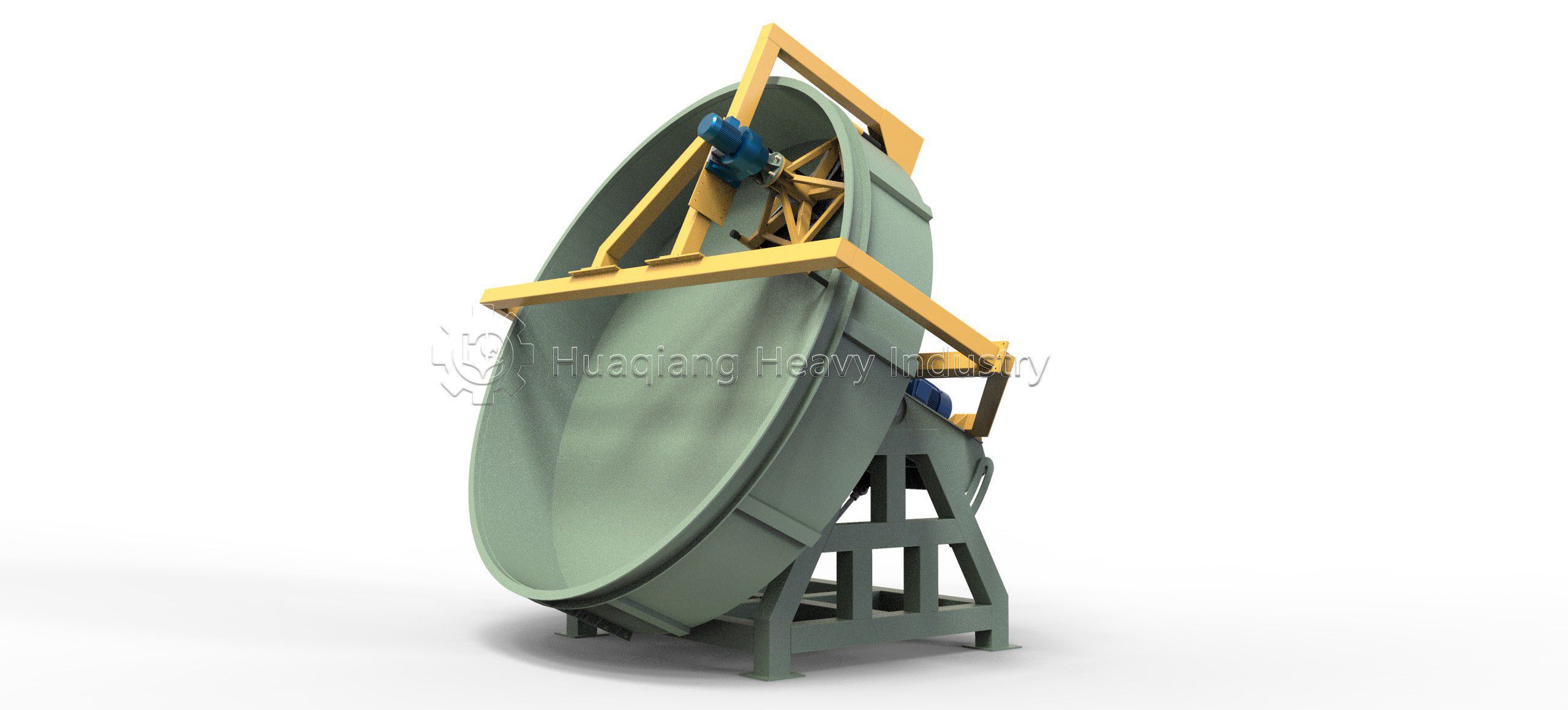
Disc Granulator
The disc granulator is a core piece of equipment for the granulation of industrial powdered materials, playing a pivotal role in sectors such as the resource utilization of organic fertilizers, the industrial production of compound fertilizers, and mineral processing. Utilizing a simple yet efficient rolling granulation principle, the equipment transforms powdered materials—which are otherwise difficult to store, transport, and use—into uniform, spherical granules, thereby significantly enhancing their commercial value and utilization efficiency. Thanks to advantages such as low investment costs, broad adaptability, high granulation rates, and ease of operation, it has become the preferred granulation equipment for users across numerous industries.
Structural Composition of the Disc Granulator
The disc granulator features a design based on simplicity, reliability, and durability. Its main components include:
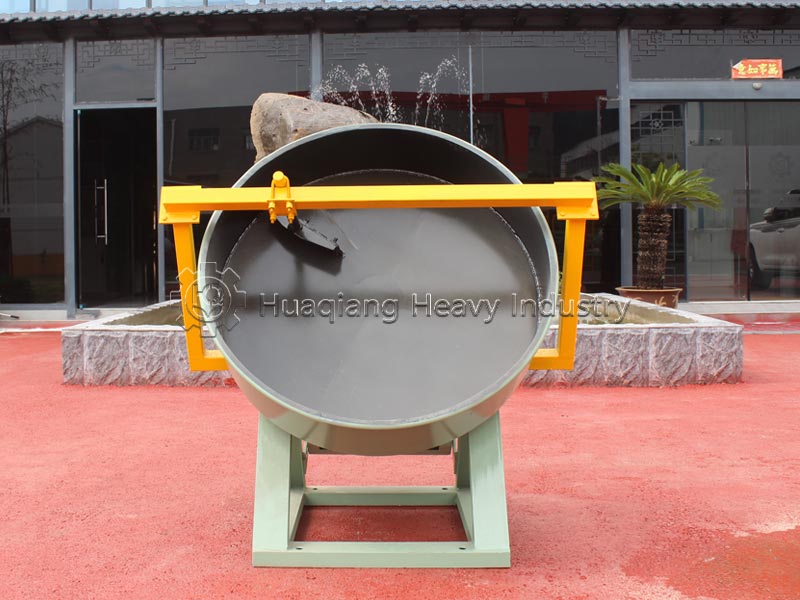
(I) Granulating Disc: The core working component of the equipment. It utilizes an integral arc-shaped structure with a disc body welded from steel plate; the disc bottom is reinforced with multiple radial steel ribs to prevent deformation under high-intensity operating conditions; the interior is lined with high-strength fiberglass (FRP), offering excellent corrosion resistance and extending the equipment's service life.
(II) Drive System: Comprising an electric motor, a gearbox, a flexible belt, and a pinion-and-gear assembly. The flexible belt drive ensures smooth startup, effectively dampens impact forces, and protects drive components.
(III) Support and Adjustment System: Includes the frame, adjustment disc, main shaft, and angle adjustment mechanism. The base features a weighted design, allowing for stable operation without the need for anchor bolts and offering flexible installation.
(IV) Cleaning System: Equipped with a non-powered scraper assembly—including bottom and corner scrapers—that automatically removes material adhering to the disc walls, keeps the disc surface clean, and ensures optimal granulation results.
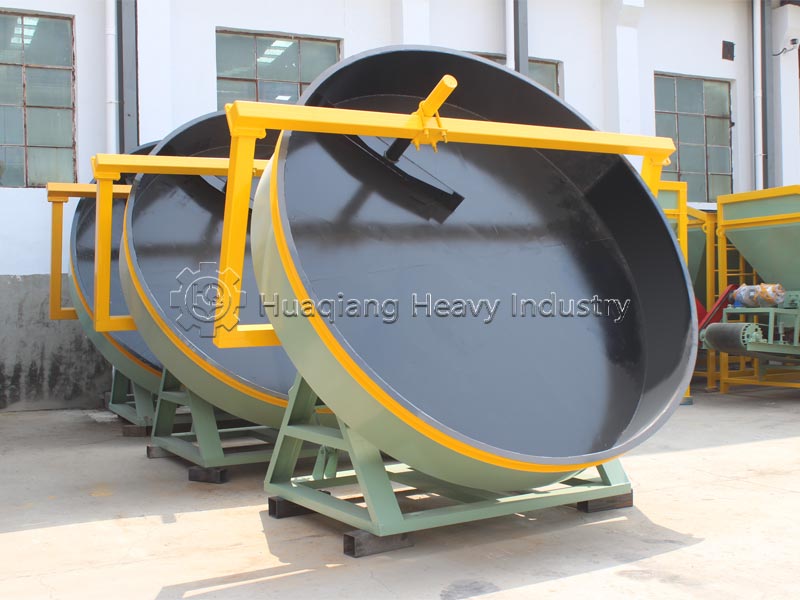
Comparative Advantages of the Disc Granulator over Other Granulation Methods
Compared to extrusion granulators, disc granulators produce granules that are more spherical and have smoother surfaces, while also offering higher processing capacity and lower energy consumption. Compared to rotary drum granulators, disc granulators feature a simpler structure, a smaller footprint, and lower investment costs, making them suitable for small- to medium-scale production. Unlike high-tower granulation, disc granulation does not require high-temperature melting; the process operates at lower temperatures, making it better suited for heat-sensitive and organic materials. Overall, disc granulators offer distinct advantages in terms of cost-effectiveness, ease of operation, and material adaptability.
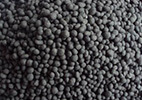
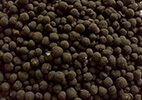
Application Scope and Target Audience for Disc Granulator Equipment
Disc granulators serve a wide range of applications and user groups:
Organic fertilizer manufacturers: Produce commercial organic fertilizers using organic waste such as livestock and poultry manure (chicken, pig, and cattle manure), municipal sludge, kitchen waste, and crop straw. This is the primary user group for disc granulators.
Compound and mixed fertilizer manufacturers: Produce granular compound fertilizers using inorganic raw materials like urea, phosphate fertilizers, and potash fertilizers to meet modern agriculture's demand for high-efficiency fertilizers.
Cement and building materials enterprises: Pelletize raw meal powder for calcination in vertical kilns, or pelletize phosphogypsum powder for use as an additive in cement grinding mills.
Metallurgical and mining enterprises: Pelletize raw materials such as iron concentrate powder and mineral fines prior to smelting to enhance smelting efficiency.
Feed processing enterprises: Pelletize feed ingredients to improve palatability and storage stability.
Chemical, pharmaceutical, and food enterprises: Granulate various powdered materials to meet specific industry requirements.
Environmental protection and waste treatment projects: Convert waste materials—such as sludge and refuse—into usable resources, achieving a balance between environmental protection and economic benefits.
What are the raw materials for a disc granulator?
The equipment can process an extremely wide range of raw materials. Organic materials include livestock and poultry manures (such as chicken, pig, and cattle manure), municipal waste, sewage sludge, kitchen waste, crop stalks, peat, and oilseed cakes/meal. Inorganic materials include urea, ammonium chloride, ammonium sulfate, ammonium bicarbonate, single superphosphate (SSP), triple superphosphate (TSP), monoammonium phosphate (MAP), diammonium phosphate (DAP), calcium-magnesium-phosphate fertilizer, and potassium chloride. Industrial mineral materials include coal dust, cement, clinker, limestone, shale, coal gangue, clay, mineral powder, iron concentrate, and titanium dioxide.
Working Principle of Disc Granulation
Inside the inclined, rotating disc, the material is subjected to the combined effects of gravity, centrifugal force, and friction, resulting in a complex motion involving both rolling and rubbing. With the appropriate addition of moisture, fine material particles collide and bond during this movement, gradually agglomerating and growing in size. The granulation process operates as a dynamic cycle of "growth, screening, and further growth": particles meeting size specifications spill over the disc rim, while undersized fines remain within the disc to continue the granulation process. This continuous operation achieves an automated cycle of granulation, screening, and material recirculation.
Granulation Process and Production Line Application of the Disc Granulator
In an organic fertilizer production line, the disc granulator is positioned after the fermentation, crushing, and mixing stages, and before drying, cooling, screening, and packaging. The complete process flow is: raw material fermentation → crushing → ingredient mixing → disc granulation → drying → cooling → screening → coating → packaging. In compound fertilizer production lines, the disc granulator likewise serves as the core granulation unit, processing uniformly mixed powdered raw materials into compound fertilizer products with consistent granule size. In the production of bio-organic fertilizer from sludge, the disc granulation process is a key technical pathway for achieving sludge volume reduction, harmless treatment, and resource recovery.
Industry Development Trends and Equipment Prospects
Driven by increasingly stringent environmental regulations and rising demands for resource recovery, disc granulators hold promising prospects in the field of organic waste treatment. The growing need for converting livestock manure into resources, the harmless disposal of municipal sludge, and the volume reduction of food waste creates a vast market for this equipment. Meanwhile, the equipment itself is evolving towards larger scales, greater intelligence, and improved energy efficiency; the integration of technologies such as variable-frequency speed control and automatic control systems further enhances automation levels and production productivity.
With advantages such as low investment costs, broad adaptability, high granulation rates, and ease of operation and maintenance, the disc granulator has established itself as one of the most cost-effective and competitive pieces of equipment in the powder granulation sector, poised to play a significant role across a wide range of industries in the future.
Models and Specifications of Disc Granulators
| Fertilizer Disc Granulator Machine | |||||
| Model | Capacity(t/h) | Diameter(mm) | Side Height(mm) | Rotation Speed(r/min) | Motor Power(Kw) |
| ZL-500 | 0.05-0.15 | 500 | 150 | 25 | 1.5 |
| ZL-800 | 0.1-0.3 | 800 | 200 | 25 | 1.5 |
| ZL-1000 | 0.1-0.35 | 1000 | 250 | 25 | 2.2 |
| ZL-1200 | 0.1-0.35 | 1200 | 250 | 25 | 3 |
| ZL-1500 | 0.3-1 | 1500 | 300 | 18 | 3 |
| ZL-1800 | 0.5-1.2 | 1800 | 350 | 18 | 4 |
| ZL-2000 | 0.5-1.5 | 2000 | 400 | 18 | 5.5 |
| ZL-2500 | 1-2.5 | 2500 | 400 | 13.6 | 7.5 |
| ZL-2800 | 2-3 | 2800 | 500 | 13.6 | 11 |
| ZL-3000 | 2-3 | 3000 | 500 | 11 | 11 |
| ZL-3200 | 3-5 | 3200 | 500 | 10 | 11 |
| ZL-3600 | 3.5-6 | 3600 | 500 | 10 | 18.5 |