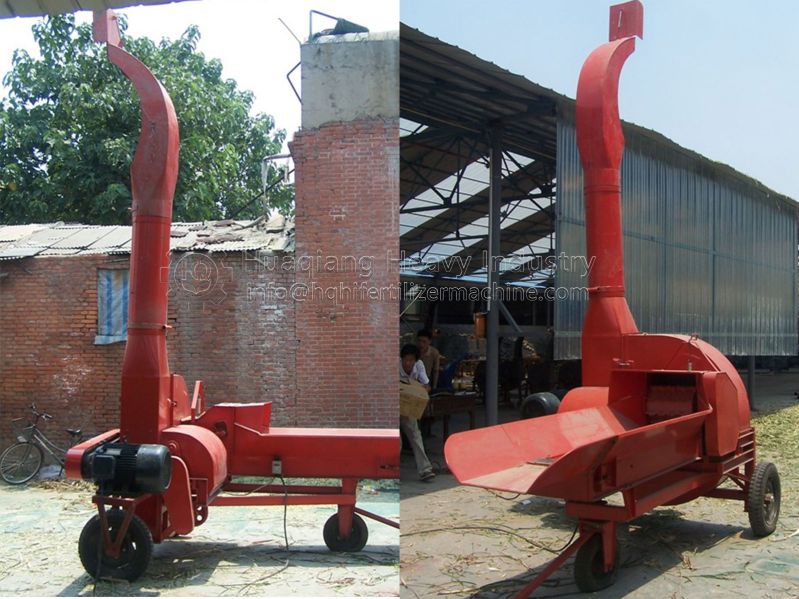
Straw crushers are core pre-processing equipment in the fields of straw resource utilization, organic fertilizer production, and biomass energy. Utilizing high-speed rotating hammer impact as its core technology, the machine combines the advantages of high-efficiency pulverization, broad material adaptability, ease of mobility, and reliable safety. With its outstanding advantages such as reasonable structure, wide processing range, adjustable fineness, and flexible power selection, the straw crusher has become a key technical equipment for transforming crop straw from "field waste" into "industrial raw materials". In terms of the design of key components, the straw crusher has been specially optimized to take into account the characteristics of straw materials, such as long fibers and strong toughness. The hammers are made of wear-resistant alloy and feature a symmetrical, stepped, dual-hole design, while the housing is constructed from welded high-quality steel. Comprehensive safety guards are installed to ensure operational security. Straw crushers offer an efficient and reliable solution for the resource utilization of straw with relatively low investment and operating costs.
Hardware Configuration and Component Functions
The hardware components of a straw crusher mainly include: (I) Crushing assembly: the core crushing component of the equipment, including rotor assembly, hammers (blades) and toothed plates. The hammers are made of wear-resistant alloy material. (II) Housing assembly: Consisting of upper and lower body sections, fabricated from welded high-quality steel. (III) Feeding assembly: Comprising the feed hopper and feeding mechanism; some models are equipped with an automatic feeding device. (IV) Discharge assembly: Including the blower fan, discharge chute, and collection unit. (V) Drive assembly: Consisting of the motor (or diesel engine), pulleys, and drive shaft. (VI) Mobility and support assembly: Including the chassis frame and mobility mechanism.
Application Landscape and Audience Distribution
Straw crushers have a wide range of applications and target audiences: Organic fertilizer production enterprises: After crushing straw, they are mixed with livestock and poultry manure for fermentation to produce high-quality organic fertilizer. shredding improves mixing uniformity and aeration. Feed processing plants and livestock farms: Materials such as corn stalks, wheat straw, rice straw, and peanut vines are shredded for use as livestock and poultry feed. Biomass energy companies: Shredded straw is used to produce biomass fuel pellets. Agricultural machinery cooperatives and large-scale growers: Straw is shredded directly in the field and returned to the soil to increase organic matter content. Edible fungus substrate producers: Shredded straw serves as a raw material for the cultivation substrate used to grow edible fungi.
Material Range and Processing Capacity
Straw crushers can process a wide range of materials, including various crop straws and biomass raw materials. In terms of processing capacity, the equipment meets the needs of operations ranging from family farms to industrial-scale production.
Operating Mechanism and Pulverization Principle
The operating mechanism of the straw crusher is based on a collaborative crushing mode of "high-speed rotating hammer impact + material collision + screening and grading". Material is fed evenly and at an appropriate rate into the pulverizing chamber through the inlet. Inside the chamber, high-speed rotating hammers subject the material to intense striking, tearing, and rubbing actions. Driven by centrifugal force, the material is thrown against a toothed plate for further breakage, while particles also collide with one another at high speeds. The pulverized material passes through a screen and is discharged by a fan. The entire process achieves the efficient transformation of long straw into uniform, fine powder.
Coordination Between the Pulverization Process and the Production Line
Straw crushers play a core role in the resource utilization of straw. In an organic fertilizer production line, the machine receives collected straw at the intake stage and shreds it into fine particles; this processing ensures the straw makes fuller contact with microorganisms, thereby accelerating the fermentation process. The shredded material is then transported to a mixing unit, where it is blended with ingredients such as animal manure and microbial inoculants. The shredder integrates seamlessly with equipment such as belt conveyors, quantitative feeders, windrow turners, and screening machines to form a complete straw-based organic fertilizer production line.