

Call us
+86-18703630069
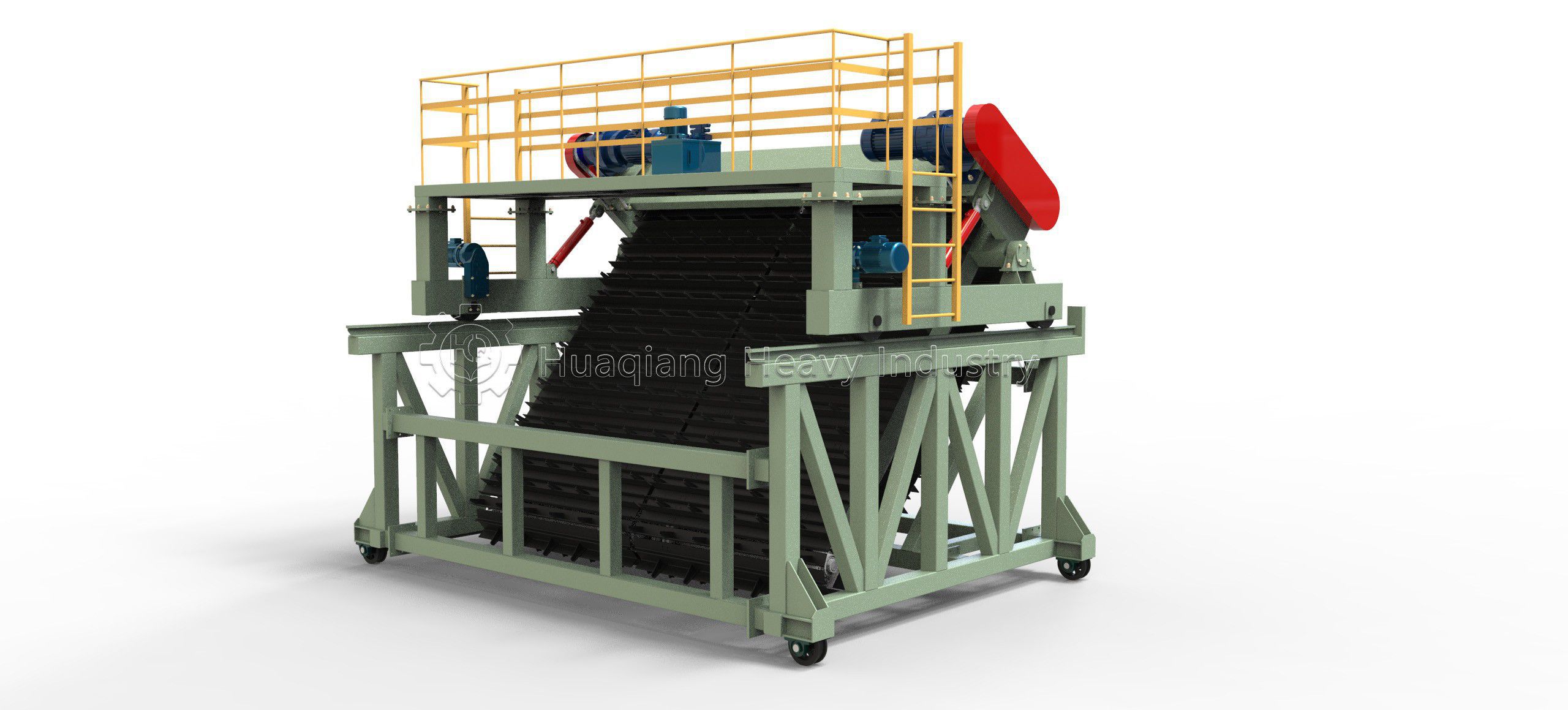
Chain-type compost turner
Chain compost turners are core fermentation equipment in the fields of organic fertilizer production, livestock and poultry manure treatment, and organic waste resource utilization. Utilizing chain-drive technology as its core, the equipment integrates advantages such as deep turning and uniform aeration, wear and adhesion resistance, energy and labor efficiency, and flexible adaptability, enabling comprehensive material turning and oxygenation. Featuring a design with multiple linked chain plates, the machine offers a turning width of 3–6 meters and a depth of 1.5–2.2 meters, ensuring thorough turning across the entire width and depth of the fermentation trench without leaving any dead zones. Thanks to its deep turning capability, wide operating range, high material mixing uniformity, and low energy consumption, it has become essential equipment for the large-scale, harmless treatment of manure and the standardized, mass production of organic fertilizer.
In terms of the design of key components, the chain compost turner has been deeply reinforced to address the characteristics of organic fertilizer raw materials, such as high moisture content, high viscosity, sand and fiber content, and strong corrosivity. The main body is constructed from high-quality carbon steel and undergoes a triple-treatment process—involving rust removal, anti-corrosion coating, and wear-resistant finishing—to effectively withstand erosion from corrosive substances such as livestock manure and humic acids.
Hardware Configuration and Component Functions
The hardware components of the chain-type compost turner primarily include:
(I) Chain-plate turning assembly: The core working component of the equipment, comprising chain plates, turning support plates, and high-strength, wear-resistant tines (curved blades). The turning support plates are fitted with 390 replaceable, wear-resistant curved blades.
(II) Frame assembly: Constructed from welded high-quality channel steel, ensuring sturdiness and stability. It undergoes a three-stage treatment process: rust removal, anti-corrosion coating, and wear-resistant finishing.
(III) Travel assembly: Includes longitudinal travel mechanisms and transverse shifting mechanisms. Equipped with a transfer carriage for lane switching, enabling multi-lane operations.
(IV) Power transmission assembly: Comprises the motor, gearbox, and chain drive mechanism.
(V) Hydraulic assembly: Includes the hydraulic lifting system.
(VI) Control assembly: Includes the control cabinet and remote control unit.
Comparative advantages compared with other turning equipment
Compared to other turning equipment, the chain-type compost turner offers significant advantages:
Compared to rake-style turners: It achieves a turning width of 3–6 meters and a depth of 1.5–2.2 meters, ensuring thorough turning across the entire width and depth of the fermentation trench with no dead zones; material mixing uniformity exceeds 90%; and the fermentation cycle is reduced from 15–20 days to 10–12 days.
Compared to basic turning equipment: It offers stable operation with a failure rate below 0.2%; the chain plates utilize wear-resistant, anti-corrosive materials, reducing material adhesion by 80%; maintenance costs are cut by 45%; and a single unit can process 10–50 tons per hour.
Compared to large-scale turning production lines: It features a compact structure and high adaptability; it can be paired with a transfer carriage to enable cyclic operations across multiple trenches; and it requires no complex civil engineering for installation.
Summary of core advantages: The chain-type compost turner excels in turning depth (1.5–2.2 meters), turning range (3–6 meters), material mixing uniformity (over 90%), operational stability (failure rate under 0.2%), energy efficiency (energy consumption reduced by over 30%), and maintenance costs (reduced by 45%).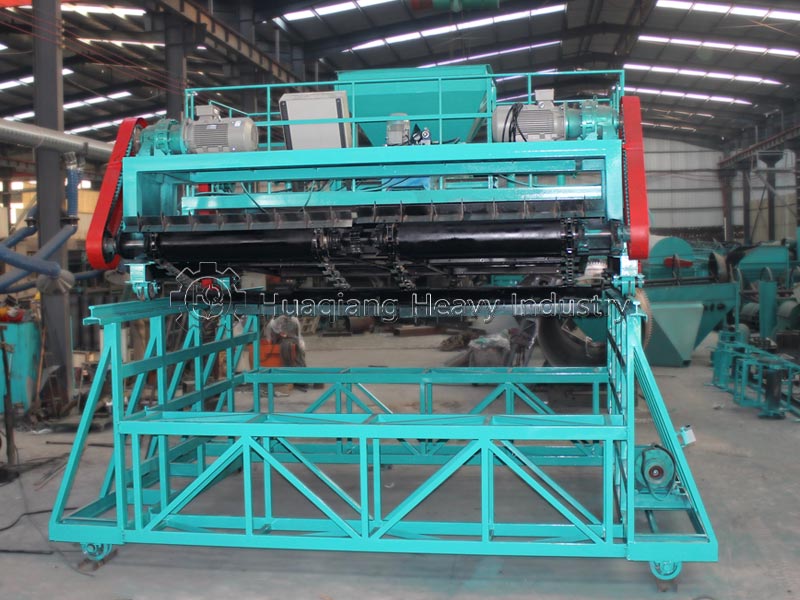
Application Landscape and Audience Distribution
The application scenarios and audience groups of chain compost turners are very wide:
Large and medium-sized organic fertilizer production enterprises: use livestock and poultry manure, straw, etc. to produce commercial organic fertilizer.
Large-scale farms: processing chicken manure, pig manure, cow manure and other breeding waste.
Municipal sludge treatment plant: aerobic composting of municipal sludge.
Agricultural waste treatment center: processing crop straw, garden waste, etc.
Industrial organic waste treatment enterprises: processing distiller's grains, medicinal residues, biogas residues, cassava residues, furfural residues, humic acid, peels, etc.
Operational Mechanism and Fermentation Principles
The operating mechanism of the chain-type compost turner is based on a synergistic "three-in-one" approach: chain-plate drive, high-level aeration/dispersion, and deep-layer turning. The equipment travels smoothly along rails on the fermentation tank; a hydraulic motor drives the continuous circulation of the chain plates, which constantly scoop up material from the tank and transport it to the rear for redistribution. The material remains on the plates for an extended period and undergoes high-level dispersion, ensuring thorough contact with the air. A hydraulic system precisely controls the lifting height of the turning assembly, allowing for flexible adaptation to varying pile heights and material conditions across different fermentation stages. The entire process enables automated, continuous operations encompassing turning, oxygenation, and material displacement.
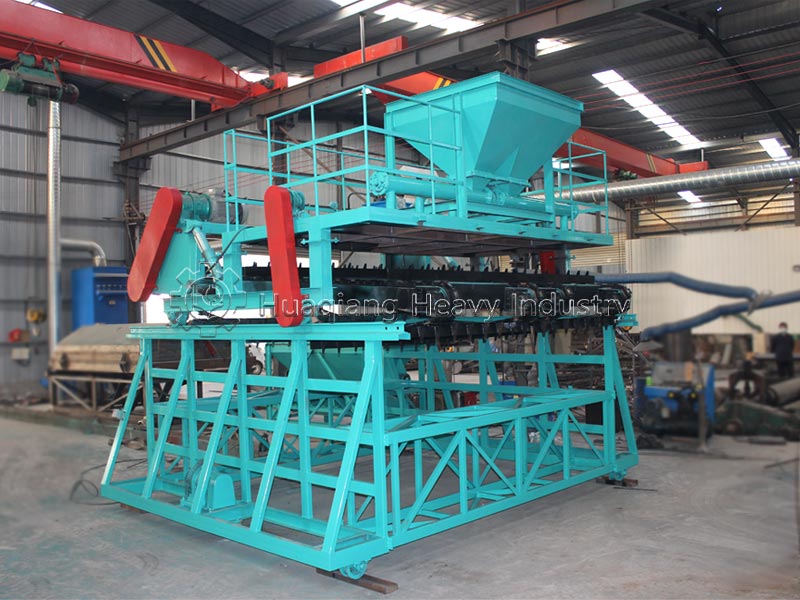
Coordination between the fermentation process and the production line
The chain-type compost turner plays a pivotal role in the aerobic fermentation process. The front section of the machine can be equipped with an ingredient mixing system. Operating by moving back and forth within the fermentation tank, the machine utilizes chain plates to perform deep-layer turning, bringing bottom material to the surface while burying surface material deep within. The material moves continuously and incrementally backward at regular intervals, establishing a continuous aerobic fermentation process. The rear section of the system can be configured with equipment for crushing, granulation, drying, cooling, screening, and packaging. Its consistent turning performance ensures the supply of high-quality feedstock—characterized by optimal moisture content and uniform particle size—for subsequent crushing and granulation stages.
Industrial value and development significance
The chain-type compost turner holds significant strategic importance for the development of the organic fertilizer industry. Environmental Value: It effectively prevents the generation of harmful and malodorous gases—such as hydrogen sulfide and ammonia—during the fermentation process. Operating within a fully enclosed trough and featuring an optional aeration system, the machine allows for the centralized treatment of exhaust gases. Resource Recovery Value: It transforms organic waste, such as livestock manure and municipal sludge, into high-quality organic fertilizer. Economic Benefits: It replaces the need for 20–30 manual laborers, resulting in substantial savings on labor costs, while reducing energy consumption by over 30% compared to traditional models. Technical Value: Its chain-drive structure provides stable and reliable technical support for the resource utilization of organic waste.
With its comprehensive advantages—including deep turning and uniform aeration, wear and adhesion resistance, energy and labor efficiency, and flexible adaptability—the chain-type compost turner has become core equipment for the large-scale, harmless treatment of manure and the standardized mass production of organic fertilizer. For enterprises facing pressure from environmental inspections and aiming to produce high-quality organic fertilizer, investing in a high-performance chain-type compost turner serves not only as a guarantee of regulatory compliance but also as a powerful tool for reducing costs and increasing efficiency.