
The core of an NPK blending fertilizer production line revolves around five key processes: raw material pretreatment, precise batching, uniform blending, finished product processing, and packaging and warehousing. The entire process achieves automated quantity control and homogeneous mixing, ensuring precise nutrient ratios and uniform particle size in the blended fertilizer. The specific processes are as follows:
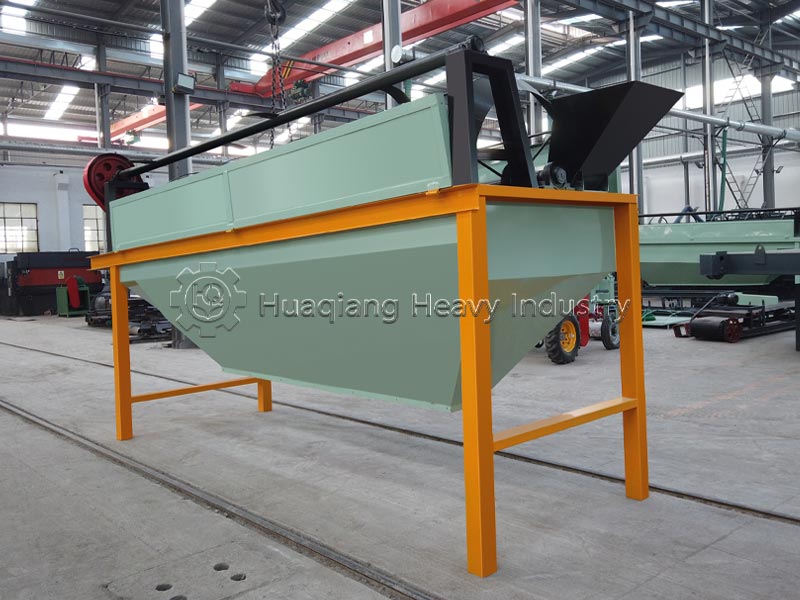
1. Raw material pretreatment: Nitrogen, phosphorus, and potassium fertilizers, as well as fillers and additives, are screened by a fertilizer screening machine to remove lumps and impurities. Large particles are then crushed to the standard particle size by a crusher. At the same time, the raw materials are stored in a moisture-proof manner to avoid moisture absorption that could affect the accuracy of the formulation.
2. Precise Automatic Batching: According to the formula requirements, each raw material is precisely measured using a quantitative batching scale and conveyed to the mixer by belt or auger. The batching process is equipped with an intelligent control system to control the batching error within ±0.5%, ensuring accurate nutrient ratios.
3. Homogeneous and Efficient Blending: The prepared raw materials enter a horizontal ribbon or twin-shaft paddle mixer, where high-speed stirring achieves homogeneous blending of multiple materials without dead zones. The mixing time is adjusted according to the characteristics of the raw materials to ensure uniform nutrient distribution throughout the finished product, preventing stratification.
4. Finished Product Screening and Cooling: The blended finished product is graded by a vibrating screen to remove unqualified large particles and fine powder, which are then returned for reprocessing. If the raw material temperature is high, it is cooled by a cooler to prevent subsequent moisture absorption and clumping, improving storage stability.
5. Quantitative Packaging and Warehousing: Qualified finished products are conveyed to a fully automated packaging line via a sealed conveyor belt, where quantitative weighing, packaging, and labeling are completed. The finished products are then transported by conveyor equipment to the finished product warehouse for moisture-proof storage, minimizing exposure throughout the process and ensuring product quality.