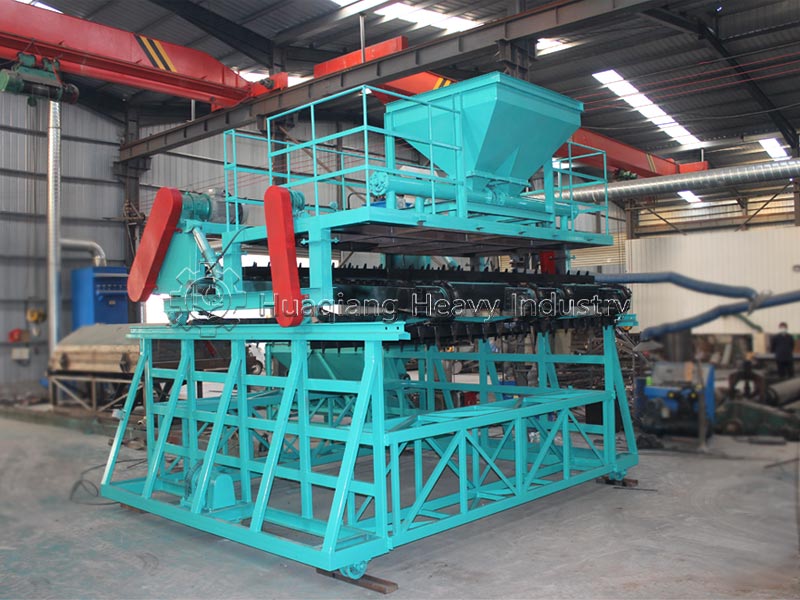

Common faults in the walking drive system of chain compost turning machine include deviation from the track, weak driving power, abnormal noises or jamming, and sudden shutdowns (tripping). Troubleshooting should adhere to the principle of first cutting off power for safety, followed by a segmented inspection process. First, completely cut off power to the machine and affix a “Do Not Operate” tag; then, clear any accumulated material or debris from the tracks and wheels. Inspect the walking motor and reducer for signs of oil leakage or overheating, and tighten the anchor bolts securing their bases.
If the machine exhibits weak driving power or experiences frequent overload tripping, the issue is typically caused by reducer wear, a loose coupling, or uneven chain tension. Inspect the elastic buffer elements within the coupling for cracks or signs of aging; if necessary, realign the coaxiality and tighten the coupling securely. Check the tension of the drive chains, ensuring that the chains on both sides are tensioned synchronously to prevent unilateral overloading and wear. Additionally, check for motor phase loss or voltage instability issues, and repair any poor electrical connections in the wiring.
If the machine deviates from the track or experiences intermittent jamming on one side, focus the inspection on the parallelism of the four wheels’ gauge. Promptly clear any jammed debris and replace walking wheels that show signs of excessive wear or seizing. Adjust the drive speeds on both sides to ensure synchronization, and correct the horizontal alignment and straightness of the tracks to prevent rail gnawing, side friction, and associated abnormal noises. If bearings overheat or emit abnormal noises, immediately shut down the machine and replenish the grease; if the bearings are severely worn or corroded, replace them. If seals show signs of aging, replace them simultaneously to prevent the ingress of moisture and dust.
For long-term prevention, it is essential to consistently clear the tracks and remove accumulated material before each shift. Avoid heavy-load “hard starts” (starting under full load) and frequent direction reversals. Conduct regular maintenance on the reducer—including changing the gear oil—and lubricate and rust-proof the drive chains. During the rainy season, implement appropriate moisture-proofing measures for the motor and electrical control components. After repairing a fault, perform a no-load test run first to confirm smooth movement, the absence of abnormal noises, and normal current levels before resuming actual composting operations with material; this practice helps extend the service life of the transmission components.