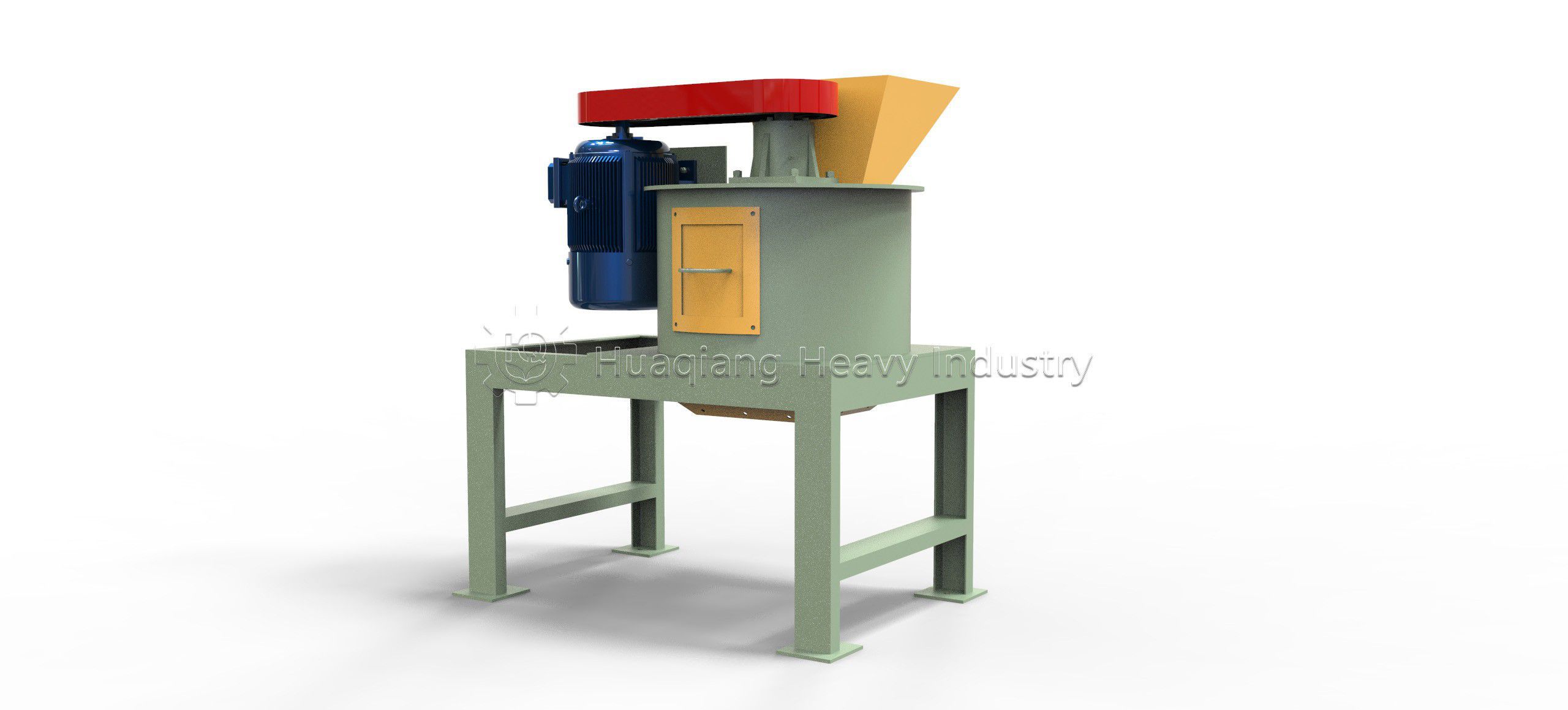
The chain crusher is one of the most widely used crushing devices in fields such as fertilizer production, organic waste treatment, and chemical processing. Utilizing high-speed rotating chains to pulverize materials through impact, the equipment offers a combination of advantages: simple structure, low cost, excellent crushing performance, and low maintenance expenses. Thanks to benefits such as uniform crushing, resistance to material buildup on walls, ease of cleaning, and suitability for continuous production, it has become a core piece of equipment for crushing medium-hardness lump materials in industries including organic and compound fertilizers, chemicals, construction materials, and mining.
Regarding critical design features, the chain crusher is specifically optimized to handle materials—such as fertilizers and chemical feedstocks—that are characterized by high moisture content, high acidity, and a tendency to clump. The crushing chains utilize a composite design featuring a carburized steel core and a wear-resistant carbide layer, effectively extending their service life. The interior of the machine is lined with rubber or polypropylene plates to prevent material adhesion and casing wear, while a quick-opening access door facilitates routine cleaning and maintenance. Horizontal models employ a dual-rotor, dual-motor drive system to ensure continuous production. Overall, the chain crusher provides an efficient and reliable material-crushing solution across various industries, characterized by low investment and operating costs.
The hardware components of the chain crusher primarily include:
(I) Rotor assembly: The core working component of the equipment, comprising the main shaft, rotor discs, and the chains and chain heads mounted on the discs.
(II) Casing assembly: Comprising the casing, internal rubber lining plates, and a quick-opening inspection door.
(III) Drive assembly: Comprising the motor, V-belts, bearings, and vibration dampers.
(IV) Feed and discharge assembly: Comprising the feed hopper and the discharge outlet.
(V) Base assembly: Comprising the structural steel base and anchor bolts.
Chain crushers have a wide range of applications and serve diverse industries:
Organic fertilizer manufacturers: Crushing lumpy organic raw materials—such as livestock manure (before or after fermentation) and industrial sludge.
Compound fertilizer manufacturers: Crushing large fertilizer chunks into granules of the appropriate size.
Chemical enterprises: Crushing chemical fertilizer raw materials (e.g., ammonium bicarbonate, ammonium chloride, monoammonium phosphate) and other chemical raw materials (e.g., soda ash, dry clay).
Building materials companies: Crushing non-metallic minerals such as limestone and dolomite.
Mining enterprises: Crushing ores and slag.
Briquette processing plants: Crushing raw materials for briquettes.
Feed and biomass processing enterprises: Crushing coarse-fiber oilseed cake/meal chunks.
Chain crushers are capable of processing a wide range of medium-hardness lump materials. Organic materials: animal manure, household waste, withered branches and leaves, biogas residue, and spent mushroom substrate. Fertilizers: compound fertilizers, organic fertilizers, potassium fertilizers, phosphate fertilizers, and ordinary superphosphate. Chemical products: ammonium bicarbonate, ammonium chloride, monoammonium phosphate, soda ash, and dry clay. Minerals: limestone, dolomite, shale, and argillaceous limestone. Processing capacities range from 1 t/h to 15 t/h.
The operating mechanism of the chain crusher relies on a synergistic crushing mode combining high-speed chain impacts with inter-material collisions. An electric motor drives the rotor to rotate at high speed via V-belts, causing the chains mounted on the rotor to move at a linear velocity of 28–78 m/s. Material fed into the crushing chamber is pulverized by the impact of the rapidly rotating chains and by collisions between the material particles themselves. Centrifugal force throws the material against the inner wall of the chamber, resulting in further breakage upon impact. In horizontal dual-rotor models, material struck by one rotor is propelled toward the other, where it undergoes additional impact. After undergoing repeated crushing impacts, the material is discharged through the outlet, completing the process.
Chain crushers play a pivotal role in the production of organic and compound fertilizers. The machine's intake section accepts fermented material clumps or large raw material pieces, subjecting them to efficient impact crushing; once the crushed material reaches the specified particle size, it proceeds to subsequent stages such as proportioning, mixing, and granulation. In organic fertilizer production lines, the chain crusher is typically positioned after the fermentation discharge stage and before proportioning and mixing. In compound fertilizer production lines, it is usually located in the raw material pre-treatment section. The equipment supports continuous 24-hour operation and integrates seamlessly with upstream and downstream machinery to form a complete automated production line.
Call us directly, submit a sample or email us!