

Call us
+86-18703630069
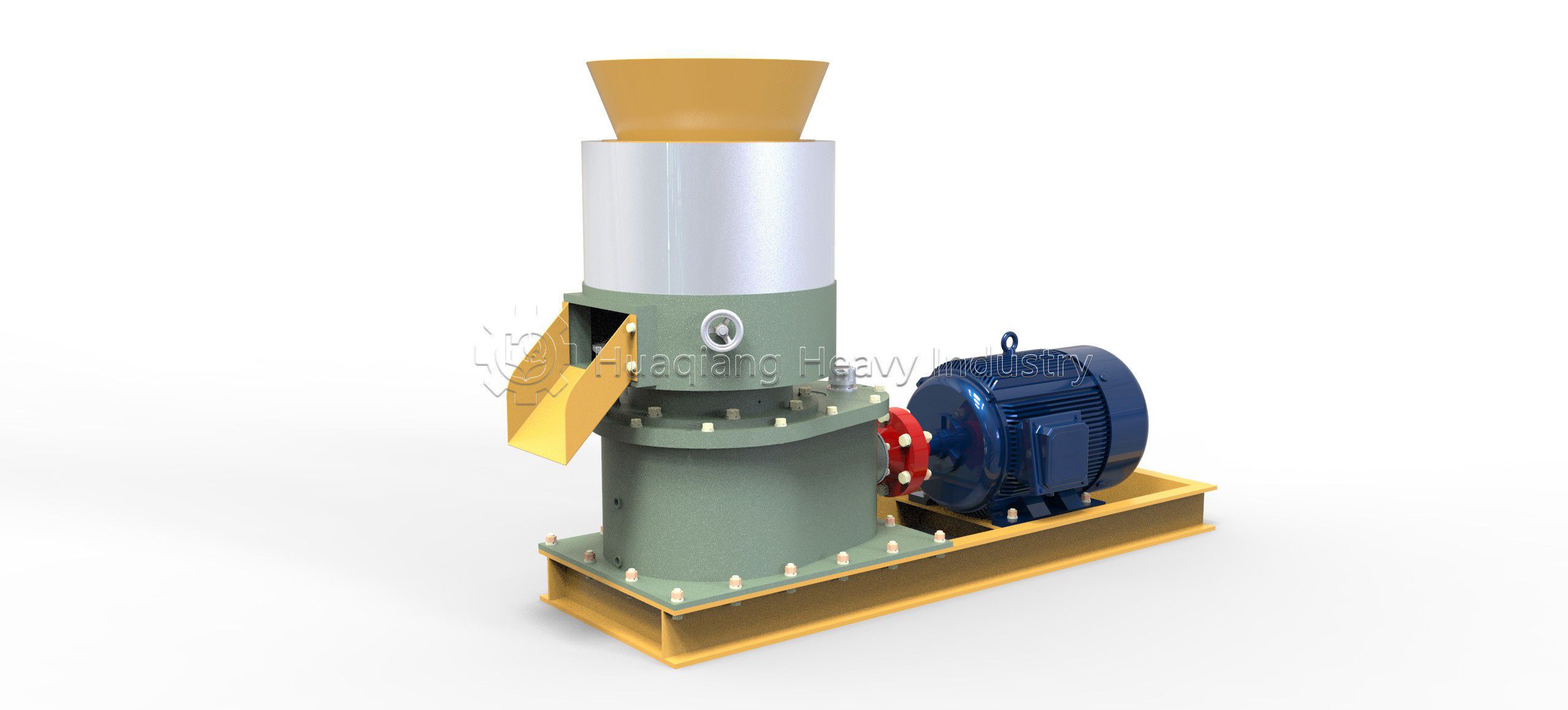
Flat Die Pelleting Machine
The flat die pellet mill is a dry forming equipment used for coarse fiber pelleting, primarily applied to the production of feed pellets and wood pellets. This equipment employs a differential gear and universal joint drive, featuring dry inlet and dry outlet operation, eliminating the need for drying. The flat die pellet mill can produce high-fat and high-molasses products. The pressure roller bearings have durable lubrication and special seals to prevent lubricant contamination of the material during pelleting. The equipment is available with flat dies of various apertures and compression ratios between Φ12-30mm. With its low energy consumption, high output, and ease of operation, the flat die pellet mill has become the ideal equipment of choice for (bio)organic fertilizer production enterprises.
Hardware configuration and component functions
The hardware components of a flat die pellet mill mainly include:
(I) Flat Die: The core component determining pellet size. Made of high-quality alloy steel with high hardness. Available in various die diameters from Φ1.5-Φ20mm (or Φ2-Φ8mm, etc.).
(II) Pressure Roller: The key component applying extrusion pressure. Adopts a conical design, large body, wide groove, and is pressure-resistant and wear-resistant. Multiple pressure rollers are evenly distributed for smooth operation.
(III) Transmission System: Employs a two-stage transmission system using belts and worm gears. Some models use high-precision gear transmission and are equipped with a hydraulic automatic circulating oil supply system.
(IV) Pressure Adjustment System: Employs a screw-centered pressure adjustment mechanism, allowing for adjustable die clearance.
(V) Cutting and Discharge System: Includes a cutter, sweeping plate, and discharge port.

Competitive comparison and unique advantages
Flat die pellet mills offer significant advantages over other pelletizing equipment:
Compared to ring die pellet mills: Flat die pellet mills allow for arbitrarily larger pressure rollers, while ring die pellet mills, limited by die diameter, cannot enlarge their rollers, resulting in smaller bearing chambers and insufficient pressure resistance.
Compared to roller pellet mills: Flat die pellet mills have a wider range of adaptable raw materials and can process coarse fibrous materials.
Core advantages:
① Larger pressure rollers and bearings result in stronger pressure resistance;
② Temperature generated by extrusion friction is less likely to be transmitted to the bearing chamber, allowing the bearings to operate at low temperatures;
③ Pressure rollers can be repaired 2-3 times, resulting in a long service life and low production costs;
④ Multi-functional: changing the die allows for the production of various shapes such as round bars, cubes, and pellets.
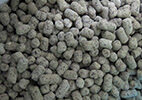
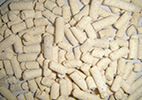
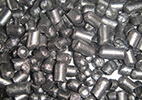
Application footprint and audience distribution
Flat die pellet mills have a wide range of applications and target audiences:
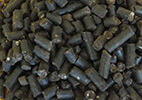
Organic fertilizer production enterprises: using livestock and poultry manure, straw, etc., to produce (bio) organic fertilizer and organic-inorganic compound fertilizer pellets.
Feed processing enterprises and farms: using corn, soybean meal, straw, etc., to produce pelleted feed.
Biomass energy enterprises: using sawdust, straw, etc., to produce biomass fuel pellets.
Waste treatment enterprises: processing municipal solid waste, waste plastics, rubber, and other waste.
Pharmaceutical, tobacco, and other industries: re-granulation of organic waste.
Material range and capacity overview
Flat die pellet mills are highly adaptable to a wide range of raw materials.
Coarse fiber materials: sawdust, rice husks, cotton stalks, cottonseed hulls, weeds, crop straw. Feed materials: corn flour, soybean meal, wheat bran, grass meal. Fertilizer materials: bio-fertilizer, organic fertilizer, compound fertilizer.
Waste materials: household waste, waste plastics, factory waste. Production capacity varies from 20-40 kg/h for the SKJ120 model to 4.5-9 t/h (organic fertilizer) for the PM1000 model.

Operating mechanism and granulation principle
The flat die pellet mill operates based on die roller extrusion molding. Material enters from the feed hopper and is driven by the main motor, which, through a reducer and transmission mechanism, moves the pressure roller in a circular motion on the flat die. Under gravity, the material is evenly spread on the die. The pressure roller continuously rolls over the material layer, squeezing it into the die holes. After being compacted and shaped within the die holes, the material is extruded and cut into pellets by a cutter. The main shaft speed is approximately 60 rpm, and the pressure roller linear speed is approximately 2.5 m/s. This lower linear speed reduces noise and wear on components during operation.
Fermentation process and production line coordination
The flat die granulator is a core component in organic fertilizer production. Upstream is the fermentation system—organic raw materials such as livestock and poultry manure undergo aerobic fermentation and secondary aging. The thoroughly fermented and decomposed material (moisture content 20%-40%) can directly enter the flat die granulator. The equipment uses a low-temperature extrusion process, eliminating the need for drying and crushing the raw materials before granulation. The granulated cylindrical particles can be connected to polishing equipment to roll the cylindrical particles into balls in one pass. The front section of the equipment can be equipped with fermentation turning, crushing, and batching mixing systems; the rear section can be equipped with cooling, screening, and packaging equipment, forming a complete production line.
Models and parameters of Flat Die Pelleting Machine
| Organic Fertilizer Flat-die Pellet Machine | ||||
| Model | KP-210 | KP-260 | KP-400 | KP-500 |
| Capacity (t/h) | 0.2-0.3 | 0.4-0.5 | 1-1.2 | 2-5 |
| Pelleting Rate (%) | >95% | >95% | >95% | >95% |
| Rotation Speed(r/min) | 370 | 260 | 260 | 125 |
| Power(Kw) | 7.5 | 11 | 30 | 55 |