

Call us
+86-18703630069

New Type Organic Fertilizer Granulator
The new organic fertilizer granulator is an advanced piece of equipment designed specifically for granulating organic materials. It primarily processes fermented organic matter such as livestock and poultry manure, composted fertilizers, green manure, seaweed fertilizer, oil-cake fertilizer, peat, mixed soil-based fertilizers, industrial/agricultural waste, and microbial fertilizers. The equipment can directly process raw materials with a moisture content of 20%–40%, eliminating the need for separate drying or pulverizing steps.
Breaking away from conventional granulation methods, this machine forms solid granules through the mutual interlocking of material micro-particles, allowing for direct batching and granulation. It produces spherical granules with a qualified granulation rate of 80%–90%; the granules exhibit higher compressive strength than those produced by traditional disc or rotary drum granulators, while the rate of oversized granules remains below 15%. Granule uniformity can be adjusted via a variable-speed control function, and the granulation process requires no added binders. The equipment is compatible with the processing of fermented organic fertilizer derived from municipal solid waste and is suitable for organic fertilizer production and the resource utilization of agricultural waste.
This equipment is particularly well-suited for granulating lightweight, fine-powder materials. The finer the basic particles of the material, the higher the sphericity and the better the quality of the resulting granules.
Structural Composition
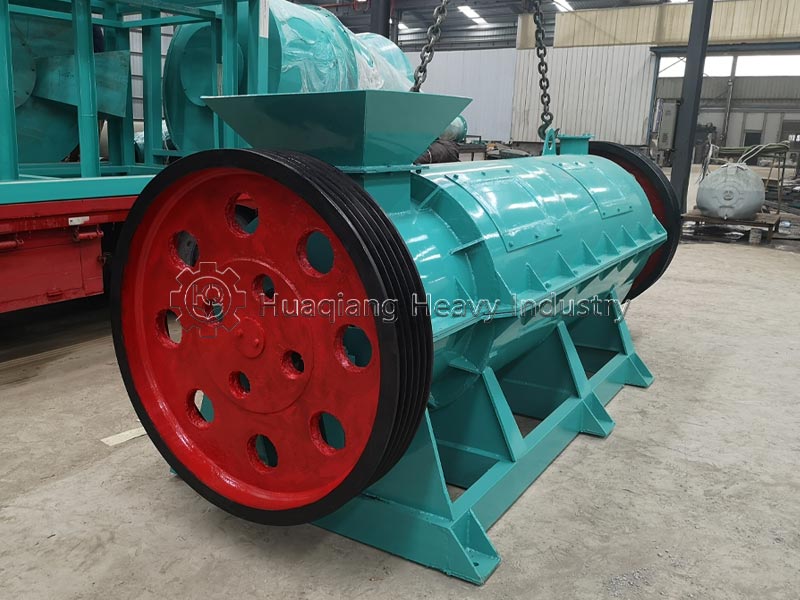
The structural design of the new organic fertilizer granulator is closely aligned with the requirements of the granulation process:
Machine Body: Comprising the equipment's overall framework and the granulation chamber. It is constructed from welded, heavy-gauge steel plate, providing an internal environment for material granulation. The structure ensures the containment and orderly flow of materials during the granulation process.
Granulation Rotor: The core component that executes the granulation process. The rotor is fitted with specially arranged stirring teeth (granulation teeth) that exert mechanical agitation and aerodynamic forces on the material during high-speed rotation. The arrangement, angle, and density of these teeth directly influence granulation efficiency and granule quality.
Drive System: Composed of a motor, a gearbox, a drive shaft, and other components. The equipment features variable speed control, allowing the granule size to be adjusted by regulating the main shaft speed.
Feeding and Discharge System: The feed inlet is located at one end of the machine body, and the discharge outlet at the other; materials are discharged after granulation is completed inside the machine. This continuous "inlet-at-one-end, outlet-at-the-other" design ensures uninterrupted production line operation.

Principles of the Granulation Process
The granulation process of this new type of organic fertilizer granulator employs a continuous wet-process mechanical agitation technique. Its core principle relies on high-speed mechanical agitation and the resulting aerodynamic forces to continuously mix, granulate, spheroidize, and densify fine powdery materials within the machine.
Mixing Stage: Upon entering the machine through the inlet, the material is thoroughly mixed with the existing contents under the action of the granulation rotor, ensuring a uniform distribution of all components.
Granulation Stage: Driven by the combined effects of high-speed agitation and aerodynamic forces, fine powder particles collide and aggregate to form tiny granule nuclei. Finer raw material particles result in higher sphericity and superior granule quality.
Spheroidization Stage: The granule nuclei continue to tumble within the machine, progressively adsorbing surrounding fine powder, growing in size, and becoming increasingly spherical. Granule diameter can be adjusted by controlling the material feed rate and the main shaft rotation speed; lower feed rates and higher speeds yield smaller granules, and vice versa.
Densification Stage: Under continuous mechanical action, the granules are compacted, their internal structures become denser, and their structural strength increases. The finished granules are discharged from the opposite end of the machine.
This process leverages the ability of organic particles to interlock and grow under specific forces, eliminating the need for binders during granulation. Fermented organic materials do not require drying, and the system accommodates a wide range of raw material moisture content (20%–40%).
Factors Affecting Granulation Quality
1. Material Fineness: The finer the primary particles of the material and the higher their sphericity, the better the granulation quality. Generally, the material particle size prior to granulation should be finer than 200 mesh. Insufficient fineness leads to poor particle uniformity.
2. Material Moisture Content: Excessively low moisture results in insufficient material cohesiveness, preventing agglomeration into granules; conversely, excessively high moisture causes the material to stick to the mold and form clumps. This new type of organic fertilizer granulator accommodates a wide moisture range (20%–40%). Particle size is directly proportional to the material's moisture content.
3. Material Cohesiveness and Fiber Content: Raw materials vary significantly in cohesiveness and fiber content, requiring targeted adjustments to process parameters. Pure straw-based organic fertilizer has poor cohesiveness and tends to produce loose, crumbling granules, whereas pure pig manure-based fertilizer is highly cohesive and prone to sticking to the equipment walls. Incompletely pulverized fibers can pierce the granules, causing them to lose structural integrity.
4. Equipment Parameters: Main shaft rotation speed directly affects particle size—higher speeds result in smaller particles. The clearance between the cylinder body and the stirring paddles should be maintained at 3–6 mm; excessive clearance prevents successful granulation.
5. Feed Uniformity: Material feeding must be consistent; fluctuations in feed rate will adversely affect granulation performance.
Key Points for Quality Control
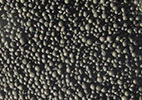
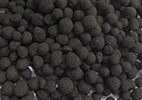
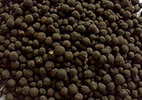
Granule Appearance: Finished granules should be spherical, with a sphericity of ≥0.7. The surface should be smooth and dense, free from visible cracks or burrs.
Granule Size: The diameter of finished granules generally ranges from 0.3 to 5 mm. Granule size can be controlled according to market demand by adjusting the material mixing ratio and the main shaft rotation speed.
Granule Strength: The compressive strength of the organic fertilizer granules should exceed that of products made using traditional disc or drum granulators. The granules are robust, allowing for immediate screening after granulation without breakage.
Granulation Rate: The rate of qualified granules should reach 80%–90% or higher. The proportion of oversized granules should be less than 15%. A granulation rate of ≥90% is considered excellent.
Organic Matter Content: Organic matter content can reach up to 100%, enabling the granulation of pure organic material.
Models and Specifications of New Organic Fertilizer Granulators
| New Type Organic Fertilizer Granulator Machine | ||||
| Model | Capacity (t/h) | Output Granules Size (mm) | Motor Power (Kw) | Outside Dimension (mm) |
| YSL-60 | 1-2 | 1-5 | 37 | 3700*1800*1050 |
| YSL-80 | 2-4 | 1-5 | 45 | 3700*2100*1300 |
| YSL-100 | 3-5 | 1-5 | 55 | 3750*2500*1500 |
| YSL-120 | 4-7 | 1-5 | 75 | 4900*2950*1900 |
| YSL-150 | 5-8 | 1-5 | 90 | 5000*3300*2150 |