

Call us
+86-18703630069
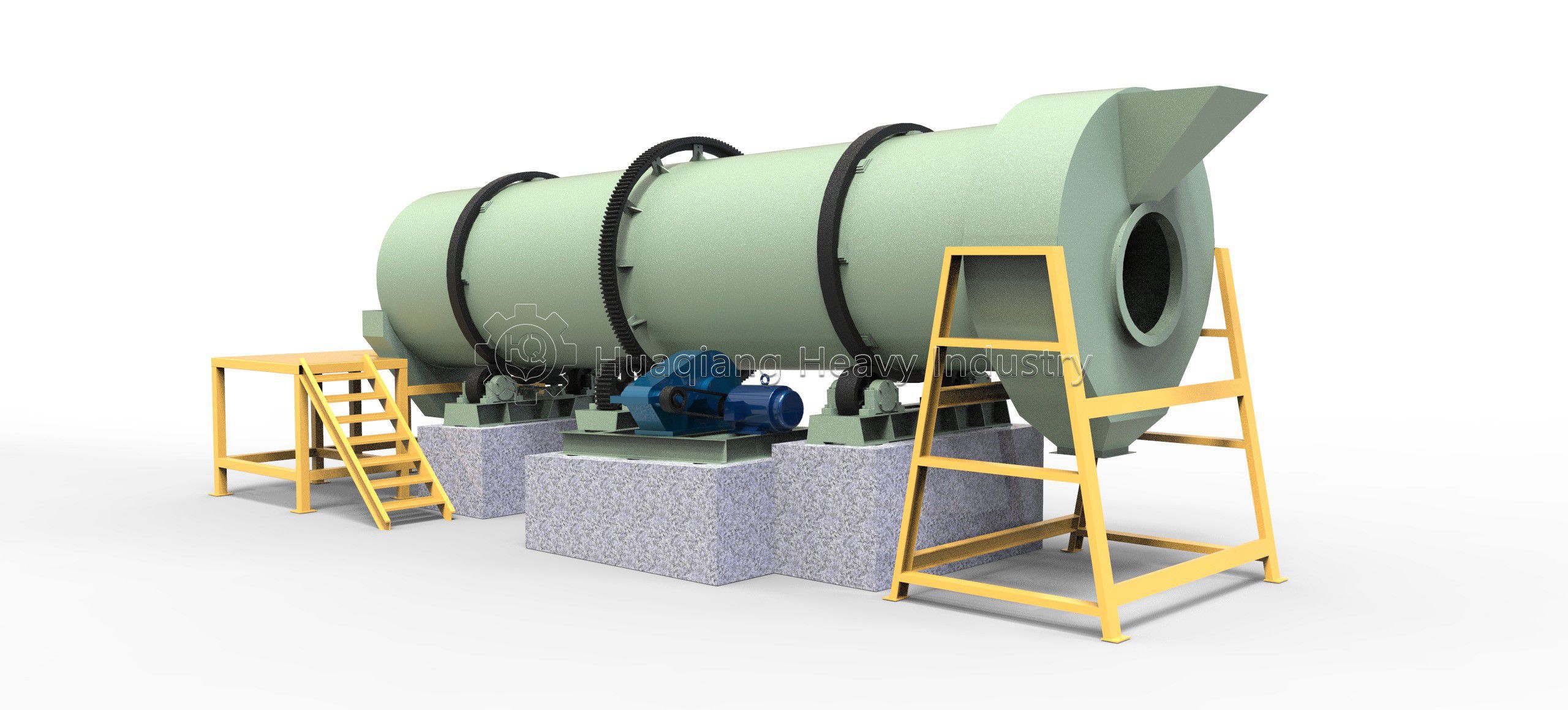
Rotary Drum Granulator
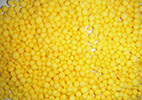
Rotary drum granulators are key equipment in the metallurgical, chemical, and compound fertilizer industries. This equipment employs a wet granulation process, using a rotating drum to agglomerate materials into spheres under liquid conditions. The equipment features high sphere strength, good appearance quality, high output, low power consumption, and low maintenance costs. Rotary drum granulators are suitable for both cold and hot granulation, meeting the large-scale production needs of high, medium, and low concentration compound fertilizers. They are also widely used in organic fertilizer production and are crucial equipment for the resource utilization of livestock waste.
Hardware configuration and component functions
The rotary drum granulator is designed for robustness, durability, and ease of maintenance:
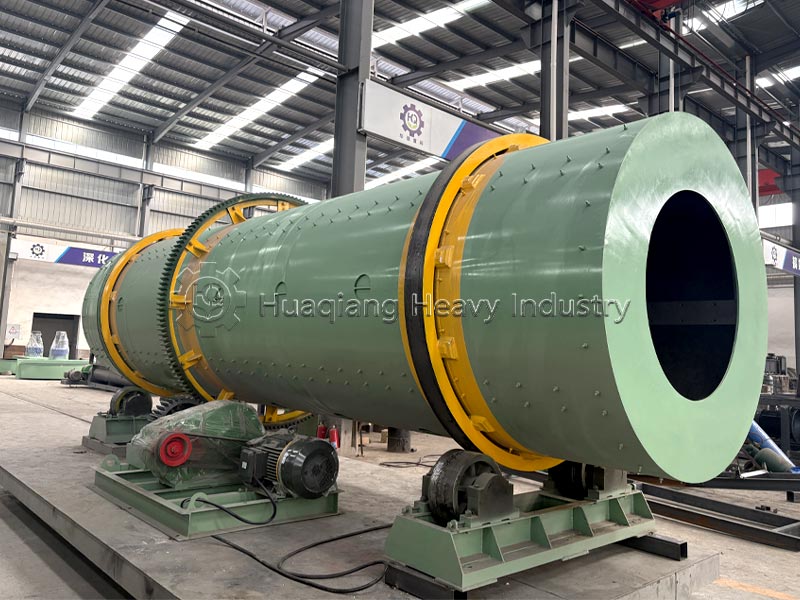
(I) Drum Assembly: Composed of the drum body, roller ring, gear ring, and inner lining. The drum body is welded from medium carbon steel plates; the inner lining is made of rubber or stainless steel.
(II) Support Roller and Thrust Roller Device: Composed of support rollers, support roller shafts, bearing seats, etc. The support rollers support the weight of the drum body; the thrust rollers prevent axial movement of the drum body.
(III) Drive Assembly: Includes a motor, reducer, pinion gear, and large gear ring. The large gear ring is fixed to the drum body.
(IV) Frame Assembly: Welded from channel steel, with adjustable inclination.
(V) Auxiliary Devices: Includes a spiral feeding device, scraper device, rake device, and water distributor device.
Competitive comparison and unique advantages
Rotary drum pelletizers offer significant advantages for large-scale production. Compared to disc pelletizers: rotary drum pelletizers have a larger throughput, making them more suitable for large-scale continuous production; they are also more automated and can operate continuously for 24 hours. Compared to extrusion pelletizers: rotary drum pelletizers produce rounder, stronger pellets; they can handle materials with higher moisture content.
Compared to high-tower pelletizers: rotary drum pelletizers require lower investment and occupy less space. Key advantages:
1. High output, with a single unit capable of producing 5-50 tons per hour;
2. High pelletizing rate, exceeding 85%;
3. Low energy consumption, reducing energy consumption by 10%-15% compared to traditional equipment;
4. Wide adaptability, capable of handling a variety of materials.
Application footprint and audience distribution
The demand for rotary drum granulators spans multiple industries:
Compound fertilizer manufacturers: Producing high, medium, and low concentration compound fertilizers and blended fertilizers using nitrogen, phosphorus, and potassium base fertilizers. This is the primary customer group for rotary drum granulators.
Organic fertilizer manufacturers: Producing commercial organic fertilizers and bio-organic fertilizers using livestock manure, straw, sludge, and other organic waste.
Chemical companies: Granulating powdered chemical products such as laundry detergent and catalysts.
Metallurgical and building materials companies: Pelletizing mineral powders, slag, etc.
Solid waste treatment and environmental protection projects: Resource utilization of urban sludge, kitchen waste, and other waste.
Large-scale agricultural production bases: Building their own organic fertilizer production lines to achieve crop-livestock recycling.
Material range and capacity overview
The rotary drum granulator has a wide range of raw material adaptability. Organic materials include: well-rotted livestock and poultry manure (chicken, pig, cow, sheep manure), straw waste, edible mushroom residue, distiller's grains, medicinal residue, humic acid, and municipal sludge. Inorganic materials include: urea, ammonium chloride, ammonium sulfate, ammonium bicarbonate, superphosphate, superphosphate, monoammonium phosphate, diammonium phosphate, calcium magnesium phosphate, and potassium chloride. Industrial materials include: slag, pulverized coal, and iron concentrate. Production capacity is as follows: small-scale: 5-10 tons per hour; medium-scale: 10-30 tons per hour; large-scale: 30-50 tons per hour.

Operating mechanism and granulation principle
The working principle of a rotary drum granulator is based on the "lifting-scattering-tumbling" cyclic motion of material within a rotating drum. A motor drives the drum to rotate at a low speed. Material is fed from the inlet and rises along the drum wall, then rolls down under gravity. A spraying device evenly sprays water or a binder. Through repeated rolling and collisions, the material continuously increases in size and compacts, forming rounded granules. Substandard fine powder can be returned for regranulation. In compound fertilizer production, steam or chemical reactions can be used to achieve thermal granulation; in organic fertilizer production, low-temperature granulation is used to preserve nutrient activity.
Fermentation process and production line coordination
The upstream of the rotary drum granulator is the fermentation system. Only thoroughly fermented and decomposed materials (moisture content ≤40%, no foul odor) can enter the granulation process. The front section of the equipment can be equipped with a crusher, batching machine, and mixer; the rear section can be equipped with a dryer, cooler, screening machine, coating machine, and packaging machine. The complete production line can realize fully automated production from raw materials to finished products.
Development Prospects and Industry Opportunities
As the global population grows and pressure on food security continues to increase, fertilizer consumption is rising steadily. The continuous expansion of the production capacity of compound fertilizers and organic-inorganic compound fertilizers has formed long-term demand support for fertilizer granulation production lines with drum granulators as the core. At the same time, increasingly stringent environmental protection policies have promoted the resource utilization of organic waste such as breeding manure and urban sludge, opening up a broad market space for drum granulators. The equipment itself is also developing towards large-scale, intelligent and energy-saving directions. With its comprehensive advantages of large output, low energy consumption, wide adaptability and stable operation, the drum granulator has become the core equipment with the most large-scale production value in the field of powder granulation and will play an important role in a wider range of industries in the future.
Models and parameters of rotary drum granulators
| Fertilizer Rotary Drum Granulator Machine | ||||||
| Model | Diameter(mm) | Length(mm) | Inclination(°) | Rotation Speed(r/min) | Capacity(t/h) | Motor Power(Kw) |
| ZG1.2*4.0 | 1200 | 4000 | 2.5 | 17 | 1-3 | 5.5 |
| ZG1.5*6.0 | 1500 | 6000 | 2.5 | 11.5 | 3-5 | 7.5 |
| ZG1.8*7.0 | 1800 | 7000 | 2.5 | 11.5 | 6-10 | 18.5 |
| ZG2.0*8.0 | 2000 | 8000 | 2.5 | 11 | 10-15 | 22 |
| ZG2.2*12 | 2200 | 12000 | 2.5 | 10.5 | 15-20 | 37 |