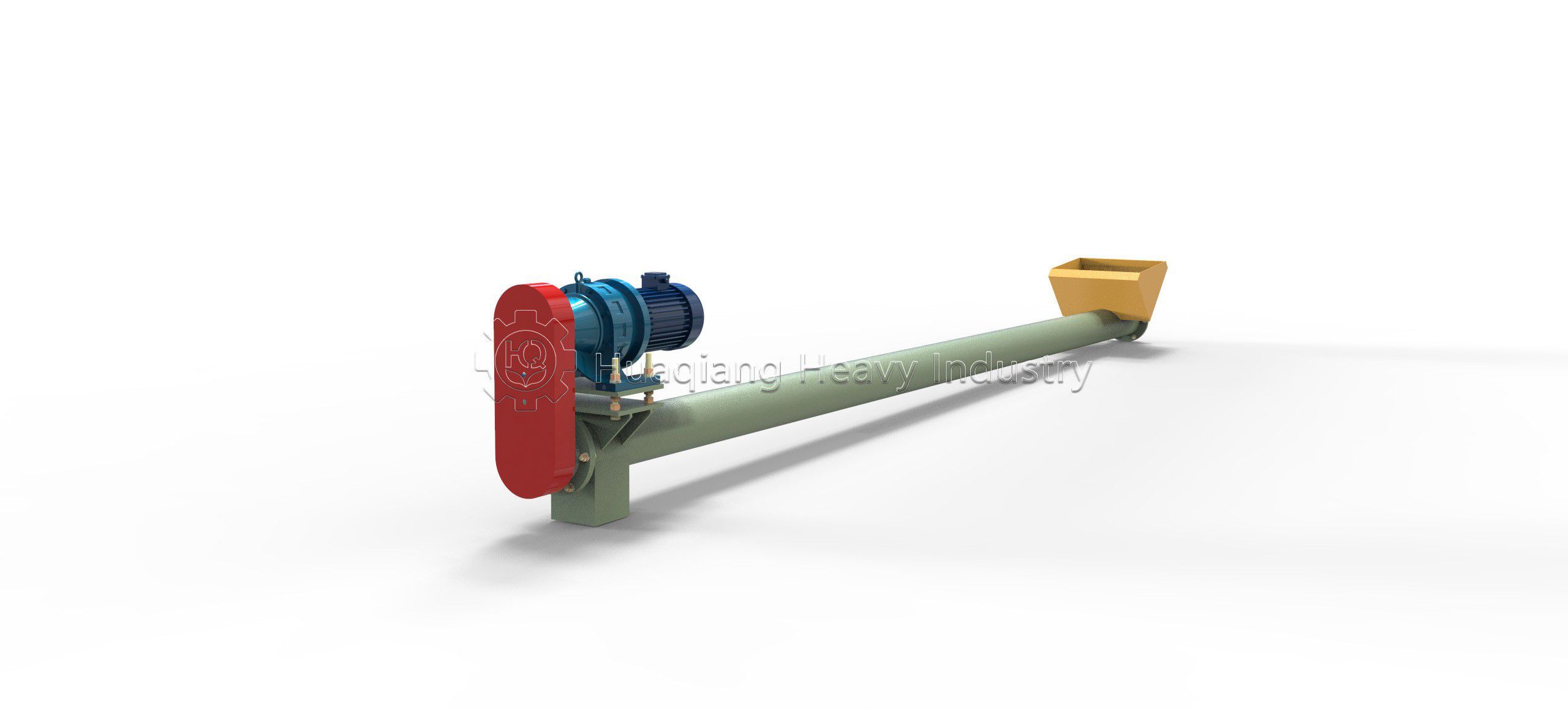
Screw conveyors are one of the most basic and widely used conveying devices for powdery and granular materials in modern industrial production. This equipment uses rotating helical blades as its working components to push materials along a fixed casing. Screw conveyors have outstanding advantages such as simple structure, good sealing, convenient operation, easy maintenance, and low cost, making them a core piece of equipment connecting various production stages and achieving closed-loop material conveying. This equipment can convey materials horizontally, inclined, and vertically.
The value of screw conveyors in industrial production lies not only in improving material conveying efficiency but also in their role in ensuring the sealed and automated operation of production lines. In the production of organic fertilizers and compound fertilizers, screw conveyors are often used as "micro-circulation" devices connecting crushers, screening machines, and granulators. In batching systems, different types of raw materials are conveyed to mixers via multiple screw conveyors. With its comprehensive advantages such as fully enclosed conveying, leak-free operation, small footprint, and strong adaptability, the screw conveyor has become an indispensable basic conveying equipment in modern industrial production.
A screw conveyor mainly consists of a screw (screw shaft and screw blades), a casing (U-shaped trough or tubular), a drive unit (motor, reducer, coupling), a bearing assembly (head bearing, tail bearing, intermediate hanger bearing), and feeding and discharging devices. The entire machine is available in carbon steel and stainless steel. Tubular screw conveyors use flange connections and are equipped with a labyrinth seal structure.
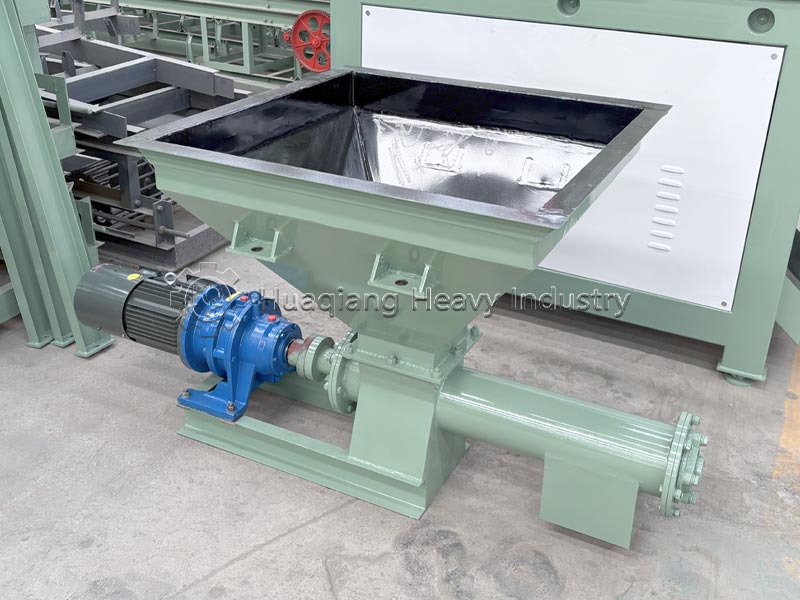
Screw conveyors have a wide range of applications. In fertilizer production, they are indispensable conveying equipment in organic fertilizer, compound fertilizer, and BB fertilizer production lines. In the chemical industry, they are used for the closed conveying of chemical powders and fertilizer raw materials. In the grain and food industry, they are used for conveying grains, cereals, and feed. In environmental protection and sludge treatment, they are used for conveying sludge, biomass, and waste. In the building materials and power industry, they are used for conveying cement, fly ash, and lime. In the pharmaceutical industry, they are used for the closed conveying of powdered materials.
Screw conveyors are suitable for conveying non-sticky, wet materials in powder, granular, and small lump form. Applications include: Fertilizers: organic fertilizer powder, compound fertilizer granules, BB fertilizer raw materials; Grains: wheat, corn, rice; Building materials: cement, lime, fly ash; Environmental protection materials: sludge, biomass, garbage. Shaftless screw conveyors are suitable for sticky and easily entangled materials.
The working principle of a screw conveyor is as follows: the rotating screw blades push the material along the fixed casing. The material's own weight and the frictional resistance of the casing prevent the material from rotating with the screw, and instead causes it to move axially.
(I) Pre-start Inspection: Check all fastening bolts on the screw conveyor for looseness. Check the lubrication condition of all bearings. Check the oil level in the reducer to meet requirements.
(II) No-load Start: Start without load. Starting with material is strictly prohibited.
(III) Operation Monitoring: Feeding should be uniform. Observe the equipment operation carefully to ensure it is normal.
(IV) Shutdown Procedure: Stop feeding first, and stop the machine only after the material has been discharged.
(I) Daily Inspection: Inspect the machine's operation daily. Check for leaks in the seals. Check for loose fasteners. Check the wear of the helical blades.
(II) Regular Maintenance: Lubricate the reducer according to the instruction manual. Change the oil after the reducer has operated for 2000 hours.
(III) Lubrication Management: Inject approximately 5 grams of lithium-based grease into the bearing housings at both ends every half month. Regularly add grease to the hanger bearings.
Screw conveyors play a crucial role in the closed-loop material transport of various production lines. In organic fertilizer and compound fertilizer production lines, they act as a "micro-circulation" device connecting crushers, screening machines, and granulators. In batching systems, different types of raw materials are transported to mixers separately via multiple screw conveyors. In quantitative packaging systems, they are used to quantitatively feed materials to packaging scales. Their fully enclosed conveying characteristics are particularly suitable for applications with limited installation space and high requirements for leak-free transport.
Call us directly, submit a sample or email us!