

Call us
+86-18703630069
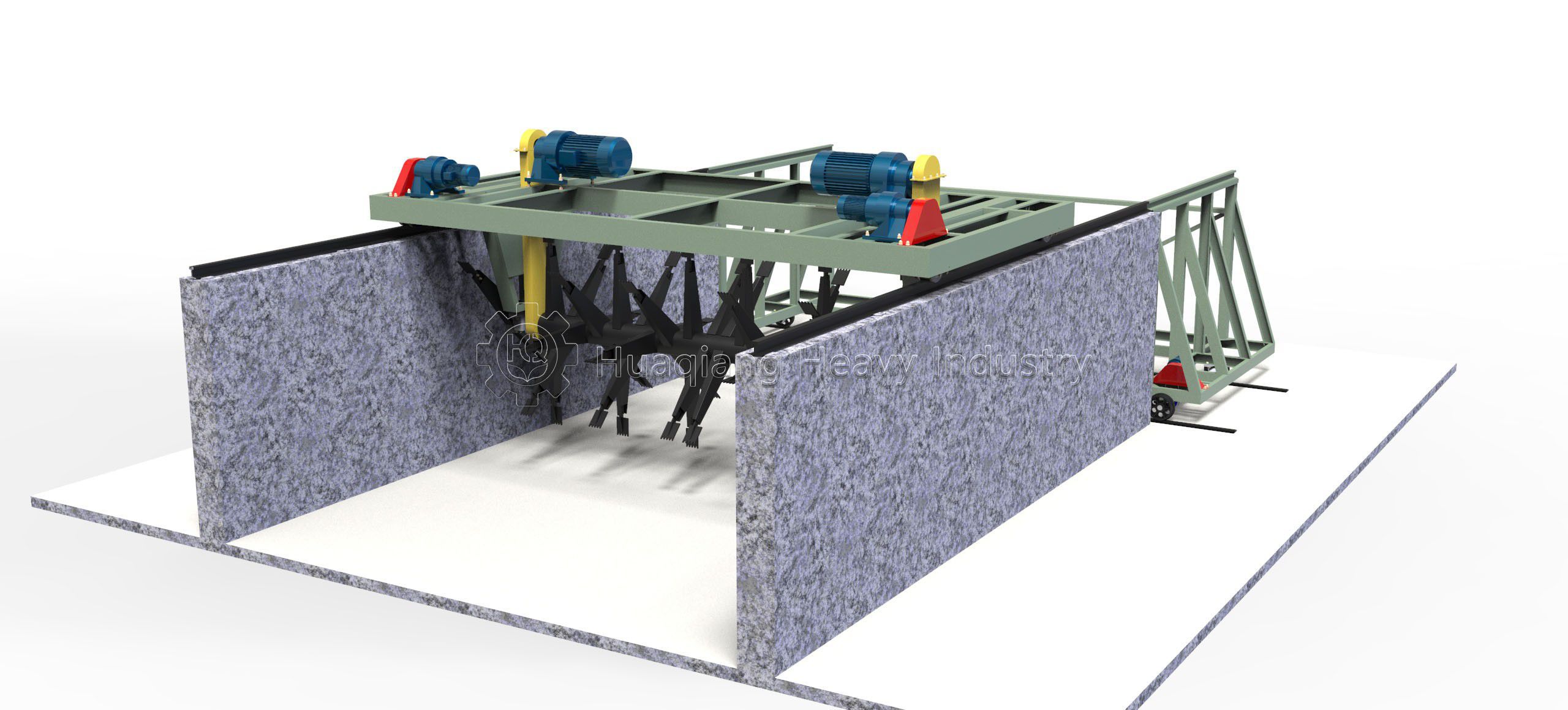
Simple Compost Turning Machine
The simple compost turner is an entry-level fermentation machine designed for organic fertilizer production, livestock manure treatment, and the resource utilization of organic waste. Utilizing a trough-based rail turning mechanism, it overcomes common industry challenges associated with manual turning—namely low efficiency, high labor intensity, and uneven fermentation. The equipment features a simple structure, ease of operation, and low investment costs, offering a balance of practicality and cost-effectiveness.
This simple compost turner is specifically designed for small-to-medium-scale organic fertilizer production and livestock manure fermentation. It enables the mechanization and standardization of trough-style fermentation at a low investment cost. The equipment is highly adaptable to various settings, including small organic fertilizer workshops, family farms, and large-scale livestock operations. Key design features incorporate several practical technologies: the turning shaft bearing housings are equipped with dust- and water-proof covers and external grease injection ports, while the drive system utilizes a variable-frequency motor with an IP55 or higher protection rating.
Hardware Configuration and Component Functions
The hardware components of the simple compost turner primarily include:
(I) Turning drum assembly: The core working component of the equipment, comprising the drum body and rake teeth mounted on it. The rake teeth are made of high-strength, wear-resistant steel, and the blades on the drum are arranged in a spiral pattern.
(II) Frame assembly: The load-bearing structure of the equipment, constructed from welded thickened carbon steel. The frame features an anti-corrosion coating, ensuring rust resistance and durability.
(III) Power transmission assembly: Includes the motor, gear reducer, and chain drive mechanism.
(IV) Travel assembly: Includes the travel motor, drive gears, and travel wheels.
(V) Control assembly: Includes the centralized control cabinet and limit switches.
Comparative advantages over other fermentation methods
Compared to other fermentation methods, the simple compost turner offers significant advantages:
Compared to manual turning: Labor intensity is drastically reduced, and turning efficiency increases manifold. It ensures uniform turning and thorough aeration, avoiding the issue of shallow-layer-only turning, and cuts the fermentation cycle by more than half.
Compared to large-scale, fully automated turners: The purchase cost is only one-third to one-half that of large equipment. Infrastructure requirements are minimal—no complex civil engineering is needed. Operation is simple, requiring no specialized technical training. It offers superior cost-effectiveness for smaller-scale operations.
Summary of core advantages: The simple compost turner excels in terms of cost (low purchase price and energy consumption), operation (operable by one person with no specialized training), maintenance (streamlined structure with few wear parts), and adaptability (suitable for various materials and scales).
IV. Application Scope and Target Audience
The simple compost turner has a wide range of applications and user groups:
Small and medium-sized organic fertilizer plants: Producing commercial organic fertilizer from livestock manure, crop straw, and similar materials; the equipment handles the core fermentation process.
Family farms and small organic fertilizer workshops: Processing small batches of livestock manure and straw for fermentation; the equipment is compact, has a small footprint, and requires low investment.
Large-scale livestock farms: Processing manure, bedding, and other waste for on-site fermentation, thereby alleviating environmental pressure.
Environmental protection and solid waste treatment: Processing municipal sludge, food waste, etc.; used in conjunction with fermentation tanks to achieve harmless treatment and resource recovery.
Horticulture and crop cultivation: Suitable for horticultural nurseries and button mushroom farms for turning and aerating cultivation substrates during fermentation.
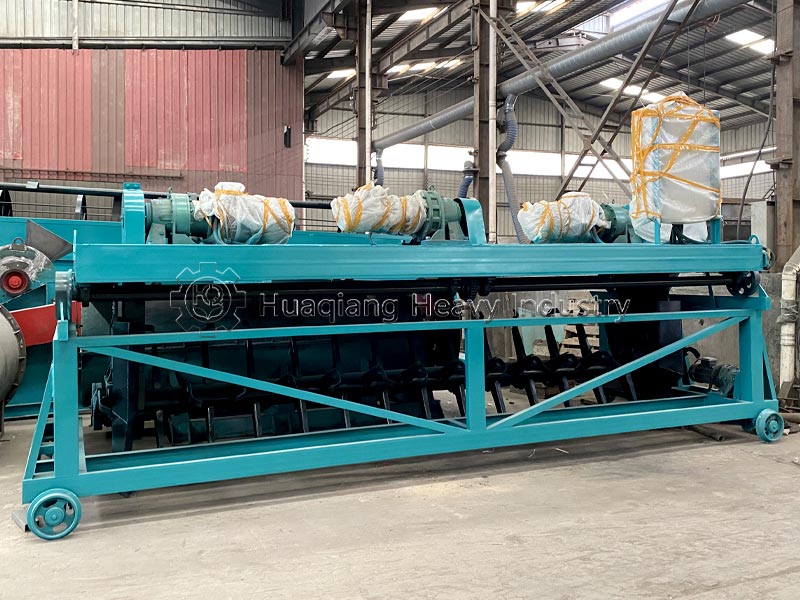
Material Range and Processing Capacity
The simple compost turner is capable of processing a wide range of organic waste materials. These include decomposed livestock and poultry manure (chicken, pig, cattle, and sheep manure), straw powder, spent mushroom substrate, distillers' grains, herbal medicine residue, municipal sludge, and kitchen waste. The equipment can handle materials with a moisture content of 50% to 70%. In terms of processing capacity, it offers an hourly turning volume of 10 to 80 cubic meters and a working depth of 0.6 to 1.8 meters.
Operational Mechanism and Fermentation Principles
The operating mechanism of the simple compost turner is based on a synergistic "mechanical mixing, forced aeration, and directional displacement" approach. As the high-speed rotating drum penetrates the material pile, it performs three core functions: mixing and pulverizing—thoroughly breaking up compacted material to eliminate caking; aeration and oxygenation—ensuring full contact between the material and air to rapidly replenish oxygen within the pile; and directional displacement—gradually moving the material from the feed end to the discharge end to facilitate continuous fermentation.

Coordination between the fermentation process and the production line
The simple compost turner plays a pivotal role in the aerobic fermentation process. The front section of the equipment can be configured with an ingredient mixing system to blend raw materials and additives in specific proportions before feeding them into the fermentation tank. The machine operates by moving back and forth within the tank; its turning action ensures that material aggregates come into full contact with air, allowing various beneficial microorganisms to thrive within their optimal temperature ranges. The rear section can be equipped with machinery for crushing, granulating, drying, cooling, screening, and packaging, thereby forming a complete organic fertilizer production line.
Fermentation Quality Control and Performance Assurance
Simple compost turners play a pivotal role in controlling fermentation quality. Temperature control: Turning operations effectively regulate the pile temperature, allowing it to rapidly rise to 55–65°C. Oxygen supply: Turning ensures full contact between the material and the air, quickly replenishing oxygen within the pile. Uniformity: Turning achieves over 90% uniformity, eliminating "dead zones" in the fermentation process. Cycle efficiency: The fermentation period is reduced from over 60 days to just 10–20 days. Hygiene and safety: Pathogens and insect eggs within the material are effectively eliminated. Quality assurance: Issues such as incomplete decomposition and strong odors—often caused by localized anaerobic conditions—are prevented.
With key advantages such as low cost, ease of operation, and practical efficiency, simple compost turners have become the preferred equipment for small-to-medium-scale organic fertilizer production and livestock manure treatment. Whether for use on small family farms or in small-to-medium organic fertilizer plants, selecting the right model effectively resolves the many challenges associated with manual turning while lowering investment costs, boosting fermentation efficiency, and ensuring high-quality organic fertilizer.
Models and Specifications of Simple Compost Turners
| Simple Compost Turning Machine | ||||
| Model | Main Motor | Walking Motor | Lifting Motor | Mobile Car Motor |
| FD3 | 7.5kw*2 | 1.5kw | / | 1.5Kw |
| FD4 | 11kw*2 | 1.5kw | / | 1.5Kw |
| FD5 | 15kw*2 | 2.2kw | 0.75kw | 1.5Kw |
| FDT3 | 7.5 kw*2 | 1.5kw | 0.75 kw | 1.5Kw |
| FDT4 | 11kw*2 | 1.5 kw | 0.75 kw | 1.5Kw |
| FDT5 | 15kw*2 | 2.2 kw | 0.75 kw | 1.5Kw |