

Call us
+86-18703630069
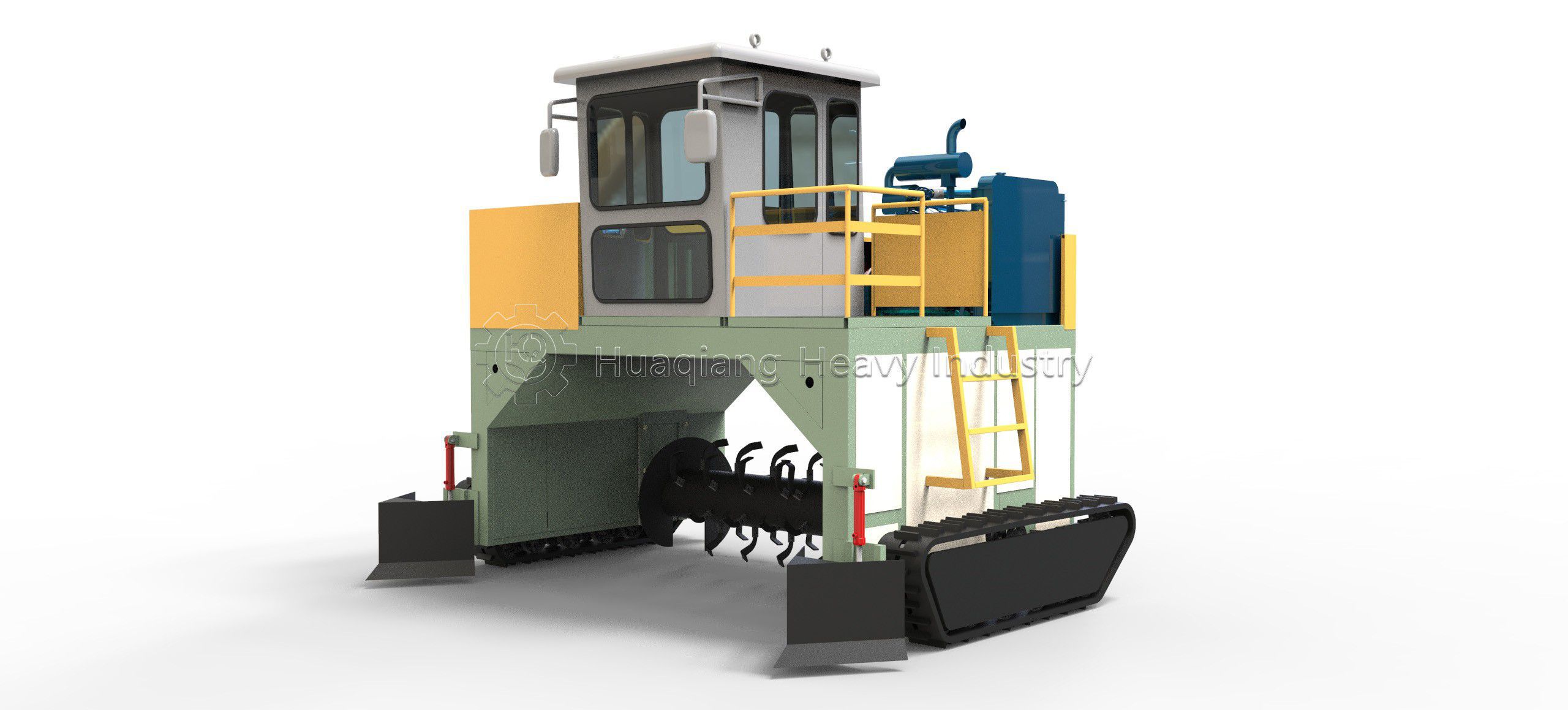
Windrow Compost Turning Machine
The windrow compost turner is the core piece of equipment for the ground-based aerobic windrow composting process and serves as indispensable machinery in organic fertilizer production, livestock and poultry manure treatment, and the resource utilization of organic waste. Featuring a self-propelled design as its core technology, the equipment combines the advantages of high maneuverability, no requirement for civil engineering infrastructure, single-operator control, and high processing capacity; it performs the full range of operations—including turning, crushing, oxygenating, and restacking—on ground-based windrows.
The development of windrow compost turners has evolved from wheeled to crawler-tracked configurations. Early domestic designs relied primarily on mechanical drive systems, often utilizing modified equipment such as rotary tillers. As technology advanced, hydraulic drive systems began to replace some mechanical components. In recent years, fully hydraulic, crawler-tracked ground turners have been developed, enabling the automatic distribution of hydraulic power. Windrow compost turners now share the market equally with in-vessel (trench-style) turners, establishing themselves as a key choice for composting operations.
Hardware Configuration and Component Functions
The hardware components of the windrow compost turner primarily include:
(I) Turning drum assembly: The core working component of the equipment, consisting of the turning drum and turning blades. The drum is fitted with left- and right-hand sections of counter-rotating spiral blades and a central section of straight throwing tines.
(II) Frame assembly: The load-bearing structure of the entire machine, characterized by high rigidity and balanced load distribution.
(III) Travel assembly: Includes the travel mechanism (tracks or tires), travel motors, and drive wheels.
(IV) Power assembly: Includes the diesel engine, reduction gearbox, and transmission mechanism.
(V) Hydraulic assembly: Includes the hydraulic oil tank, hydraulic pump, hydraulic lines, and hydraulic cylinders.
(VI) Control assembly: Includes the operator's cab, control levers, and hydraulic valve bank.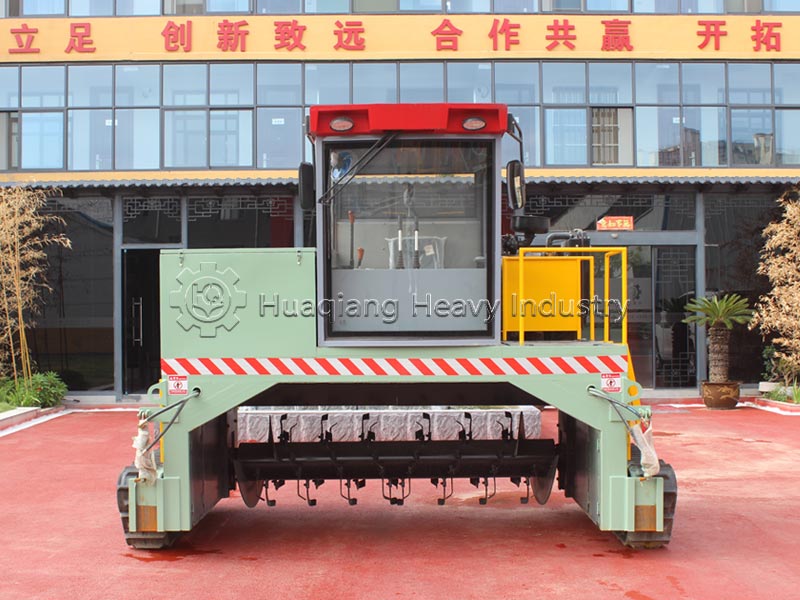
Comparative advantages over other windrow turning equipment
Windrow compost turners offer significant advantages over other types of turning equipment:
Compared to channel-type turners: They eliminate the need for civil engineering investment in concrete channels; they are highly adaptable to various sites, suitable for both open-air and greenhouse operations; and they require lower initial investment, making them ideal for small- to medium-scale production.
Compared to small-scale turning equipment: They offer high processing capacity, with typical models handling 400–1,400 cubic meters per hour; and they feature a high degree of automation, allowing for single-operator control.
Compared to imported equipment: Domestically produced units offer a clear cost advantage, along with prompt after-sales service and easy access to spare parts.
Summary of core advantages: Windrow compost turners excel in terms of civil engineering requirements (zero investment), site adaptability (suitable for both open-air and greenhouse environments), maneuverability (capable of turning in place), and ease of operation (single-person control).
Application Landscape and Audience Distribution
Windrow compost turners serve a wide range of applications and user groups:
Small, medium, and large-scale organic fertilizer producers: Manufacturing commercial organic fertilizer from livestock manure, crop straw, and other materials.
Large-scale livestock farms: Processing manure (chicken, pig, cattle, etc.) and other farm waste for on-site composting.
Municipal sludge treatment plants: Processing urban sludge via aerobic composting.
Agricultural waste treatment centers: Processing crop straw, landscaping waste, and similar materials.
Industrial organic waste treatment enterprises: Processing materials such as distillers' grains, pharmaceutical residues, and cassava dregs.
Edible fungus and horticultural substrate producers: Preparing substrates for mushroom cultivation and horticulture through composting.
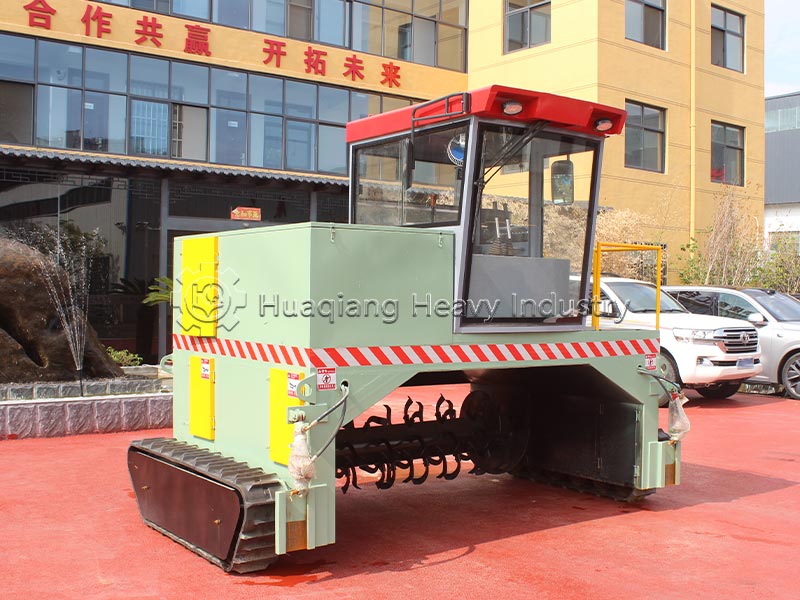
Material Range and Processing Capacity
Windrow compost turners can process a wide range of organic waste materials. These include livestock and poultry manure (chicken, pig, cattle, and sheep manure), municipal sludge, distillers' grains, medicinal herb residues, cassava residue, crop stalks, landscaping waste, and furfural residue. In terms of processing capacity, the equipment meets production needs ranging from handling hundreds of cubic meters per day to producing tens of thousands of tons annually; typical models have a processing capacity of 400 to 1,400 cubic meters per hour.
Operational Mechanism and Fermentation Principles
The operating mechanism of the windrow compost turner is based on a synergistic process of self-propelled turning and natural aeration. The machine straddles the elongated material windrow and is operated by a single driver. A diesel engine powers the high-speed rotation of the turning drum; blades mounted on the drum cut into the material pile, turning, breaking up, and throwing the material backward. As the material is thrown, it makes full contact with the air, facilitating oxygen replenishment and heat and mass exchange. As the machine advances, the material is reformed into a new windrow in its wake. The entire process integrates turning, aeration, and windrow reforming into a continuous operation.
Coordination between the fermentation process and the production line
Windrow compost turners play a pivotal role in aerobic composting processes. The front section of the system can be equipped with an ingredient mixing unit to blend raw materials and additives in specific proportions before forming them into windrows. The turner straddles the windrow, moving back and forth to perform the turning operation. Windrows are arranged in parallel on a flat composting site, either outdoors or indoors. The turning action ensures thorough contact between the material and the air, maintaining the pile temperature between 55°C and 70°C. Downstream equipment—such as units for crushing, granulation, drying, cooling, screening, and packaging—can be integrated into the system.
Models and Specifications of Windrow Compost Turners
| Windrow Compost Turning Machine | |||
Model | HQ-FD 2500 | HQ-FD 2600 | HQ-FD 3000 |
| Width(mm) | HQ-FD 2500 | 2600 | 3000 |
| Height(m) | 500-1000 | 500-1100 | 500-1200 |
| Stack spacing (m) | 1.0-1.2 | 1.0-1.2 | 1.0-1.2 |
| Max Particle Size (mm) | 250 | 250 | 250 |
| Power | R4102 Turbocharged 90HP Diesel Engine | R4105 Turbocharged 105HP Diesel Engine | R6105 Turbocharged 136HP Diesel Engine |
| Rated power speed(r/min) | 2200 | 2200 | 2200 |
| Working speed(m/min) | 6-18 | 6-18 | 6-18 |
| Driving speed(m/min) | 50 | 50 | 50 |
| Processing capacity(m3/h) | 400-600 | 600-800 | 1000-1200 |
| Overall size(m) | 3.64×2.6×2.7 | 3.75×2.6×2.7 | 4.36×2.75×2.95 |