

The drying and cooling stages constitute an indispensable and critical process within an organic fertilizer production line, directly impacting product quality, yield, and storage stability. This is particularly true for the production of bio-organic fertilizers, where low-temperature drying is essential for preserving the viability of functional microorganisms. Following fermentation, organic fertilizer raw materials typically possess a moisture content of approximately 30%–40%; even after granulation, the moisture content of the pellets remains between 15% and 20%—far exceeding the quality standard requirement of less than 14%. Consequently, these materials must undergo drying and cooling treatment.
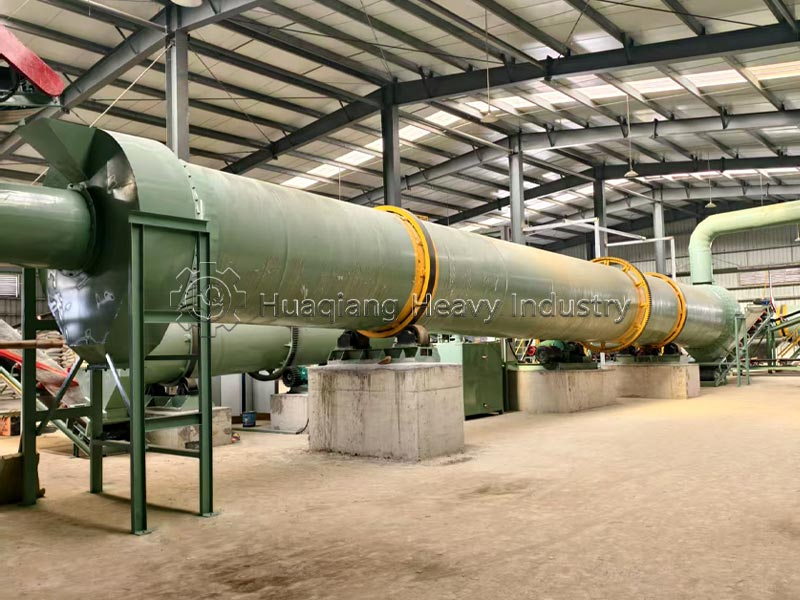
The organic fertilizer dryer is specifically engineered for organic fertilizer production. Featuring a cylindrical structure, the machine is equipped with a specialized internal scraping mechanism designed to prevent material adhesion. It employs a high-temperature, rapid-drying process characterized by a high heat transfer coefficient and superior thermal efficiency. Additionally, the front section of the unit incorporates a secondary granulation zone, which serves to enhance the overall granulation rate. During the drying process, hot air supplied by a hot-blast furnace comes into full contact with the dispersed material. Driven by the drum’s inclination angle and the action of induced airflow, the material moves slowly through the unit, completing the drying cycle. The exhaust gas is subsequently treated via a dust removal system before being discharged, ensuring full compliance with environmental protection regulations.
The organic fertilizer cooler is designed to operate in tandem with the dryer. Utilizing a counter-current airflow mechanism, the unit employs fans to draw ambient air into the equipment, thereby rapidly reducing the temperature of the fertilizer pellets. Once cooled, the material becomes easier to screen and package; furthermore, cooling prevents mold growth during storage—a risk associated with excessive temperatures—while simultaneously enhancing pellet strength to minimize breakage during transportation.
By judiciously selecting and applying drying and cooling equipment during the granulation phase of an organic fertilizer production line, manufacturers can effectively reduce energy consumption, preserve the nutritional integrity of the product, and boost the product qualification rate, thereby providing a robust guarantee for the stability and efficiency of organic fertilizer production operations.