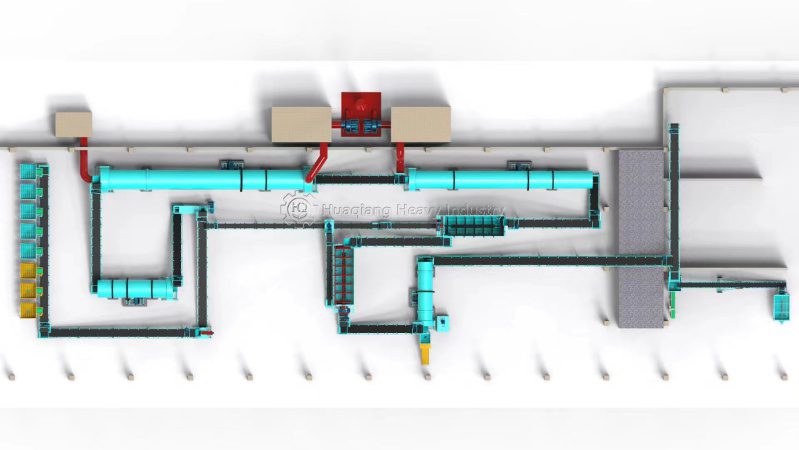

Material blockage is a common issue in BB fertilizer production line, primarily occurring during the raw material storage, batching, conveying, mixing, screening, and packaging stages. The root causes are often linked to material characteristics, the structural design of the fertilizer production machine, process parameters, and operational management practices.
The raw materials themselves constitute the primary contributing factor. BB fertilizer ingredients typically include urea, potassium chloride, and monoammonium phosphate; some of these materials possess strong hygroscopic properties and are prone to absorbing moisture and caking—particularly during rainy or humid weather—causing granules to adhere to one another and form clumps, which directly leads to bridging and blockages at the discharge outlets.
Poor design of storage hoppers and discharge structures frequently triggers blockages. If a hopper’s cone angle is too acute or its inner walls are rough, materials tend to stick to the walls and form arches; conversely, if the discharge outlet narrows too abruptly or the channel is too constricted, large clumps of material can easily become wedged. Furthermore, the absence of arch-breaking devices—or the provision of such devices with insufficient force—prevents the effective breakdown of caked materials, resulting in frequent blockages.
Mismatches between the batching and conveying stages can also lead to blockages. During batching, simultaneous discharge from multiple hoppers or excessive flow rates can exceed the conveying capacity of screw conveyors or belt conveyors, causing material to accumulate and jam. In screw conveyors, worn blades or an insufficient screw pitch can compromise the ability to effectively push viscous or caked materials, leading to blockages at the feed inlet or at bends in the conveyor path. Additionally, conveying pipelines with excessive vertical drops or overly shallow angles can slow down material flow, making the material prone to stagnation and blockage.
Improper control of equipment settings and process parameters exacerbates blockage issues. If the mixer’s rotational speed is too low or its mixing intensity is insufficient, caked materials cannot be effectively broken down, resulting in poor discharge flow; similarly, if the screens in the screening machine become clogged or the vibration amplitude is insufficient, materials will accumulate and fail to pass through the screen. Operational errors—such as dumping excessive amounts of material into the system at one time or executing improper start-up and shut-down procedures—can also cause momentary overloads that trigger blockages.
Finally, inadequate routine maintenance can gradually lead to blockages; for instance, if material is allowed to accumulate and harden on the inner walls of the equipment, or if transmission components lack sufficient lubrication and begin to operate jerkily, these issues can progressively trigger blockages and disrupt the continuous operation of the entire production line.