

With the advancement of “dual carbon” goals and the growing awareness of green agriculture, the environmental transformation of NPK fertilizer production lines has become an inevitable trend in the industry. Traditional NPK fertilizer production lines suffer from high energy consumption and significant pollutant emissions. However, new environmentally friendly NPK fertilizer production lines, through process innovation and technological upgrades, have achieved multiple breakthroughs in “energy saving, consumption reduction, and emission reduction,” paving the way for green development.
Reduced energy consumption is a key achievement of this environmental transformation. A fertilizer company in Quzhou adopted low-temperature physical extrusion granulation technology, replacing the traditional high-temperature granulation process, reducing energy consumption in the NPK fertilizer production line by more than 30%. This also avoids nutrient loss caused by high-temperature processing, ensuring fertilizer quality. In addition, the NPK fertilizer production line is equipped with a waste heat recovery system, which recycles the waste heat generated during production, further improving energy utilization efficiency.
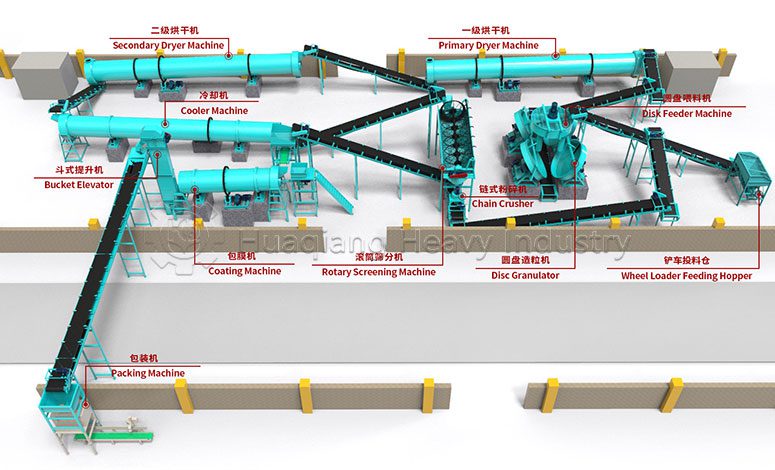
Significant progress has been made in pollutant reduction. By improving the coating process and using environmentally friendly polymer coating materials to replace traditional highly polluting materials, ammonia volatilization and dust emissions have been reduced; production wastewater is treated and recycled, achieving “zero wastewater discharge”; and waste residue is crushed and processed, then reintroduced into production as raw materials, forming a resource recycling system.
This green transformation not only meets environmental requirements but also enhances corporate competitiveness. Products produced by environmentally friendly NPK fertilizer production lines are more favored by the market due to their lack of residue and pollution. Today, more and more companies are increasing their investment in environmental protection, promoting the green and low-carbon upgrading of NPK fertilizer production lines, ensuring that nitrogen, phosphorus, and potassium compound fertilizer production safeguards food security while protecting the ecological environment.