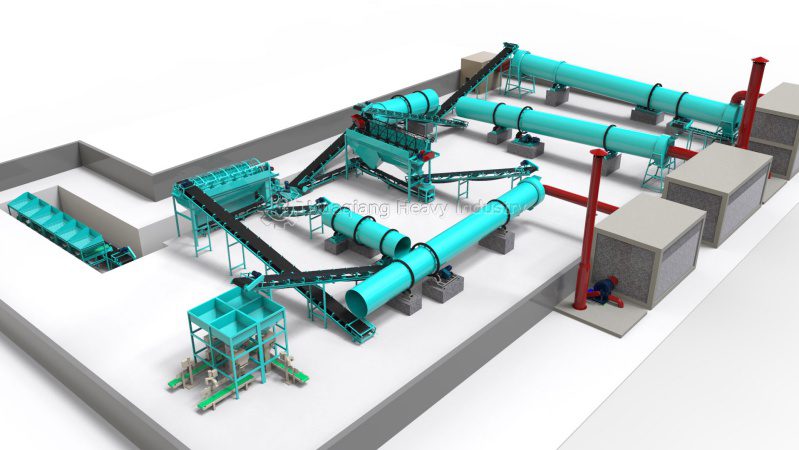

BB fertilizer production lines primarily rely on physical blending and feature a relatively simple process; however, in actual production, they are prone to issues such as inaccurate formulation ratios, uneven mixing, particle segregation, and equipment clogging. These problems directly impact product qualification rates and production stability.
Significant metering errors frequently occur during the batching stage. Most lines utilize multiple silos single weigh static batching systems; if sensor drift, unstable feeding speeds, or significant variations in material flowability occur, the ratios of nitrogen, phosphorus, potassium, and trace elements may deviate beyond acceptable limits, failing to meet national standards. Additionally, material arching or bridging within raw material bins can interrupt the material flow, thereby halting the batching process and disrupting continuous production.
Uneven mixing is a common issue during the blending stage. Since BB fertilizers comprise various raw materials with differing densities and particle sizes, factors such as inappropriate mixer speeds, insufficient mixing times, or improper feeding sequences can easily lead to localized nutrient enrichment, resulting in significant fluctuations in nutrient levels when sampling the finished product. Furthermore, poor sealing in certain equipment components can lead to dust leakage, thereby contaminating the workshop environment.
Severe particle segregation often occurs during the finished product transfer and packaging stages. Given that raw materials—such as urea, potassium chloride, and granular phosphate fertilizers—vary in size and specific gravity, significant drop heights during transfer via bucket elevators or belt conveyors can cause lighter particles to float to the top while heavier particles settle to the bottom. This results in uneven nutrient distribution between the upper and lower layers of the packaged product, ultimately compromising its effectiveness for farmers.
The production line is also susceptible to material clogging and equipment wear. Raw materials that have absorbed moisture and caked, or those containing excessive dust, can cause blockages in hoppers, mixer outlets, and chutes. The entry of hard foreign objects into the equipment can damage mixer blades and conveyor belts, necessitating emergency shutdowns for repairs. Moreover, inaccurate weighing or unstable bag-sealing during the packaging stage can lead to short-weight packages, incomplete seals, or ruptured bags.
Some production lines also face issues related to corrosion and aging. Certain raw materials are corrosive; prolonged exposure can cause rust and corrosion in storage bins and conveying equipment, thereby reducing their operational lifespan. Furthermore, high dust levels and poor sealing during production can exacerbate electrical component failures, leading to increased maintenance costs.