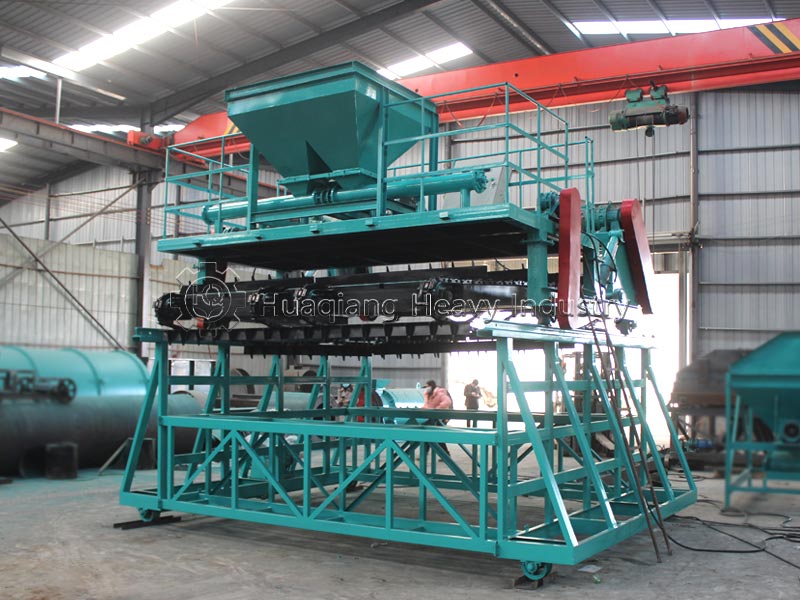

The overall cost of exhaust gas treatment for NPK compound fertilizer production lines is moderate. The key factors are scale, process, and treatment plan. With proper control, the additional cost per ton of fertilizer can be controlled at 3-8 yuan. The following is a detailed analysis:
I. Cost Composition and Range
• NPK blending machine investment: A 200,000 tons/year production line costs approximately 4-6 million yuan, and a 500,000 tons/year line costs approximately 8-12 million yuan; smaller capacity blending processes can opt for simplified solutions, reducing investment to 60% of the conventional cost.
• Other costs: Including online monitoring, labor, environmental protection taxes, etc., accounting for approximately 5-10% of the total operating cost.
II. Core Factors Affecting Costs
• Exhaust gas volume and concentration: Granulation/drying lines have high air volume and ammonia concentration, requiring multi-stage treatment, thus increasing costs; blending lines only have dust and low-concentration ammonia, resulting in lower costs.
• Selection of treatment technology: Bag filters for dust (low investment, low operating costs); acid scrubbing + biofilter for ammonia/hydrogen sulfide (medium investment, low chemical consumption); SCR/SNCR for boiler flue gas (high investment, high operating costs).
• Emission standards and regulations: When local standards are stricter than national standards, additional deep treatment units are required, increasing costs by 20-30%.
III. Key Measures to Reduce Costs
• Process optimization: Raw material pretreatment to reduce dust, enclosed + negative pressure collection to control fugitive emissions, reducing the load on end-of-pipe treatment.
• Equipment and system optimization: Selecting energy-efficient fans/pumps, using automatic dosing to precisely control chemical consumption; waste heat recovery can reduce energy consumption by 20-40%.
• Resource recovery: Dust removal ash and absorption liquid by-products (such as ammonium sulfate) can be recycled back into production, offsetting some costs.