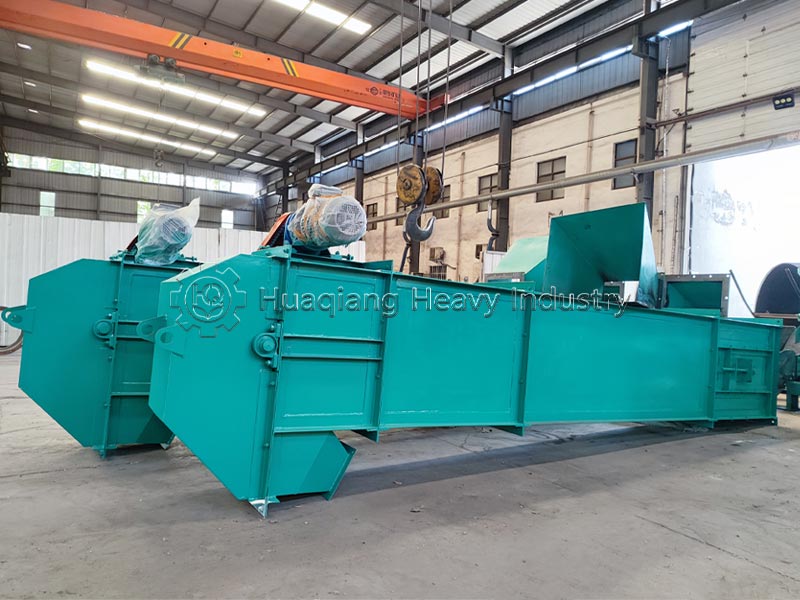

Nutrient loss in fertilizers produced by NPK bulk blending machine is mainly related to four factors: equipment operating parameters, raw material characteristics, process operation, and finished product storage and transportation. Specifically:
1. Insufficient mixing uniformity of the equipment: If the mixing paddle speed is too low, the mixing time is too short, or the material residence time in the machine is uneven, it will lead to insufficient mixing of nitrogen, phosphorus, and potassium raw materials, resulting in nutrient stratification. During subsequent storage, transportation, or application, this can easily lead to localized areas with excessively high or low nutrient levels, appearing as apparent “loss.” In addition, if the equipment’s discharge port is poorly designed and residual materials are not cleaned in time, they will mix with the next batch of raw materials, disrupting the nutrient ratio balance.
2. Large differences in the physical characteristics of raw materials: The particle size and specific gravity of nitrogen, phosphorus, and potassium single-element fertilizers vary considerably. For example, urea particles are finer, while potassium chloride has a higher specific gravity. During the blending process, segregation is prone to occur, and transportation vibrations will further exacerbate stratification, leading to localized nutrient deficiencies during application.
3. Non-standard process operation: If the NPK blending fertilizer production line does not follow the principle of “heavy first, then light; large first, then small” when feeding materials, or if anti-caking agents and antistatic agents are not added, it will lead to material agglomeration and clumping, affecting nutrient distribution; if the finished product is not sealed promptly during packaging, nitrogen fertilizers (especially urea) are prone to moisture absorption and decomposition, causing volatile nitrogen nutrient loss.
4. Improper storage and transportation of finished products: Stacking finished fertilizers too high will cause compression and clumping, and violent collisions during loading and unloading will cause particle breakage, leading to dust loss of fine particles; humid and poorly ventilated storage environments will accelerate fertilizer moisture absorption and rewetting, causing nutrient dissolution or chemical decomposition.