

Fertilizer granulators are the core equipment in NPK fertilizer production lines, responsible for converting powdered raw materials into granular fertilizers. Their performance directly determines the appearance, strength, and pass rate of the compound fertilizer.
The most commonly used type in NPK fertilizer production lines is the rotary drum granulator. Its working principle involves a motor driving an inclined drum to rotate at a uniform speed. Inside the drum, the material is subjected to centrifugal force, friction, and gravity, continuously tumbling, contacting, and bonding, gradually forming uniformly sized granules.
During the granulation process, an appropriate amount of binder or steam is sprayed through an atomizing device to help the material form granules. The rotational speed, inclination angle, and feed rate of the fertilizer granulator all affect the granulation effect. Moderate rotational speed and uniform feed are essential for producing round and full granules.
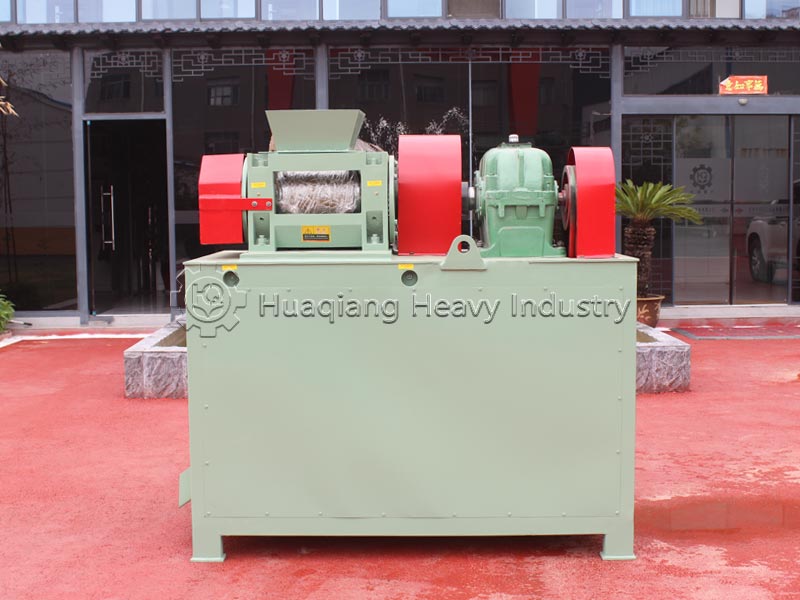
The function of fertilizer granulators is not only to form granules but also to improve fertilizer strength, enhance solubility, and facilitate storage, transportation, and mechanized fertilization. Without a fertilizer granulator, NPK fertilizer can only exist in powder form, which is prone to moisture absorption and separation, failing to meet market demands.
In an NPK fertilizer production line, the fertilizer granulator connects to the mixer before and the dryer after, playing a crucial role in bridging the two processes. A stably operating fertilizer granulator is essential for ensuring the entire production line’s high efficiency, high output, and low failure rate.