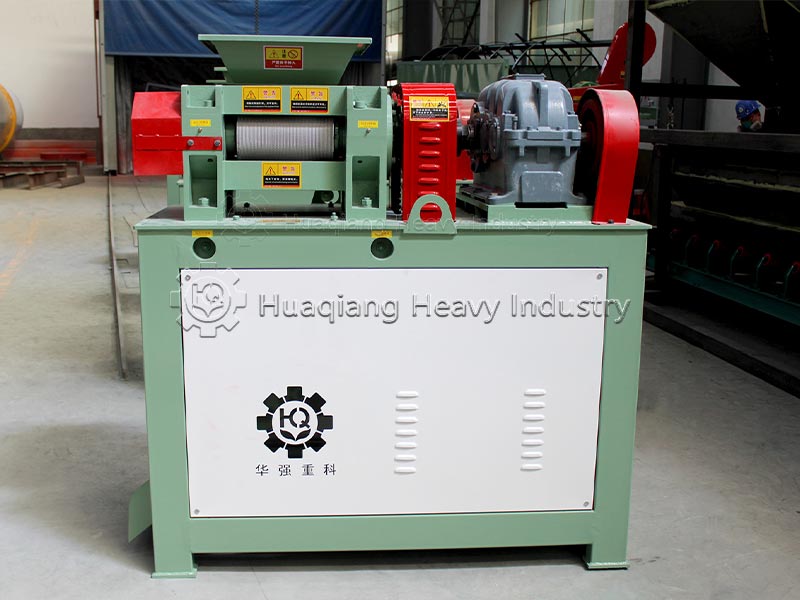

Double roller press granulator produciton technology is currently recognized in the organic fertilizer, NPK compound fertilizer, and blended fertilizer industries as a highly efficient, energy-saving, and low-cost process, offering significantly superior overall benefits compared to disc and drum granulation.
In terms of production costs, the double roller extrusion granulation process eliminates the need for drying and extensive heating, substantially saving on coal, gas, and electricity consumption. Energy consumption per ton of finished product is reduced by more than 50% compared to wet granulation. The production process is short, requiring less floor space and fewer auxiliary equipment, resulting in lower initial investment and ongoing operating costs. Furthermore, it adapts to a wide range of raw materials, eliminating the need for large amounts of binders and reducing auxiliary material inputs, further lowering raw material costs.
Regarding production efficiency, this process boasts a high granulation rate and minimal rework. Qualified granules are formed in a single pass, and rework can be quickly recycled. The NPK blending fertilizer production line operates continuously and stably with a low failure rate and minimal downtime, resulting in higher output per unit time. Operation is simple, with a high degree of automation, reducing the number of workers and lowering labor costs.
In terms of product quality, the extruded granules are hard, non-loose, and not easily pulverized, resulting in minimal loss during storage and transportation. They also exhibit uniform nutrient distribution without segregation, making them suitable for mechanized fertilization and highly regarded by growers and distributors. The products have a uniform appearance and good marketability, enhancing brand value and market competitiveness.
Overall, the roller extrusion granulation process achieves low energy consumption, high efficiency, high yield, and high environmental friendliness, bringing tangible economic benefits to fertilizer companies. It is the preferred process for small and medium-sized fertilizer plants to improve quality and efficiency.