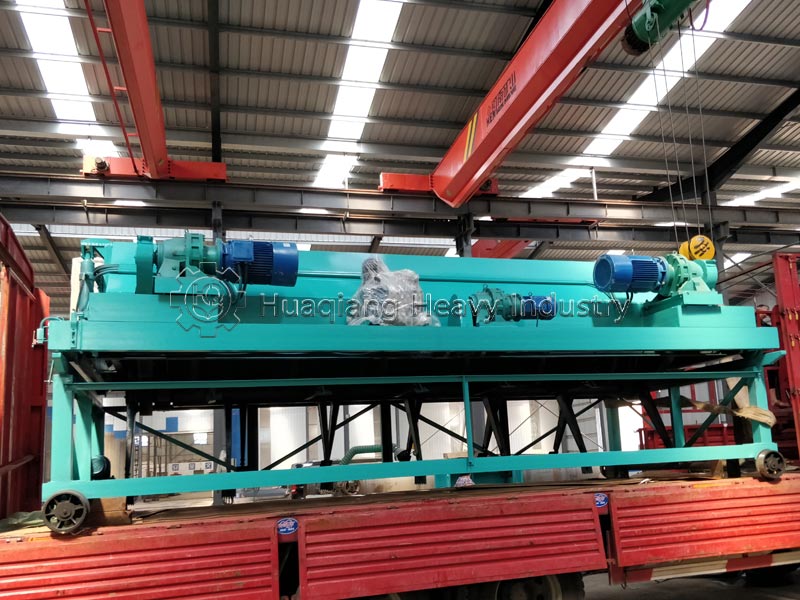

The hydraulic compost turning machine is a mainstream piece of equipment in aerobic fermentation of organic fertilizer, known for its high oxygen supply efficiency and stability. Its oxygen supply effect directly determines the fermentation speed and the maturity of the material. Relying on a hydraulic lifting system, the equipment can flexibly adapt to fermentation trenches 1.5–2 meters deep. The turning components penetrate deep into the bottom of the material layer, rapidly turning the bottom anaerobic material to the surface during the turning, crushing, and repositioning process, while simultaneously entraining a large amount of air, significantly increasing the oxygen content and permeability of the compost pile.
During the turning operation, the material is fully dispersed and forms a loose, porous structure, maintaining a porosity of 30%–40%. Oxygen can quickly penetrate to the interior, avoiding problems such as localized anaerobic digestion, foul odors, and slow temperature rise. Under normal operating conditions, the oxygen content of the material after turning can be stabilized at 10%–15%, far exceeding the 5% standard required for aerobic fermentation. This rapidly activates microbial activity, causing the pile temperature to quickly rise to 55–65℃, achieving efficient and harmless treatment.
This equipment offers excellent oxygen supply uniformity with no obvious oxygen dead zones within the trough, making it suitable for various organic materials such as livestock and poultry manure, kitchen waste, and straw. Compared to forced aeration processes, it eliminates the need for aeration pipes and high-pressure blowers, relying solely on mechanical turning to meet oxygen supply requirements, thus reducing investment and energy consumption. However, it operates on an intermittent oxygen supply basis; the oxygen content gradually decreases after shutdown, necessitating periodic turning based on material moisture, temperature, and oxygen consumption rates.
Overall, the hydraulic trough turner boasts strong oxygen supply capacity, deep penetration, and high efficiency. In conventional deep-trough fermentation scenarios, it can independently meet oxygen supply requirements, making it a reliable choice for improving organic fertilizer fermentation quality and shortening the fermentation cycle.