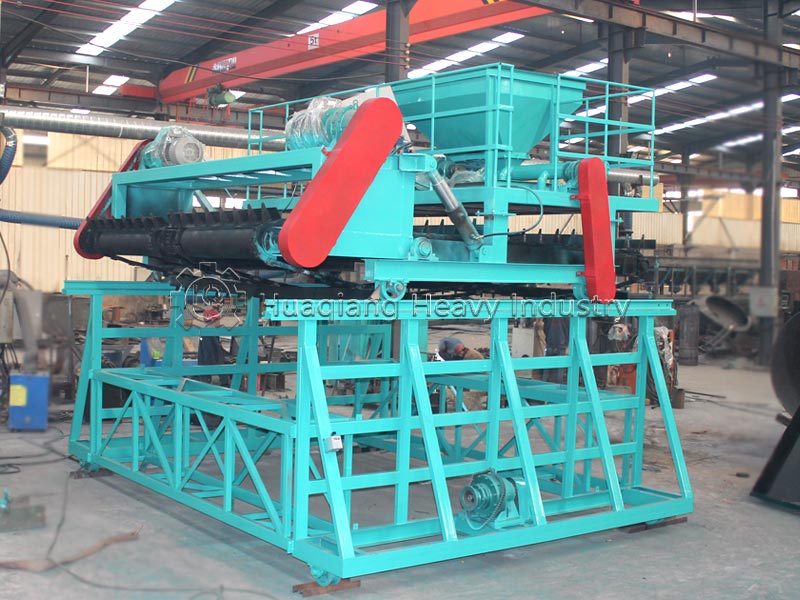

The chain compost turning machine serves as the core centerpiece of an organic fertilizer fermentation production line. It occupies an indispensable and pivotal position within the entire process workflow, directly determining the maturity level of the organic fertilizer, production efficiency, and product quality. The essence of biological organic fertilizer production lies in transforming waste materials—such as livestock and poultry manure, crop straw, and sewage sludge—into harmless organic fertilizer through high-temperature aerobic fermentation; the chain-plate windrow turner is precisely the key equipment that enables this transformation.
Through continuous turning, crushing, and aeration, the machine ensures that the raw materials achieve full contact with the air, facilitating rapid temperature rise and fermentation. This process effectively eliminates pathogenic bacteria, insect eggs, and weed seeds, thereby meeting the safety and harmlessness standards required for biological fertilizers. Furthermore, the turning process allows for the regulation of material moisture content and temperature, preventing the generation of foul odors associated with anaerobic fermentation and promoting the prolific growth of beneficial microorganisms. This establishes a solid foundation for subsequent granulation stages and ensures the ultimate quality of the finished product.
Compared to trough-type or wheel-type windrow turners, the chain-plate model offers superior deep-trough processing capabilities, higher material throughput, and smoother operation. It is ideally suited for large-scale, continuous production environments, capable of significantly shortening the fermentation cycle and boosting the overall capacity of the production line. Without stable and highly efficient turning equipment, fermenting materials are prone to issues such as uneven decomposition, clumping, and stickiness. These problems not only disrupt subsequent mixing and granulation processes but also result in unstable nutrient levels and excessive levels of miscellaneous bacteria in the biological organic fertilizer, rendering it unable to meet national quality standards.
Moreover, the chain-plate windrow turner is characterized by reliable operation, a low failure rate, and ease of maintenance. It can be seamlessly integrated into multiple production lines for continuous operation, serving as a vital guarantee for achieving large-scale, standardized, and environmentally friendly production of biological organic fertilizers. Acting as a critical link that bridges upstream and downstream processes within the entire production line, it directly impacts the overall economic benefits of the project and the market competitiveness of the final product.