

If a BB (bulk blend) fertilizer mixture fails to match its intended formula, the problem does not necessarily lie with the mixer. Whether the final product aligns with the recipe depends on three sequential process safeguards: a “multiple-silo, single-weigh” static batching system ensures accurate weighing; the mixing process ensures uniformity; and the granular blending equipment (such as an NPK bulk blending machine) ensures resistance to segregation. These three elements operate at different levels—batching, mixing, and equipment design—and conflating them often leads to misattributing the cause of errors to the wrong component.
The first safeguard is static batching. A “multiple-silo, single-weigh” system allows various silos to discharge materials sequentially into a single high-precision weigh hopper. Because weighing occurs while the materials are relatively stationary—unaffected by fluctuations in conveying speed or the impact of falling material—the proportioning error can typically be kept within a very tight range. The primary value here is not speed, but rather “batch-to-batch reproducibility.” However, static weighing requires consistent material flow; otherwise, fluctuations in the feeding rhythm can still introduce deviations during the weighing stage.
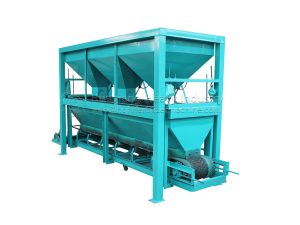
The second safeguard is the mixing process. For BB fertilizers, the key performance indicators go beyond the coefficient of variation (uniformity); they also include the rate of granule breakage and the amount of residual material left in the mixer. Given the significant difference in bulk density between components like urea and potassium chloride, mixing is typically carried out using a low-speed convective process. This allows the granules to swap positions without being shattered by high-shear forces. Furthermore, a longer mixing time is not necessarily better; beyond a certain point, the pulverization rate of brittle granules actually increases. The goal of the mixing process is to achieve sufficient uniformity in the shortest possible time, without damaging the granules.
The third safeguard concerns the mixture’s resistance to segregation (stratification) after blending. Equipment such as NPK bulk blending machines is designed with the physical compatibility of the granules in mind. It is essential that the average particle size of each component remains as uniform as possible; otherwise, vibrations during transport can cause lighter particles to rise and heavier ones to sink, meaning a batch that was uniform upon leaving the factory may no longer be so by the time it reaches the field. It is not responsible for granulation, nor does it rectify inconsistencies in the raw materials; it only delivers on its promises for granules that already meet quality standards.
The sequence of these three lines of defense is clear: the proportioning system locks in the ratios, the mixing process blends granules from various sources into a uniform mixture, and the granule-compatibility equipment works to minimize any subsequent separation during transport. Conflating these three distinct stages into one leads to misdiagnosing the root cause when problems arise—blaming the mixer for inaccurate weighing, the proportioning scale for poor mixing, or the equipment itself for material segregation. The stability of bulk-blended (BB) fertilizer relies on each of these three lines of defense remaining firmly in its designated role.