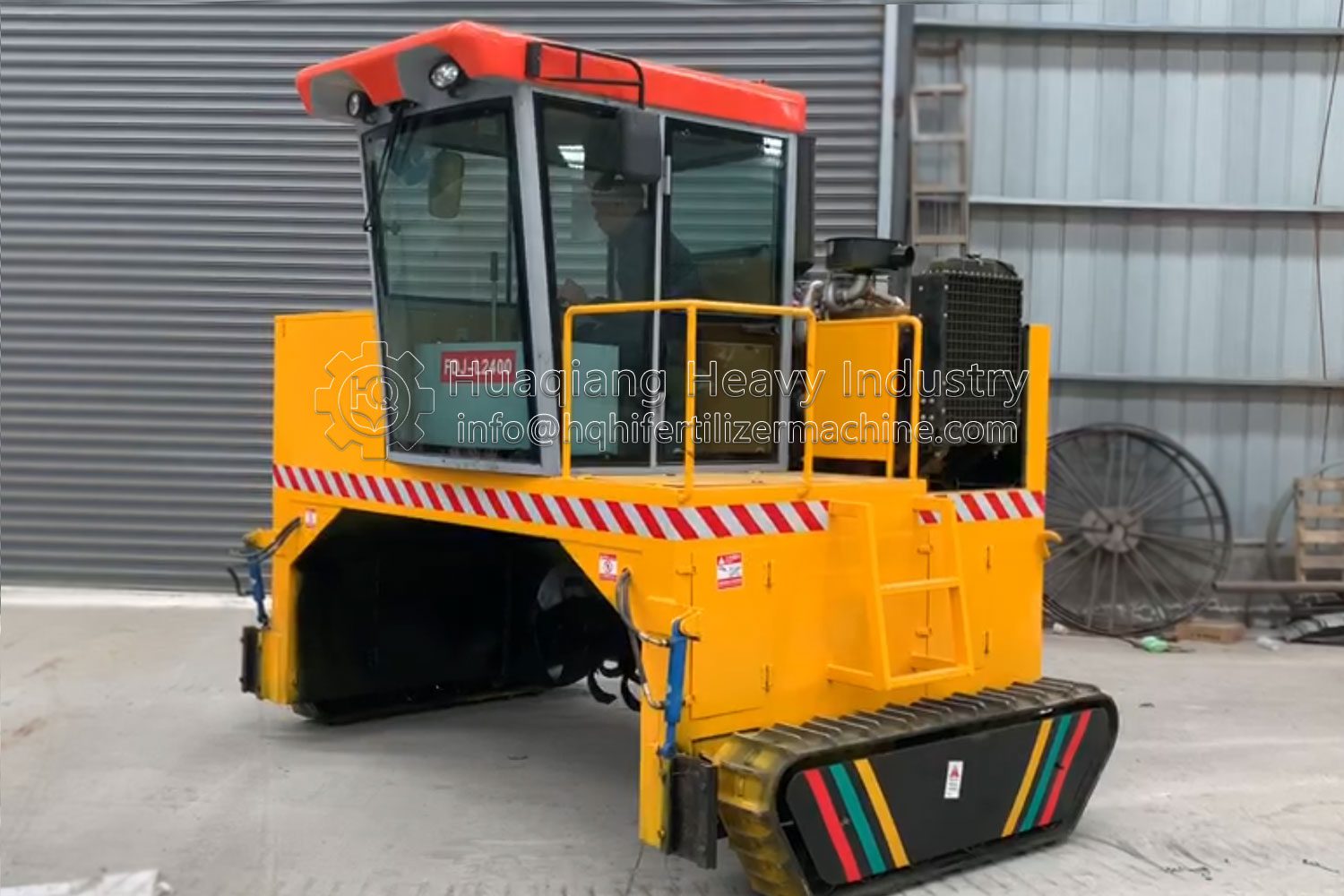

Selecting a windrow compost turning machine involves matching the machine to four key dimensions—processing scale, raw material characteristics, site conditions, and budget—while balancing operating costs and production stability. First, select the model based on daily processing volume. For small farms processing under 20 tons daily, choose a narrow-width crawler model (1.8–2.5 meters) for its compact size and maneuverability. For medium-sized facilities processing 30–60 tons daily, match with a standard-width model (3–4 meters) capable of a turning depth of about 1 meter, suitable for conventional windrow composting. For large-scale plants processing over 60 tons daily, prioritize heavy-duty, wide-width models equipped with high-power turning drums to reduce the frequency of passes. Since crawler models have limited maximum capacity, relying on a single crawler unit as the primary machine is not recommended for production lines exceeding 100 tons per day. Second, select based on raw material moisture and impurity content. When processing high-moisture, sticky materials like fresh chicken manure, biogas residue, or sludge year-round, choose wider, thicker rubber tracks to reduce ground pressure and prevent sinking, and opt for wear-resistant high-manganese steel drum blades. If raw materials contain significant amounts of straw, sand, or debris, select a turning drum equipped with shredding teeth and increase motor torque to prevent jamming. Standard models suffice if the feedstock consists primarily of dry straw or decomposed dry manure. Third, evaluate based on site conditions. For simple outdoor sites without paved surfaces, wide-track models are essential to prevent sinking in mud. For facilities with paved floors and zoned windrow operations, remote-controlled steering models offer convenient switching between zones. In confined spaces with narrow windrow spacing, choose compact, maneuverable models, as large, wide-width equipment designed for straight-line operation is difficult to reposition. Outdoor operations require a simple rain shelter, and caution should be exercised when relying solely on crawler machines in regions with heavy rainfall. Fourth, consider budget and automation needs. Choose basic manual models for limited budgets or individual use; prioritize wireless remote-controlled models for larger facilities to save on labor costs. When comparing the costs of parts and consumables—especially given the long-term processing of highly corrosive manure—it is advisable to prioritize models featuring tracks and drums that allow for quick disassembly and replacement, thereby reducing future maintenance expenses. Overall, crawler-type windrow turners are suitable only for small- to medium-scale windrow composting; large-scale commercial organic fertilizer plants should prioritize channel-type (trough) systems, using crawler units merely as auxiliary or backup equipment.