

When selecting fertilizer production equipment, the purchase price is often the first figure compared. However, what truly determines the long-term viability of a production line is not the initial savings, but whether “invisible parameters” meet essential quality standards. The following analysis examines the balance between costs and benefits across four areas vulnerable to a “cost-cutting mindset.”
Roller Shells: Saving on a set costs you a whole batch. The roller shell is the most expensive wear part on a double-roller extrusion granulator. Cheap equipment uses ordinary cast steel shells; the tooth surfaces can collapse after just two days of processing high-nitrogen materials. Industry standards for replacement are clear: shells must be replaced if the tread pattern wears down by more than two-thirds of its original depth, the effective thickness decreases by one-third, or if cracks and spalling appear on the surface. Lifespans vary drastically by material: 1–3 months for ordinary carbon steel, 3–6 months for alloy steel, and up to 1–2 years for hard-alloy hardfacing. Saving on the purchase price of a single set of roller shells can result in the entire batch of granules crumbling into powder and being returned.
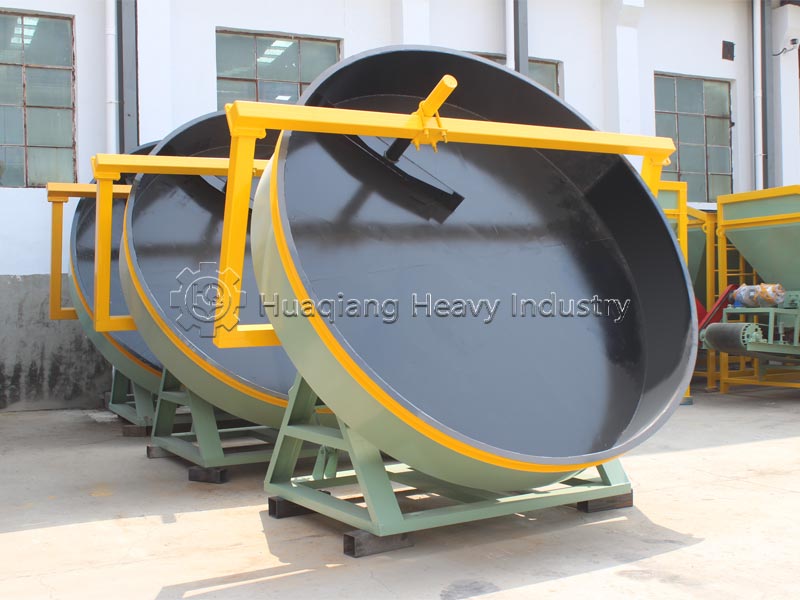
Temperature: Saving on electricity kills the microbes. The core value of a bio-organic fertilizer disc granulator lies not in production capacity, but in maintaining “low temperatures.” The survival rate of functional microbes plummets when temperatures exceed 60°C. Disc granulation—utilizing low-friction coatings and an open operational structure—stabilizes granulation temperatures between 30°C and 55°C, ensuring microbial survival rates exceed 80%. If cooling processes are simplified or high-temperature drying steps are introduced to “save electricity,” the effort invested in earlier fermentation and granulation stages will be incinerated during the drying process.
Mixing: Saving a minute compromises the CV value. The passing standard for BB fertilizer mixing uniformity is a Coefficient of Variation (CV) of ≤5%. A twin-shaft paddle mixer can achieve a CV of 3.8%–4.5% in 3–5 minutes, whereas models with simplified structures require 6–8 minutes, resulting in a higher CV of 4.2%–5.1%. It may seem like a difference of only a minute or two, but if mixing time is insufficient, the variation in nutrient distribution within the packaging can far exceed the limits permitted by national standards.
Ingredient proportioning: a 0.2% discrepancy translates to a 100-ton difference. Static proportioning systems can achieve an accuracy of ±0.2%, whereas dynamic continuous systems typically range from ±1% to ±2%. For a production line with an annual output of 50,000 tons, a 0.2% difference in accuracy means that 100 tons of product deviate from the target nutrient levels each year. On a report, the gap in proportioning accuracy is merely a number; in the field, however, it translates to a difference in crop yields.
You might opt for cheaper equipment, but if you fail to uphold the bottom line regarding quality, every penny saved will eventually be spent in other ways during production.