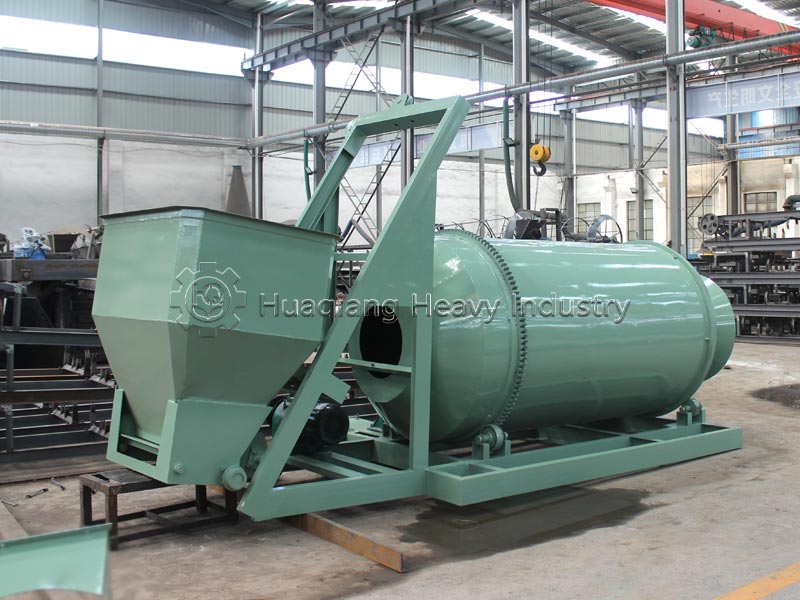

BB fertilizer consists of a blend of hard granules, such as urea, phosphate fertilizers, and potash. During production on a BB fertilizer production line, the granules are prone to surface abrasion, pulverization, moisture absorption, and structural loosening—issues that compromise both their visual appearance and storability. By optimizing the operational parameters of the BB fertilizer mixer production process, granule strength can be significantly enhanced. The following methods outline how to achieve this:
First, strictly control feed moisture levels and implement moisture-proofing measures. All raw materials must undergo dehumidification and be protected against condensation, rain, and mist before being stored in silos. The blending workshop itself should be kept dry and well-ventilated to prevent granules from absorbing moisture—which causes them to soften, become sticky on the surface, and crumble upon contact. The lower the moisture content, the higher the granule hardness and the greater their resistance to breakage.
Second, reduce blending speeds and extend the gentle mixing duration. BB fertilizer should not be subjected to high-speed, high-impact agitation or intense shear forces. Instead, utilize a low-speed, large-capacity horizontal blender specifically designed for BB fertilizers. This involves employing curved paddles and wider clearances to minimize physical impact and surface abrasion, ensuring the mixture is thoroughly homogenized without crushing the granules, thereby preserving the integrity of their original outer shells.
Third, optimize the material charging sequence to minimize “hard-on-hard” collisions. Load small-to-medium-sized granules and softer fertilizers first to create a cushioning base layer, followed by harder granules such as urea. By introducing materials slowly and in layers, the impact force is buffered, effectively reducing surface abrasion and the generation of fine dust.
Fourth, sparingly add anti-caking agents and strengthening additives. During the blending process, uniformly spray a small amount of coating oil, anti-caking agent, and a trace amount of liquid humic acid. This creates a thin protective film on the granule surfaces that locks in hardness, enhances friction resistance, and prevents moisture absorption, all without altering the fertilizer’s nutrient ratio.
Fifth, control the filling volume and blending duration. Do not fill the blender to capacity; leave sufficient void space to allow for proper material flow. Limit the blending time to approximately two minutes. Excessive blending leads to increased inter-granular friction, which heightens the risk of dust generation and granule cracking.
Sixth, integrate pre- and post-blending screening and gentle conveying systems. Utilize chutes, buffer plates, and conveyor belts for material input and discharge to minimize drop heights and the resulting impact damage. Immediately after blending, screen the mixture to remove any fine dust particles; this prevents fine dust from adhering to the granules—a phenomenon that can compromise their structural strength.