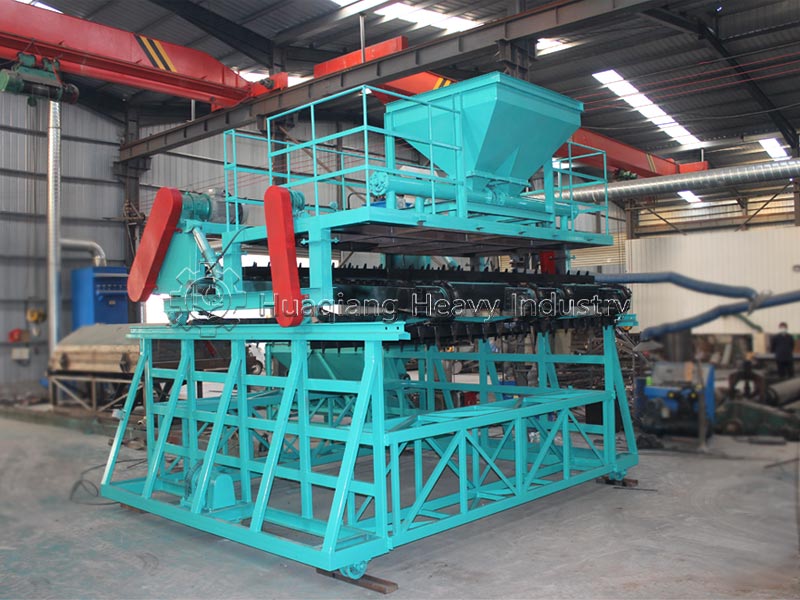

Choosing a Chain Compost Turning Machine requires matching the fermentation tank, processing capacity, material characteristics, and core configuration, while considering durability and practicality. Below are simplified selection guidelines.
First, match the fermentation tank specifications. Select the model based on the tank width; 3m, 4m, and 5m are commonly used. The turning width should be slightly larger than the tank width. The tank depth should ideally be 1.5-2 meters, prioritizing models with adjustable depth. The track should be laid on top of the tank. For high-capacity operations, a transfer cart can be used to enable multi-tank operation, improving equipment utilization.
Second, determine the power based on daily processing capacity. For daily processing under 50 tons, choose the 3000 model (45-55kW); for 50-150 tons, choose the 4000 model (52-60kW); for over 150 tons, choose the 5000 model (65-75kW). Variable frequency speed control is recommended, as it allows for adjustable travel speed, more even turning, and less material accumulation.
Furthermore, select the appropriate structure based on the material characteristics. For processing highly moist and sticky materials such as manure and sludge, a high-torque reducer and wear-resistant curved toothed cutters should be selected. For materials containing a high amount of sand and gravel, the chain plates and turning teeth should be made of high-manganese steel or wear-resistant alloy materials. For materials prone to clumping, spiral-arranged claw teeth are preferable for better dispersing.
Finally, considering budget and automation requirements, small-scale plants can opt for manual control models, which are low-cost and easy to operate. For large-scale production lines, it is recommended to equip them with automatic temperature control, spraying, and timed start/stop functions to reduce manual labor and improve fermentation quality. Simultaneously, choosing a manufacturer with excellent after-sales service and timely supply of wear parts ensures the long-term stable operation of the organic fertilizer fermentation production line.