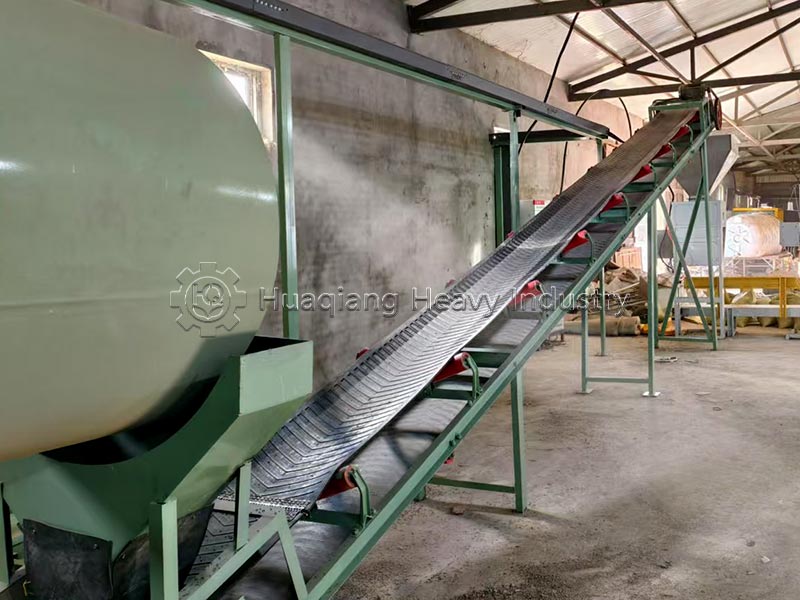

Proportioning deviations in BB fertilizer production lines directly affect fertilizer quality. Improvements can be made in four aspects: raw materials, metering equipment, feeding operations, and operation and maintenance management.
First, standardize the state of raw materials. Pre-screen and break up lumpy materials to ensure loose and uniform particles. Standardize the particle size of various raw materials to reduce particle size differences and minimize proportioning imbalances caused by stratification during conveying. Strictly control the moisture content of raw materials to prevent dampness, adhesion, and unstable feeding. Store materials separately to prevent mixing, reducing metering errors from the source.
Second, calibrate and maintain the batching and metering equipment. Regularly zero and calibrate the electronic batching scales, and clean dust and residual materials from the scale body and sensor surfaces to prevent dust accumulation from affecting sensing accuracy. Check the hopper arch-breaking device to prevent inconsistent feeding speeds and material interruptions. Timely repair the discharge valves to ensure uniform and stable discharge speed, and replace any aged or damaged sensors immediately.
Standardize feeding and production operations, strictly following the order of feeding heavy materials first, then light materials, and bulk raw materials first, then trace elements. Control the total amount of ingredients dispensed at one time to avoid overloading production, and set a reasonable feeding speed according to the formula. When switching product formulas, thoroughly empty the equipment of any residual material to prevent mixing of old and new materials and resulting in incorrect proportions.
Conduct daily inspections and parameter control of the equipment. Regularly check the sealing and smoothness of conveyor and discharge components, and troubleshoot belt slippage and discharge jamming. Maintain fixed equipment operating parameters and avoid arbitrarily changing feeding time and speed. Establish a batch sampling inspection system, taking samples of each batch of finished product to test nutrient content, and promptly fine-tuning equipment parameters if deviations occur. Simultaneously, ensure proper moisture and dust control in the workshop to reduce environmental interference and stabilize batching accuracy.