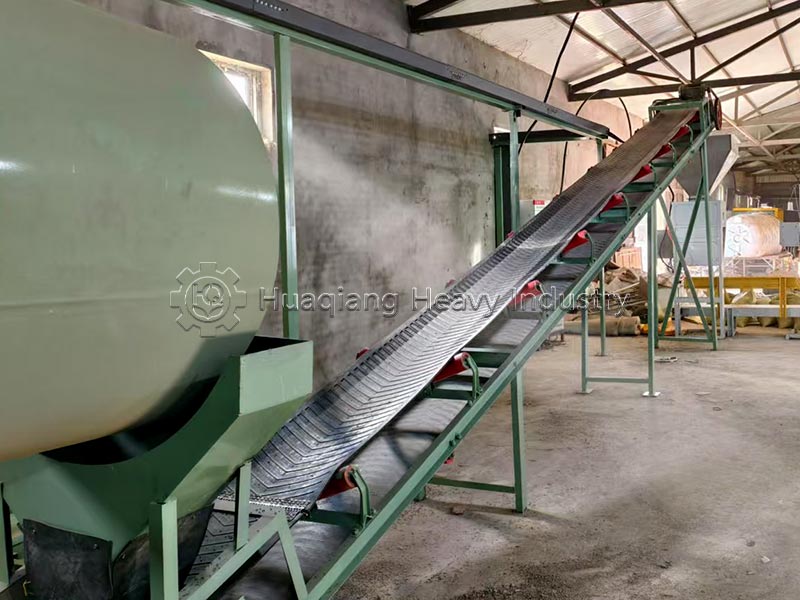

With the widespread adoption of soil testing and formula fertilization and the standardized management of the fertilizer industry, traditional manually operated NPK bulk blending machine can no longer meet the requirements of production, quality inspection, environmental protection, and traceability. Intelligent transformation of NPK blending fertilizer production lines has become a multi-dimensional necessity, covering the entire process of ingredient mixing, production control, environmental protection, operation and maintenance, and data management.
Precise automatic ingredient mixing is a core intelligentization requirement. Traditional manual feeding and weighing has large errors, easily leading to insufficient nitrogen, phosphorus, and potassium nutrients. The equipment needs to be equipped with a high-precision weighing module and a PLC intelligent control system. Each raw material silo should have independent frequency conversion feeding to dynamically compensate for weight deviations caused by material bridging and uneven feeding, controlling the mixing ratio error within 0.5%. The system can store hundreds of formulas, allowing for switching without manual recalculation. It can also automatically add micronutrients such as calcium, magnesium, and boron to achieve customized fertilizer blending to suit the soil needs of different regions.
Full-process automated linkage control reduces reliance on manual labor. The entire production line features one-button start/stop for batching, conveying, mixing, screening, and packaging. All equipment is interlocked and operates in tandem; if any stage experiences blockage or material shortage, the entire line automatically issues warnings and slows down to prevent material accumulation and waste.
Intelligent operation and maintenance, along with remote control, are essential for cost reduction. Equipment is connected to an IoT platform, allowing managers to remotely view production capacity, energy consumption, and fault records via mobile phones and computers. The system predicts potential problems such as belt wear and sensor drift, sending early maintenance reminders to reduce unexpected downtime. It automatically calculates power consumption and raw material loss per ton of fertilizer, generating energy consumption reports to assist factories in optimizing production scheduling and controlling operating costs. This comprehensive intelligent transformation, balancing production efficiency, product quality, environmental compliance, and refined management, is an inevitable trend for the upgrading of the blended fertilizer industry.