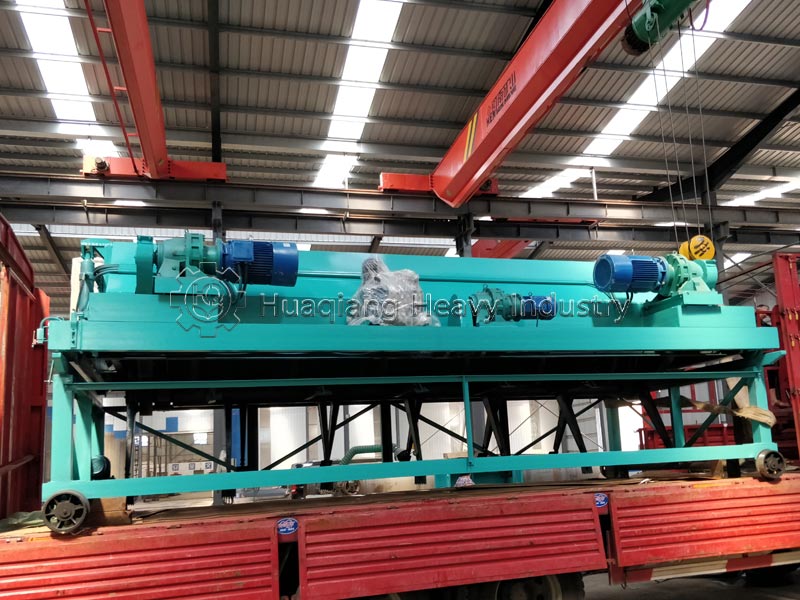

During the long-term operation of hydraulic compost turning machines, issues such as jerky movement, excessive load, and high material-turning resistance can lead to increased energy consumption and a higher risk of mechanical failure. By implementing structural adjustments, parameter matching, material management, and routine maintenance, the overall operating resistance can be effectively minimized.
The rational regulation of the hydraulic system is paramount. Based on the thickness and hardness of the material being processed, excess hydraulic pressure should be reduced and the flow rate appropriately matched to avoid high-pressure overload conditions. Regular checks of hydraulic oil viscosity are essential; compliant hydraulic oil should be replaced on schedule, and filter elements and oil lines must be cleared of impurities to prevent flow obstructions that could result in power loss and sluggish operation.
Optimizing turning parameters is also crucial. The lifting depth of the main shaft should be adjusted in accordance with the height of the material layer to prevent the turning blades from digging excessively deep into the material bed. It is advisable to appropriately lower both the main shaft’s rotational speed and the machine’s travel speed, adopting a “low-speed, steady-travel” mode to reduce the abrasive friction and compressive resistance between the mixing blades and the material, thereby preventing material entanglement or clogging that could increase the operational load.
Proper maintenance of the guide rails and travel components is indispensable. The parallelism of the guide rails should be calibrated, and any accumulated material, debris, or clumps on the rails must be cleared to ensure the smooth gliding of the travel wheels. Travel bearings and rollers should be lubricated with grease at regular intervals to minimize mechanical friction; furthermore, severely worn travel wheels and guide rail accessories must be replaced in a timely manner.
Standardized material pre-treatment is a prerequisite for efficient operation. Large lumps of material should be crushed and agglomerated raw materials broken apart in advance. Strict control over the material’s moisture content is also critical to prevent wet, sticky substances from adhering to and encasing the main shaft and blades. At the end of every shift, any entangled debris or accumulated material layers on the turning shaft should be cleared, and any deformed blades should be ground smooth to reduce material-turning resistance. Concurrently, all frame connections and fasteners should be tightened to prevent structural instability or deformation that could induce additional operational loads, thereby ensuring the low-resistance, energy-efficient, and stable operation of the fertilizer fermentation equipment.