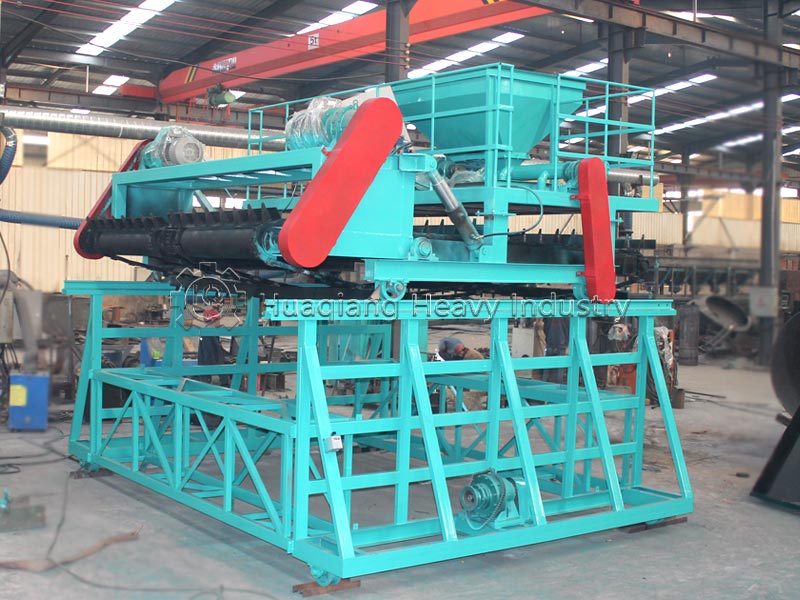

The chain compost turning machine is the core equipment in an organic fertilizer fermentation production line. Its operation process is standardized and clear, enabling continuous fermentation and uniform oxygen supply. Overall, it is simple to operate and runs stably.
Before starting, complete the necessary preparations. Check the chain, sprockets, and drive belts for damage. Lubricate the bearings and gearbox. Ensure the walking track is free of debris and the foundation is stable. Simultaneously, clean and level the material in the fermentation tank to prevent large clumps or foreign objects from obstructing the equipment. Only start the equipment after verifying that the on-site circuits and control switches are functioning normally.
During operation, first start the turning and turning main shaft motor. After the chain plate turning and turning components are running smoothly, start the walking motor. The equipment will slowly move forward along the fermentation tank track. The turning and turning chain plates penetrate deep into the material, turning and breaking up the anaerobic fermentation material at the bottom, allowing the material to fully contact the air, increasing oxygen content, and simultaneously dissipating internal heat and moisture, promoting rapid microbial fermentation. During operation, adjust the walking speed according to the material humidity and fermentation temperature. Slow down the speed appropriately when humidity is high and temperature is low to increase the turning depth and ensure uniform fermentation. After turning and tossing to the end of the fermentation tank, the walking motor and main shaft motor are stopped sequentially, completing a single turning operation. In daily operation, turning is performed every 2-3 days, with the frequency adjusted flexibly according to the ambient temperature; turning is increased appropriately during hot seasons.
After operation, promptly clean any material adhering to the chain plate, check for wear on components, and tighten any loose fasteners. Regularly maintain and repair the transmission components and clean debris from the tracks. Standardized operating procedures effectively extend equipment life, ensure sufficient fermentation and thorough decomposition of materials, and lay a solid foundation for subsequent granulation production.