

In the field of fertilizer production equipment, double-roller extrusion granulators and BB (Bulk Blending) fertilizer blending lines represent two distinct yet complementary technical pathways. The former directly transforms powdered materials into high-strength granules using high pressure, while the latter physically mixes pre-formed granules according to precise formulas. Understanding the process fundamentals and operational scope of these two pathways is crucial for fertilizer manufacturers seeking to optimize equipment selection and maximize return on investment.
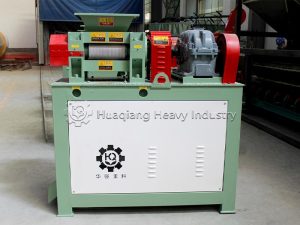
The core operating principle of the double-roller extrusion granulator (also known as a fertilizer roller press) is based on purely physical extrusion forming. Under high pressure, dry materials agglomerate into dense, hard sheets or “cakes”—a process known as extrusion—which are subsequently crushed and screened into granules—a process known as granulation. Extrusion serves two purposes: expelling air from between particles and bringing particles close enough together to generate intermolecular forces such as van der Waals forces, adsorption, crystal bridging, and mechanical interlocking. The structural strength of the resulting granules relies on these intermolecular forces. A standout advantage of double-roller extrusion granulation is its dry, ambient-temperature process; the entire operation requires no added water, heat, or binders. Compared to traditional steam granulation, dry granulation eliminates the drying stage, thereby preventing issues like caking caused by residual moisture during storage and significantly reducing energy consumption. The equipment primarily consists of a frame, a drive system, pressure rollers, and a feeding system. Production lines typically incorporate crushers, screening equipment, and packaging systems, utilizing a drying-free workflow that enables ambient-temperature production and single-pass product forming. These granulators accommodate a wide range of raw materials; they have been successfully used to process over twenty types of materials—including ammonium nitrate, urea, ammonium chloride, potassium chloride, and potassium sulfate—and offer flexible formulation capabilities, allowing a single unit to produce dozens of different product formulations. The equipment operates without generating waste gas, wastewater, or solid waste, fully complying with environmental protection standards.
In the field of bulk blend (BB) fertilizer production, NPK blenders and BB fertilizer blending lines perform the task of precise “granule-to-granule” mixing. BB fertilizer production is essentially a purely physical process: pre-granulated basic fertilizers—such as large-granule urea, monoammonium phosphate (MAP), and potassium sulfate—are blended directly according to soil-test-based formula data. The complete BB fertilizer blending line comprises a raw material storage and conveying system, a proportioning system, an NPK blender, and an automatic packaging system. The proportioning system utilizes a static batching setup featuring multiple hoppers and a single scale; materials are discharged intermittently from the hoppers and weighed in a single hopper scale, ensuring precise proportioning according to the formula. Each ingredient is fed using a two-stage process—fast feed followed by slow feed—achieving a weighing accuracy of ±0.1%. Once the materials enter the NPK blender, they are mixed rapidly and uniformly through the action of a specially designed mixing mechanism. The entire line is computer-controlled, allowing for flexible and convenient formula switching; it offers a single-batch mixing capacity of 1 to 2 tons with a mixing time of only 2 to 3 minutes.
Twin-roll extrusion granulators and BB fertilizer blending lines serve distinct needs: the former handles “powder-to-granule” granulation, while the latter manages “granule-to-granule” blending. When an enterprise possesses powdered raw materials and needs to produce its own granular base materials, the twin-roll extrusion granulator offers a dry-process forming solution that eliminates the need for drying. Conversely, when an enterprise purchases pre-granulated single-nutrient fertilizers with the goal of producing blended fertilizers with flexible formulations, the BB fertilizer blending line represents the most cost-effective, fastest-to-commission, and most flexible option for formula changes. A flexible combination of these two technical routes enables enterprises to cover the entire process—from powder granulation to finished product blending—adapting dynamically to changes in raw material sources and market demand.