

When purchasing fertilizer equipment, capacity is the figure most frequently compared. However, a closer look at quotations reveals a confusing inconsistency: a BB fertilizer line might be rated at “10 tons per hour” and a roller extrusion granulation line at “8 tons per hour,” whereas a disc granulator is listed as “0.5 tons per batch.” Although all refer to capacity, the differing units reflect fundamentally different production logics.
BB fertilizer production line: Batch-style mixing; capacity is calculated by the “batch.” The core of the line is the mixer, which typically employs a twin-shaft paddle structure; materials undergo a three-dimensional tumbling motion within the chamber, with a mixing time of 2 to 5 minutes per batch. The operational cycle follows a sequence of “feeding—mixing—discharging—re-feeding,” meaning one batch must be completed before the next begins. Consequently, capacity calculations must account for the batch cycle time, including mixing, feeding, and discharging. A mixer rated at “1 ton per batch” with a 5-minute cycle has a theoretical hourly output of 12 tons; however, actual output often falls short due to constraints such as ingredient dosing speeds and packaging rates. Ultimately, the capacity of a BB fertilizer line is defined as “batch capacity × number of batches per hour.”
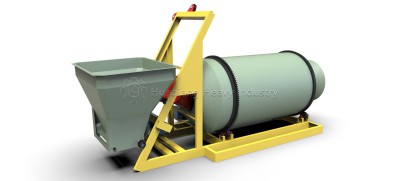
Roller extrusion granulation line: Continuous production; capacity is measured in “tons per hour.” Roller press granulation lines utilize a continuous extrusion process in which powdered material is fed continuously between two rollers via a screw feeder; the process involves extrusion, crushing, screening, and material recycling to form a closed loop. The system is designed for continuous operation under a constant load, with capacity measured in “tons per hour.” Yet, continuous production does not guarantee steady output; factors such as roller surface wear, fluctuations in the recycle ratio, or changes in material moisture content can cause actual hourly output to deviate from the nominal rating. An extrusion line nominally rated at 8 tons per hour might yield an actual stable output of 6 to 7 tons. Bio-organic fertilizer disc granulators operate in a mode that falls somewhere between batch and continuous processing. They utilize physical forming at ambient temperatures; materials roll into spheres on an inclined disc surface, with granules continuously overflowing from the rim. While production capacity is typically expressed in “tons per hour,” it is heavily influenced by factors such as material moisture content, particle fineness, and ambient temperature and humidity. Bio-organic fertilizer granulation requires maintaining temperatures below 55°C throughout the process; if ambient temperatures are high or frictional heat builds up, the feed rate must be reduced, resulting in a corresponding drop in actual output.
When designing a production line, one cannot simply convert between “batch capacity” and “continuous capacity.” For instance, selecting equipment for a BB fertilizer line based solely on tons-per-hour output—while ignoring batch cycle times—can lead to an incorrect assessment of the required scale. Conversely, managing an extrusion granulation line with a batch-processing mindset—involving frequent start-stop cycles—can accelerate wear on the roller surfaces. Understanding the time-based operational characteristics of the production line before discussing capacity figures is far more meaningful than merely comparing numbers on a quotation.