

While both the granules produced by a double-roller press granulator and the raw materials typically used in a BB fertilizer production line—such as urea, ammonium phosphate, and potassium chloride—are technically “granules,” they differ significantly in terms of shape, surface characteristics, and flowability. When extruded granules are fed directly into a BB fertilizer mixer, the issues that arise generally stem not from the mixer itself, but from the physical state of the granules prior to entering the mixing chamber.
Differences in shape compromise flowability. A double-roller press granulator compresses powdered material into dense sheets, which are subsequently crushed and screened. The resulting granules are often cylindrical or irregularly flake-like with sharp edges, leading to a significantly larger angle of repose compared to spherical granules. BB fertilizer mixers are designed to handle finished, free-flowing granules that should tumble and circulate smoothly within the mixing chamber. Extruded granules, with their irregular shapes and sharp edges, tend to interlock or form “bridges” (clogs). This hinders discharge, necessitates longer mixing times, and increases the rate of granule breakage.
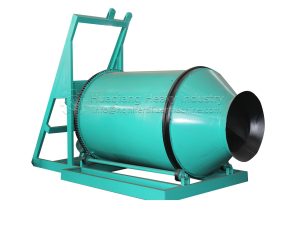
Mismatched particle sizes lead to segregation. The primary objective of a BB fertilizer production line is not merely to achieve thorough mixing, but to ensure a consistent nutrient ratio in every single bag. If there is a substantial disparity in particle size between the extruded granules and other components like urea or potash, the mixture—even if blended to a coefficient of variation (CV) of ≤5% within the mixer—will inevitably re-segregate during subsequent handling, such as conveying, discharging, or vibration during packaging. Finer particles tend to settle at the bottom, while larger particles rise to the top, causing the nutrient distribution within the bag to become inconsistent.
A BB fertilizer mixer is designed to “preserve” particle shape, not to “reshape” it. These mixers utilize a low-shear, gentle blending process intended to achieve a uniform mixture within 2 to 5 minutes, all while minimizing damage to the original form of the granules. Such equipment cannot round off cylindrical granules, nor can it screen out particles that fall outside the desired size range. Relying on a mixer to “fix” extruded granules that fail to meet shape or size specifications—effectively forcing equipment designed for blending to perform a shaping function—is fundamentally the wrong approach.
A more viable workflow is: “shape, then screen, then blend.” If roller-extruded granules are intended for use as raw materials for bulk-blended (BB) fertilizer, they should first be processed through a rounding machine to achieve a near-spherical shape. Subsequently, they should be screened to ensure their particle size falls within the target range, minimizing any discrepancy in average particle size compared to other components like urea or potash, before being fed into the BB fertilizer production line’s raw material silos. During the formulation process, these granules should be stored in dedicated silos and metered separately; batch sizes and mixing durations must be carefully controlled, and a final screening stage should be implemented prior to packaging. In this setup, the roller-press granulator is tasked with “producing high-strength granules,” while the BB fertilizer mixer is responsible for “maintaining granule integrity and ensuring a uniform blend.” Each piece of equipment performs its intended function, rather than attempting to compensate for the shortcomings of the other.