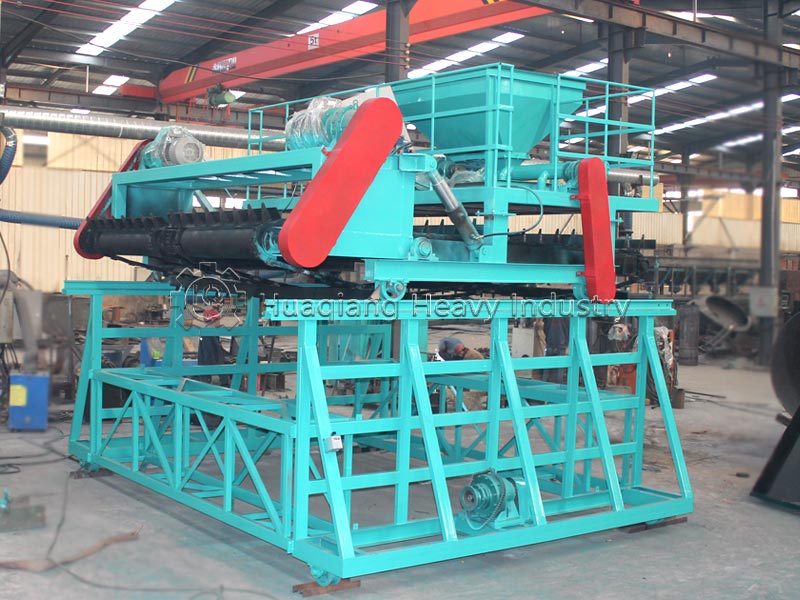

Chain compost turning machines have a strong load-bearing structure and a large turning depth, making them suitable for various organic fertilizer fermentation raw materials. Appropriate material selection can reduce equipment wear, improve fermentation efficiency, and extend equipment life.
Firstly, they are best suited for high-moisture, high-fiber, large-piece loose raw materials, including livestock and poultry manure, straw, mushroom residue, distiller’s grains, garden branches, mushroom residue, and kitchen waste. These materials are loose and well-aerated, and the chain plate structure is less prone to clogging and sticking, resulting in excellent turning and dispersing effects, suitable for windrow and trough high-temperature fermentation.
Secondly, the moisture content of the raw materials should be controlled, ideally maintained at 50%–60%. Overly dry raw materials easily generate dust and are easily pulverized, accelerating wear on the chain plates and scrapers; excessively high moisture content easily leads to caking and sticking, increasing equipment load, causing material accumulation on the chain plates, increasing motor overload and corrosion risk. Dry materials can be used to adjust the carbon-nitrogen ratio and moisture content.
Strictly control material impurities; stones, bricks, and hard metal objects are strictly prohibited from entering the material pile. Chain plates and chain claws are precision wear-resistant components. Hard impurities can cause jamming, deformation, and breakage, exacerbating chain wear and causing abnormal vibration and noise in the equipment.
Avoid prolonged use of highly corrosive and strongly acidic materials as a single source. Salty and highly acidic/alkaline wastes must be properly mixed and neutralized to prevent rust and aging of the chain plates and frame. The material mix must ensure a balanced carbon-to-nitrogen ratio and a mix of soft and hard materials to prevent material compaction and reduce resistance during turning.
Adjust the travel and turning speeds according to the material’s specific gravity. Reduce the travel speed for heavy materials and appropriately increase the speed for light and loose materials. Proper material selection and mixing ensure uniform fermentation and decomposition, reduce equipment malfunctions, and significantly extend the service life of the chain plate compost turner.