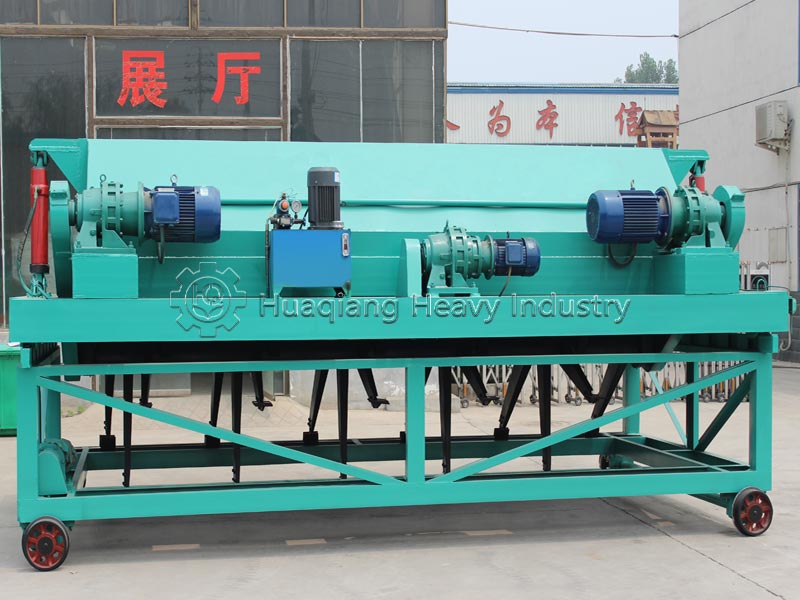

The hydraulic compost turning machine is the core equipment for organic fertilizer fermentation. The key to its operation lies in controlling temperature, oxygen, moisture, and stroke to ensure thorough fermentation, odorlessness, and uniform decomposition.
The timing of turning is crucial. The starting standard is a pile temperature of 55-65℃. Temperatures below 50℃ result in slow fermentation and incomplete sterilization, while temperatures above 70℃ can kill beneficial bacteria and destroy nutrients. Generally, turn the pile once a day during the warming period, once every 2-3 days during the high-temperature period, and reduce the frequency during the cooling period to ensure aerobic fermentation throughout.
Moisture control is critical. The ideal moisture content for fermentation is 50%-60%, where the pile can be formed into a ball when squeezed in the hand, but not dripping wet. Excessive moisture easily leads to anaerobic fermentation, foul odor, and clumping. Dry materials such as straw and rice husks can be added during turning to adjust the moisture level. Excessive dryness stagnates fermentation; atomized watering is necessary to prevent waterlogging.
The turning operation must be standardized. Adjust the turning depth and walking speed according to the material thickness and moisture content to ensure the bottom material is completely turned over, leaving no dead corners and preventing anaerobic blackening at the bottom. Spread the material evenly during turning to avoid uneven piles and ensure consistent ventilation and oxygen supply. Never force start the equipment under load to prevent overload damage.
The tank and ventilation must be coordinated. Keep the fermentation tank well-drained to prevent water accumulation at the bottom; provide ventilation ducts or activate bottom aeration to improve oxygen supply efficiency. Cover the tank during rainy weather to prevent rainwater from entering and increasing moisture content.
Daily maintenance is essential. Before operation, check the hydraulic system, chains, and blades, and promptly remove any tangled debris; after turning, clean any remaining material from the tank walls to prevent mold and bacterial contamination.
Strictly following these points will shorten the fermentation cycle, ensuring the material is fully decomposed, odorless, and free of insect eggs, laying a good foundation for subsequent crushing and granulation.