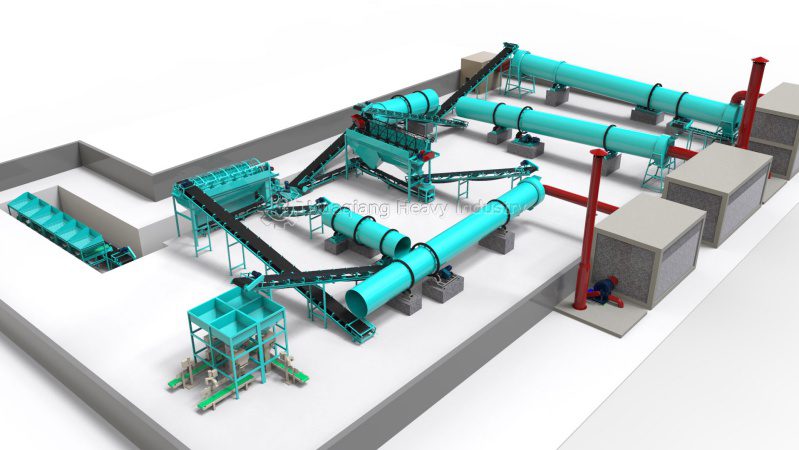

The selection of NPK bulk blending machine should be based on six key dimensions: production capacity, batching accuracy, mixing effect, materials, automation, and site environmental protection. This will help avoid common problems such as excessive nutrient levels, particle stratification, and corrosion losses.
First, determine the production capacity level based on production and sales scale. Township fertilizer blending stations and agricultural supply stores should choose small lines with an hourly output of 3-8 tons, which require less land and have lower investment. County-level fertilizer plants mainly use medium-sized fully automated lines with an hourly output of 8-15 tons to ensure stable supply throughout the year. Large regional plants with an annual output of over 50,000 tons should choose large modular production lines with an hourly output of 15-30 tons, capable of continuous 24-hour operation. Simultaneously, reserve 10%-20% capacity margin to cope with peak demand during peak fertilizer seasons.
Second, the core batching system should prioritize independent weighing in each bin, using high-precision weighing sensors. The measurement error of a single raw material should be controlled within ±0.5%, meeting national standards for blended fertilizer nutrient content. The number of silos matches the types of raw materials, typically 6-12 silos, accommodating both nitrogen, phosphorus, and potassium single-element fertilizers and micronutrient additions. The PLC system supports one-click retrieval of multiple formulas and traceable production data, avoiding errors caused by manual proportioning.
The mixer is crucial for quality; a twin-shaft paddle mixer is preferred, featuring three-dimensional convection mixing with a mixing uniformity of ≥95%. Combined with an anti-segregation discharge structure, it solves the stratification problem caused by the large difference in specific gravity between urea and potassium fertilizer particles. Ordinary ribbon mixers are avoided due to poor mixing effect and high material residue. Parts in contact with fertilizer are made of 304 stainless steel to resist fertilizer corrosion, reduce material adhesion, and facilitate cleaning.
Supporting equipment is matched as needed. Raw material conveying uses a fully sealed belt elevator equipped with a pulse dust collector to meet environmental inspection requirements. The packaging machine is compatible with 5-50kg universal bags and can switch to ton bags. A modular design for the NPK blending fertilizer production line is preferred, allowing for future addition of silos and automation upgrades without requiring complete line replacement. Finally, verify the manufacturer’s after-sales service and supply of vulnerable parts, and choose equipment manufacturers with comprehensive machine warranty and local service outlets to reduce long-term operation and maintenance costs.