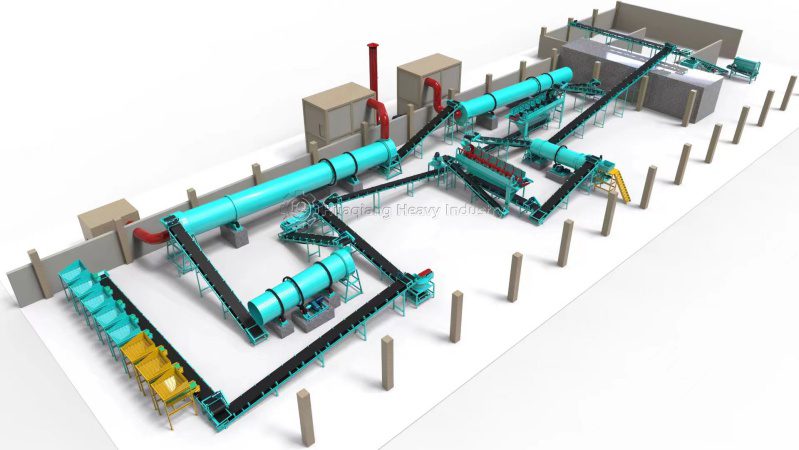

The market size of NPK blending fertilizer production lines is influenced by multiple factors, with industry trends deeply intertwined with agricultural development, policy controls, and technological advancements.
Agricultural planting demand is the fundamental support. The continuous construction of high-standard farmland in China, the increasing number of family farms and specialized cooperatives, and the resulting large-scale planting drive up demand for formulated fertilizers, directly stimulating the procurement of new production lines. Simultaneously, the expanding planting area of cash crops such as fruits, vegetables, and seedlings, along with diversified formulation demands, compels companies to upgrade their NPK blending machine, boosting sales of mid-to-high-end models. Fluctuations in the prices of nitrogen, phosphorus, and potassium raw materials also affect the enthusiasm of fertilizer companies for expanding production and technological upgrades, indirectly influencing the equipment market.
Relevant policies play a crucial guiding role. Supportive policies such as fertilizer reduction and efficiency improvement, and soil testing and formula fertilization, continuously promote the development of the blended fertilizer industry. Tightening environmental and energy consumption standards, and upgraded controls on dust and exhaust emissions, accelerate the phasing out of high-pollution, high-energy-consuming old equipment, releasing significant demand for equipment upgrades. Subsidy policies for intelligent fertilizer blending equipment in some regions will further stimulate market vitality.
Technological iteration drives product structure upgrades, with automated, high-precision batching, and fully enclosed environmentally friendly models gradually replacing traditional equipment, continuously increasing the added value of equipment. The widespread adoption of intelligent control systems and online monitoring technologies accelerates the replacement of existing equipment.
Furthermore, market competition and overseas trade have also had a significant impact. Increased industry concentration in China, with large fertilizer companies concentrating their procurement, has driven up demand for high-end equipment; growing demand in overseas markets such as Southeast Asia and Africa has led to a steady increase in equipment exports, becoming a new growth engine for market size.