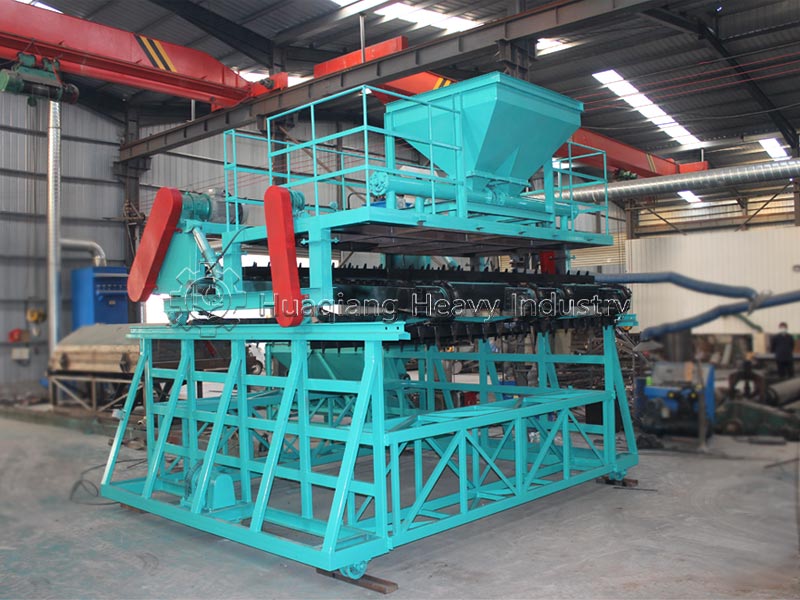

The cutters of chain compost turning machines are wear parts. Long-term use with straw, manure, and materials mixed with sand and gravel can easily cause wear and deformation, reducing turning efficiency and increasing replacement costs. Wear can be reduced from three aspects: source control, operation, and maintenance.
First, proper raw material pretreatment is the most fundamental method. Stones, bricks, and metal debris mixed in the raw material are the main cause of rapid chipping and severe wear of the cutters. Screening and impurity removal are essential before production. Simultaneously, control the material moisture content. Overly dry material produces more dust and stronger friction, accelerating cutter wear; excessive moisture causes the cutters to stick and bear weight, exacerbating impact wear. Maintaining a moderate moisture content significantly reduces losses.
Second, standardize the operation and running parameters of fertilizer production machine. Forcibly starting the equipment with material and hard turning in place are strictly prohibited. Start smoothly and operate at a constant speed. Adjust the depth of the cutter penetration according to the pile height, avoiding excessive depth or overloading to reduce the hard impact resistance of the cutters. The walking and turning speeds should not be too high; low-speed, uniform operation using variable frequency drives reduces high-frequency friction and impact between the cutter teeth and the material.
Then, ensure proper accessory selection and daily maintenance. Prioritize high-manganese steel and alloy wear-resistant thickened cutter teeth for significantly improved wear resistance. Regularly check the cutter tooth fixing bolts; loose bolts will cause wobbling and uneven wear, requiring timely tightening. Periodically clean any adhering or caked material from the cutter tooth surface to prevent increased frictional load. Simultaneously, ensure proper tension of the chain and transmission components for smooth machine operation, effectively avoiding unilateral force and uneven load wear, and extending the service life of the cutter teeth.