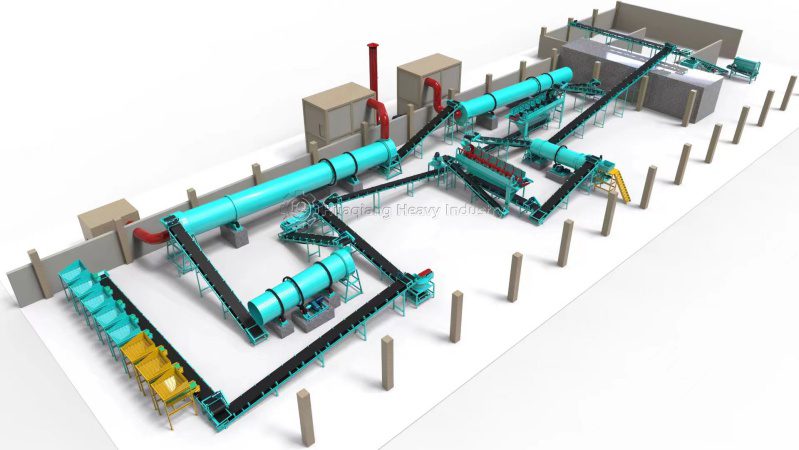

Poor discharge, bridging, and blockage in the batching silo are common problems in NPK blending fertilizer production lines. These are often caused by material characteristics, silo structure, auxiliary devices, and improper operation and maintenance. Troubleshooting can be done step-by-step, starting with the most difficult issues.
First, address the material itself. Moisture-induced clumping, mixed particles, and excessive dust are the main causes of blockage. Clumped materials need to be screened and crushed beforehand to control the moisture content and prevent wet material from entering the silo. Different particle sizes should be stored separately to reduce fine powder accumulation. Regularly clean the material adhering to the silo walls to prevent material buildup and narrowing of the discharge opening.
Second, optimize the silo and discharge structure. A small silo cone angle and insufficient discharge opening size can easily create dead zones. The discharge opening can be widened appropriately, and fluidizing air cushions, anti-bridging rods, or vibrators can be installed inside the silo to break up material bridging. Inspect gate valves, butterfly valves, and screw feeders, removing any stuck particles and debris from the valve bodies, repairing any deformed or jammed valve cores, and ensuring smooth valve opening and closing.
Then, debug the auxiliary conveying equipment. If the screw conveyor stalls or feeds slowly, reduce the speed and check for blade deformation or wear; replace severely worn blades promptly. If the belt feeder slips or accumulates material, adjust the belt tension and clean any accumulated material from the rollers. Properly control the silo level, maintaining a low to medium level to avoid overloading and compaction, which can exacerbate bridging.
Finally, ensure proper daily management and maintenance of the NPK bulk blending machine. Establish an inspection system, cleaning the silos, valves, and conveyor channels every shift; during the rainy season, ensure the raw materials and silos are sealed against moisture. Adjust the start/stop duration and frequency of the vibrator according to the different flowability of the raw materials to achieve automatic arch breaking. For aging silos that have been in use for a long time, the inner walls can be modified to a smooth material and guide plates can be installed to fundamentally improve the feeding conditions and ensure continuous and stable batching.