

In a vegetable greenhouse, growers encountered a strange problem: despite applying fertilizer according to the agricultural technology station’s formula, the cucumbers in the greenhouse were not growing uniformly. Testing revealed the problem lay in the fertilizer granules—some granules were high in nitrogen and low in potassium, while others were the opposite. During machine application, the heavy and light granules were separated, resulting in uneven growth, with some having vast fields while others had nowhere to stand. This seemingly insignificant problem of “uneven particle size” is the driving force behind the continuous evolution of the NPK blending fertilizer production line. This production line aims to solve more than simply “mixing several fertilizers together,” but rather how to make granules with different characteristics “coexist peacefully,” working hand-in-hand into every inch of soil.
It’s important to understand that urea granules in nitrogen fertilizer are like light, floating foam balls, while diammonium phosphate in phosphate fertilizer is like heavy pebbles; they naturally “can’t play together.” Traditional mixing methods either grind granules into powder due to excessive speed or result in clumping due to insufficient mixing. The core wisdom of the BB fertilizer production line lies in its “gentle yet precise” approach—using the slow shearing force of dual-shaft blades, it allows granules with significantly different densities to repeatedly convection and diffuse in three-dimensional space, much like hand-tossing a salad, ensuring each leaf is coated with dressing without crushing it. This perfectly balanced physical force keeps the coefficient of variation for mixing uniformity consistently low, truly achieving “every spoonful of fertilizer is a complete formula.”
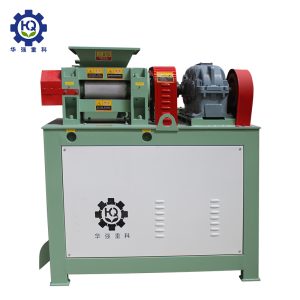
Speaking of the granules’ inherent vitality, the double roller press granulator plays a crucial role. The round fertilizer granules we see daily are not naturally formed. Inside the extruder, two rows of grooved rollers act like giant molds, instantly pressing dry powder into thin sheets under pressure of hundreds of megapascals. After granulation and screening, they become dense “pills.” The interesting aspect of this process is that it doesn’t rely on water for binding; instead, it uses pure physical extrusion to create a “clumping” effect between molecules. When powder particles are pressed close enough, the surface molecular forces spontaneously generate attraction, much like two pieces of glass sticking together after being moistened with water. This “dry granulation” not only eliminates the enormous fuel costs of subsequent drying but also preserves the original chemical form of nutrients, making it particularly suitable for special trace elements that are easily decomposed in water.
Even more intriguing is that this production line also acts as an “environmental translator” in the agricultural chain. Every year, hundreds of millions of tons of livestock and poultry manure and crop straw are produced nationwide. These are rich in organic matter but difficult for crops to absorb directly. However, using roller extrusion technology, these organic raw materials, after fermentation and decomposition, can be compressed into slow-release organic granules, solving the environmental pressure of waste accumulation and replenishing the soil with long-term nutrients. From this perspective, the NPK Blending Fertilizer Production Line is no longer a cold, impersonal machine, but a “nutrition converter” connecting farms, growers, and dining tables—it injects industrial precision thinking into agricultural production, making “on-demand meal planning” more than just empty talk.