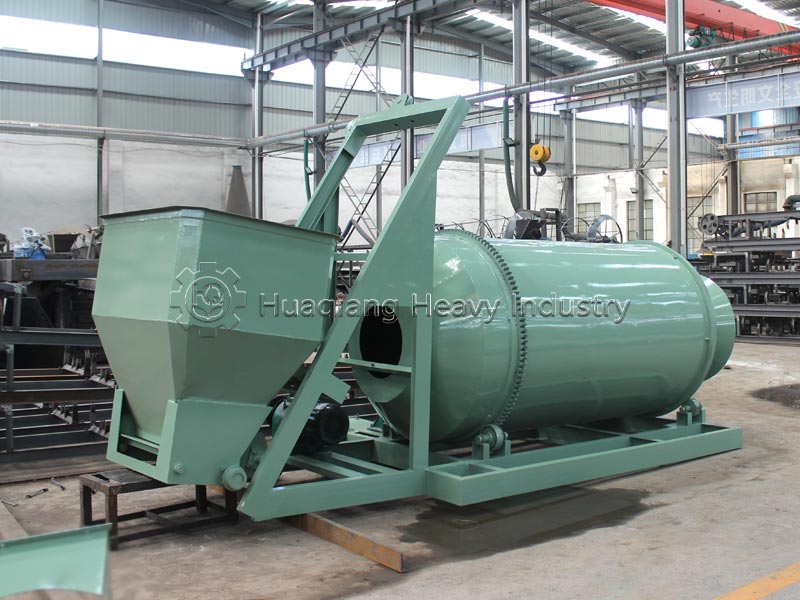

BB fertilizer—also known as bulk-blended fertilizer—is created through the physical mixing of various granular fertilizers. The BB fertilizer mixer serves as the core hub of the entire production line; it directly determines product quality and holds an irreplaceable position.
Regarding the BB fertilizer production line’s process, upstream automatic batching equipment conveys nitrogen, phosphorus, and potassium granules, along with secondary and trace elements, into the mixer. Without a uniform mixing stage, nutrient distribution becomes unbalanced—leading to issues such as localized nitrogen excess or deficiencies in phosphorus and potassium. This results in uneven crop growth after application and renders the product substandard. By using internal blades to continuously turn the materials, the mixer ensures that nutrient variances in every bag meet national standards, making it the key piece of equipment for quality control.
In terms of production efficiency, the mixer dictates the maximum capacity of the entire line. High-capacity continuous mixers can synchronize with multi-bin batching systems and enable uninterrupted discharge and packaging, effectively linking batching scales with packaging machines to facilitate continuous assembly-line operations. If the mixing equipment lacks capacity or operates too slowly, it causes material backups at the batching stage and downtime at the packaging stage, disrupting the production rhythm and significantly reducing overall output.
Regarding cost and waste control, high-quality mixers feature wear-resistant inner walls and minimal material residue; this eliminates the need for extensive cleaning when switching formulas, thereby reducing raw material waste. Their enclosed structure suppresses dust dispersion, lowers the load on dust-removal systems, eases environmental compliance pressure, and cuts manual cleaning costs. Conversely, inferior mixing equipment leads to uneven blending and severe material buildup; frequent shutdowns for cleaning increase labor costs and material losses.
From a market compliance perspective, nutrient uniformity is a key focus of product inspections. If a mixer fails to achieve adequate blending, there is a high risk of failing quality checks and facing product recalls. A stable, reliable mixer ensures consistent blending uniformity over the long term, helping manufacturers avoid regulatory penalties and maintain their reputation.
In summary, the mixer bridges the upstream and downstream stages of the production line and balances capacity, quality, environmental protection, and regulatory compliance, making it an indispensable core component of the BB fertilizer production line.