

There is a counter-intuitive phenomenon in the procurement of fertilizer equipment: the option with the lowest price often entails the highest total cost of ownership. Many factories focus solely on the figures in the quotation during the selection process, only to discover after commissioning that electricity costs, rework rates, and losses due to downtime far exceed expectations. Both NPK blending lines and roller press granulation lines (centered on the double-roller press granulator) involve hidden cost factors that are easily overlooked.
The first pitfall is “comparing installed power rather than actual electricity consumption.” The installed power of a blending line is indeed low—comprising a multi-bin static weighing system and a low-speed mixer, the total power is usually just a few dozen kilowatts because the process involves neither heating nor high pressure. In contrast, the power rating of individual machines in an extrusion granulation line appears higher, as the roller drive requires significant torque to “bite” into the material. However, the true cost difference lies not in the nameplate power, but in operating duration and load factor. While blending lines have low power ratings, they involve significant idle time while waiting for formula changes; extrusion lines, once stabilized, operate at full load, making electricity consumption per unit of output more controllable. An electricity consumption of approximately 8 to 15 kWh per ton of fertilizer is typical for the extrusion process, whereas for wet granulation, the fuel cost for the drying stage alone far exceeds this figure.
The second pitfall is “ignoring the hidden constraints of raw material particle size.” The blending process is far less tolerant of variations in raw material particle size than one might imagine. Urea granules typically range from 2 to 4 mm, diammonium phosphate (DAP) from 1 to 4 mm, and potassium chloride (MOP) from 1 to 3 mm. When these are mixed, if the difference in average particle size exceeds 1 mm, secondary segregation—caused by vibration during transport—becomes almost inevitable. Many factories purchasing NPK blending lines focus exclusively on batching accuracy and mixing uniformity metrics while overlooking the pre-screening of raw materials. The result is that while the mixture meets uniformity standards at the mixer outlet, subsequent testing of packaged product after two weeks in the warehouse reveals that nutrient distribution has deviated from the formula specifications. Solving this issue does not require replacing the main machine; instead, simply adding a vibrating screen before the raw materials enter storage—to bring the particle size variations of the different components within a reasonable range—is sufficient.
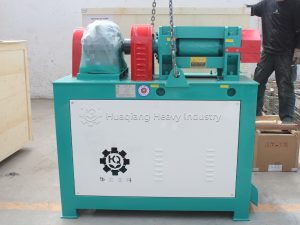
The third pitfall is “underestimating the long-term impact of roller wear on granule strength.” The compaction performance of a double-roller press granulator relies on the friction between the roller surfaces and the material. As the rollers wear over time, their ability to “bite” and draw in material diminishes; consequently, the density of the extruded sheet drops under the same hydraulic pressure, leading to a decline in granule strength. This deterioration is gradual, and operators often only realize there is a problem after receiving an increase in product quality complaints. In industry practice, rollers are typically made of high-chromium alloy steel or feature tungsten carbide coatings, with a normal service life of 800 to 1,500 hours, depending on material hardness and operating pressure. If this replacement cycle is ignored, the granules will shift from being robust enough to withstand loading without crumbling to becoming so fragile that they shatter at the slightest touch—a problem factories often discover only when it is too late.
The common thread among these three pitfalls is that none of them appear on the initial quotation, yet they continuously erode profits once production begins. The core competence in equipment selection lies not in comparing specification sheets, but in identifying the operational variables hidden behind those parameters.