

Farmers have a simple standard: you can tell if fertilizer is good or not just by looking at the granules. But few people have thought about how those uniform, firm, and dust-free granules are produced. The answer lies in three easily overlooked details—the “accuracy” of the npk bulk blending machine, the “gentleness” of the BB fertilizer mixer, and the “cleanliness” of the bio organic fertilizer equipment.
Let’s start with “accuracy.” The biggest problem with fertilizer blending is “good enough”—just close enough, roughly equal enough. But once it reaches the field, any nutrient deviation won’t be corrected. The npk bulk blending machine addresses precisely this “good enough” mentality. Its multi-compartment static scale weighs each raw material individually, minimizing error, ensuring that the nitrogen, phosphorus, and potassium ratios in each batch can withstand testing. It doesn’t pursue speed; it pursues “every bag is the same.” This almost obsessive precision is not an added bonus for fertilizer blending stations supplying thousands of acres of farmland; it’s the bare minimum—because they pay based on test reports.
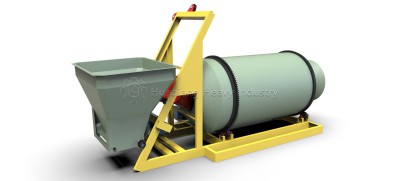
Next, let’s talk about “gentleness.” With a precise formula, even mixing is crucial. But evenness requires finesse—it can’t break down granules for the sake of uniformity. The BB fertilizer mixer‘s low-speed dual-shaft design allows granules of different specific gravities and sizes to repeatedly convection and diffuse within the drum, as gently as hand-stirring a salad. Lighter urea won’t be thrown to the top, and heavier phosphate fertilizer won’t sink to the bottom; every granule has a chance to come into contact with its neighboring components. Uniform mixing is achieved, and granule integrity is preserved. Those finished products, poured from the packaging with distinct granules and almost no powder, are all thanks to a mixer that understands “restraint.”
Finally, let’s talk about “cleanliness.” Inorganic fertilizers prioritize precision and uniformity, while bio-organic fertilizer equipment addresses a different issue—transforming viscous, damp, and odorous fermented materials into clean, loose, and easily granulated raw materials. The core capability of this equipment lies in screening and crushing: removing large, incompletely decomposed lumps, breaking up tangled fibers, and simultaneously separating lightweight impurities through air separation or dust removal systems. Clean material ensures that the resulting organic fertilizer granules won’t easily crumble and won’t become damp and moldy when stored in warehouses.
Therefore, behind every good fertilizer granule stands at least three “guardians”—a scale upholding precision, a mixer ensuring granule integrity, and the organic fertilizer equipment ensuring material purity. Every handful of fertilizer a farmer applies to the field is, in effect, a vote for these three processes.