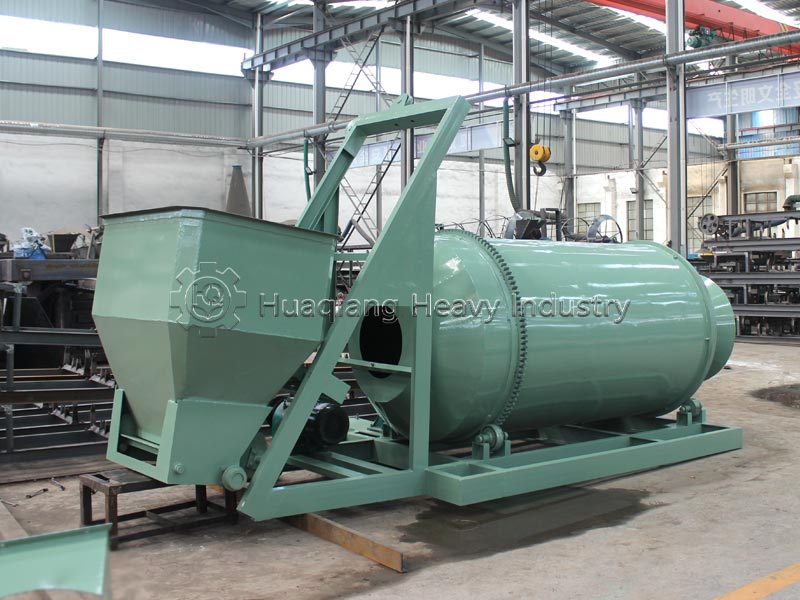

The core of optimizing the BB fertilizer mixer production process is precise ingredient proportioning, uniform mixing, intact granules, no stratification, no residue, and rapid formula changes. In terms of production processes, systematic improvements can be made in aspects such as ingredient proportioning, mixing, conveying, cleaning, and automation.
The ingredient proportioning system prioritizes multi-compartment static automatic proportioning, coupled with high-precision weighing sensors, and regular calibration to control measurement errors to a minimum, eliminating proportion deviations caused by manual feeding and ensuring stable ratios of nitrogen, phosphorus, potassium, and trace elements.
The mixing stage uses a BB fertilizer-specific twin-shaft paddle mixer, rationally controlling the filling rate and mixing time to avoid over-mixing and particle breakage. Optimizing the paddle angle and linear velocity achieves uniform mixing in a short time while reducing particle wear and pulverization, improving the appearance of the finished product.
The conveying and storage stages focus on preventing segregation and breakage. Reducing material drop height by using buffer hoppers and scraper conveyors minimizes the impact of falling materials. A flow guide device is installed in the finished product hopper to prevent stratification of large particles and fine powder, ensuring uniform nutrient content before and after packaging.
The cleaning and formula-changing processes should facilitate quick and easy cleaning. The mixer, hopper, and discharge port should employ a quick-opening structure to reduce dead-angle residue, meet the needs of multi-variety, small-batch production, and prevent cross-contamination between different formulas.
A complete and sealed dust collection system should be installed to centrally collect dust at dust-generating points such as batching, mixing, and packaging, improving the workshop environment, reducing raw material loss, and ensuring formula accuracy.
Simultaneously, the automation level of the production line should be improved, achieving integrated control of batching, mixing, conveying, and packaging, reducing manual intervention, and improving operational stability and production efficiency.
Through these process optimizations, the quality of BB fertilizer products can be significantly improved, losses reduced, and the entire BB fertilizer production line made more stable, efficient, and adaptable to the diverse production needs of the market.