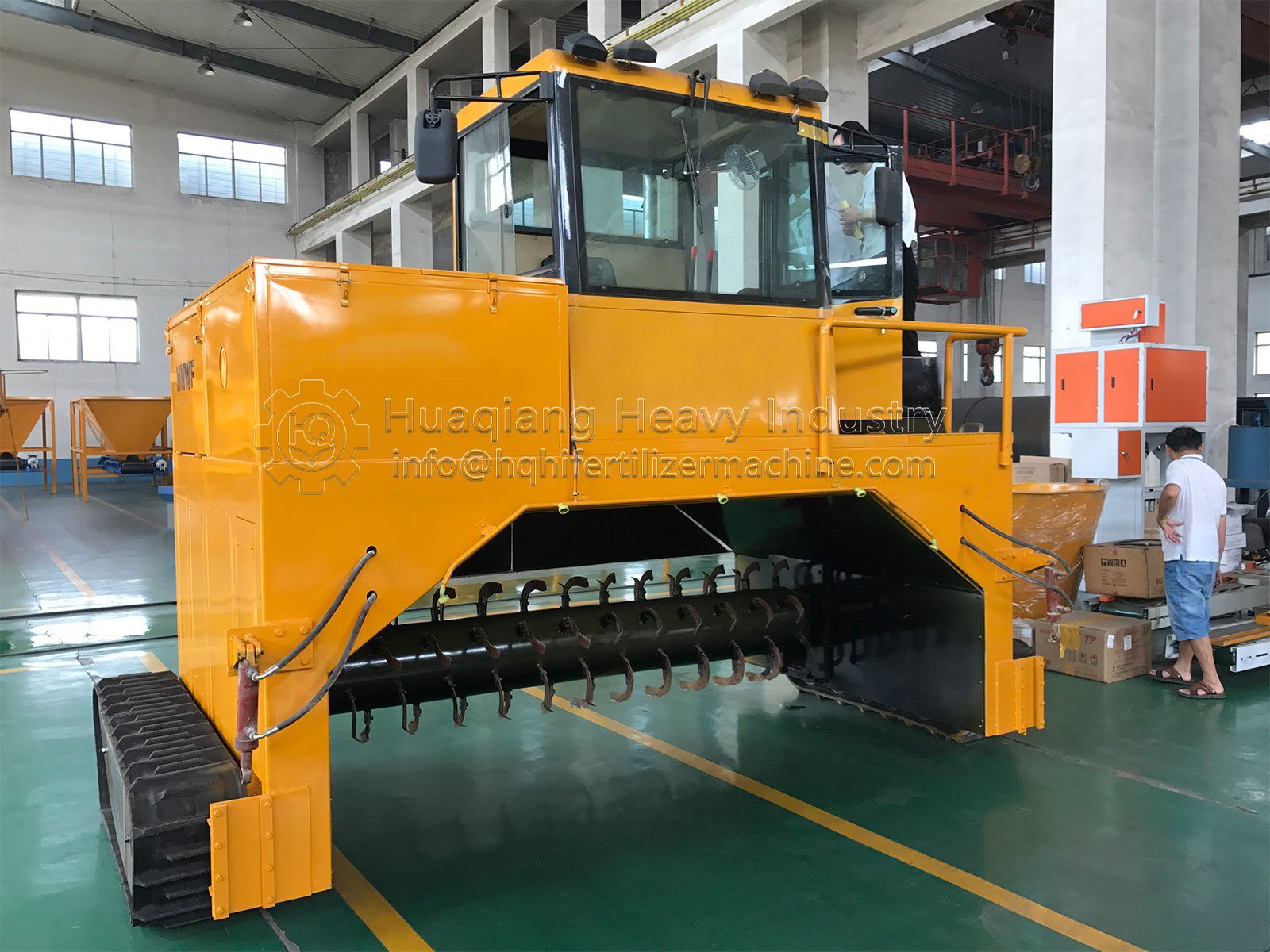

Connection plates for windrow compost turning machines fall into two categories: frame connections and track link connections. Selection is based on four core standards: material thickness, operational load, site environment, and assembly dimensions. Choosing the right components minimizes failures such as cracking, de-tracking, and deformation, thereby extending the chassis’s service life.
Material hardness is the primary selection criterion. For heavy-duty fermentation operations, frame connection plates should be made of thickened Q355 steel, while track link connection plates must be forged from high-manganese steel. Ordinary thin iron plates lack toughness and are prone to tearing under the long-term impact of the turning roller; in contrast, forged and heat-treated high-manganese steel offers superior wear and impact resistance, minimizing friction-induced wear from sand, gravel, and sludge. For sites handling highly corrosive manure or sludge, plates require a dual-layer anti-corrosion and wear-resistant coating to delay rusting and thinning, preventing a rapid loss of structural strength.
Plate thickness is determined by equipment tonnage and windrow height. For small crawler turners (under 3 meters), frame connection plates should be at least 14mm thick, with a standard track link plate thickness of 10mm. For medium-sized models (4–5 meters), frame connection plates should be 16–18mm thick with reinforcing ribs, and track link plates thickened to 12mm. For large, heavy-duty equipment (windrow height >2 meters, daily processing >500 tons), frame connection plates should be thickened to 20mm with added reinforcing ribs, and track link plates should be wider, thicker, and wear-resistant to distribute the torque generated during travel and turning, preventing frame distortion.
Strictly verify OEM assembly dimensions to ensure a perfect match for bolt hole spacing, plate dimensions (length and width), and pin hole diameters. Deviations in hole diameter can lead to insecure bolt fastening, rapid loosening due to operational vibration, and cracking caused by uneven stress on the plate. Mixing new and old connection plates is prohibited; inconsistencies in thickness or width can cause unbalanced track tension, steering drift, and frequent de-tracking or downtime. Prioritize OEM standard parts during procurement; for custom parts, provide the exact equipment model to ensure precise mold fabrication.