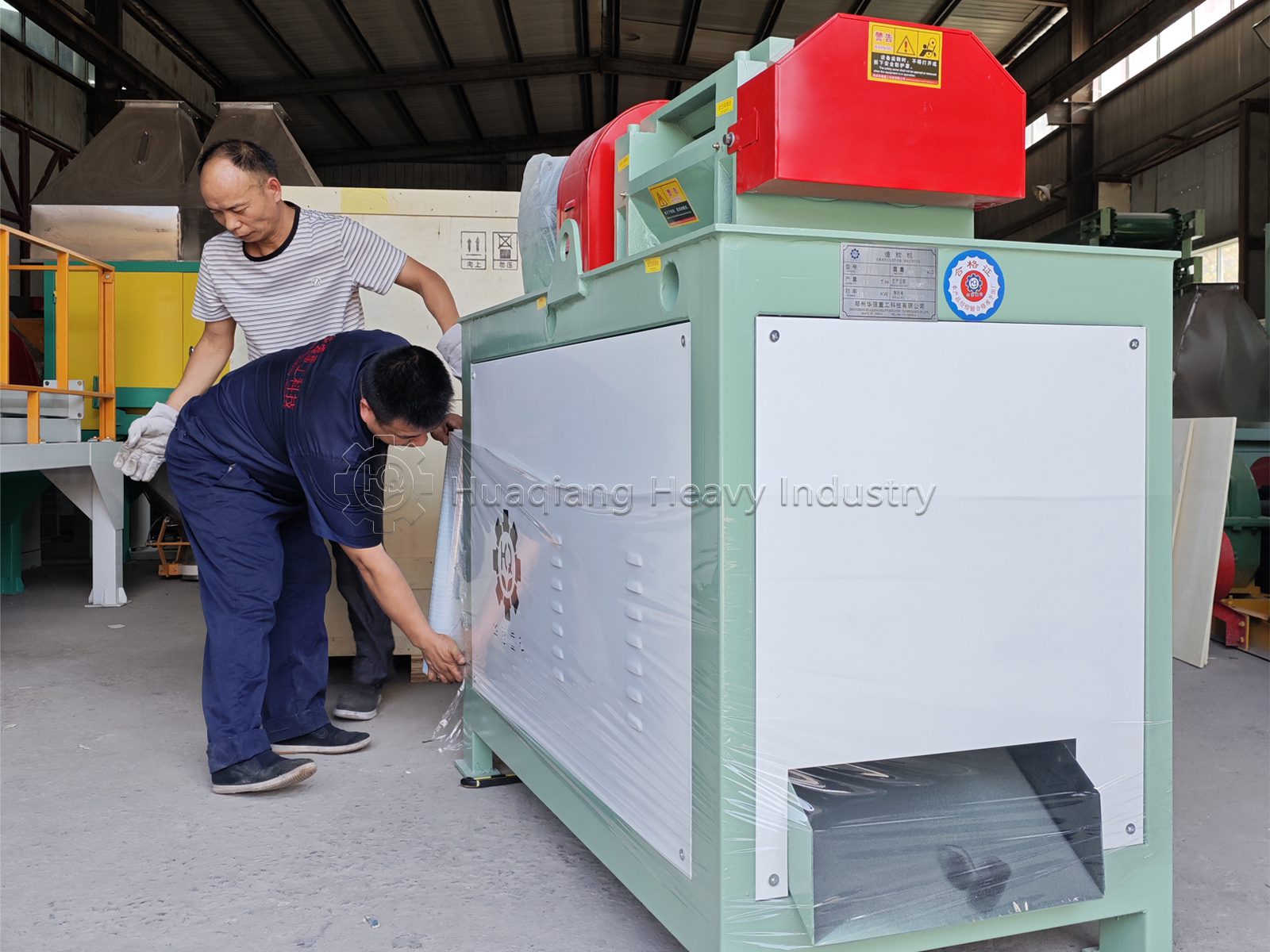

Quickly troubleshoot bearing housing failures in fertilizer roller press granulators by checking five aspects: abnormal noise, temperature rise, vibration, material leakage, and finished product condition. This helps prevent problems like bearing seizure and uneven roller wear.
- Listen for abnormal noises: Normal operation produces a smooth, low-pitched sound. When the bearing is short of oil or the balls are worn, a continuous, fine buzzing sound will occur at the bearing housing location. Pitting on the raceway or damage to the cage will produce a periodic impact sound. If the bearing housing is loose or the outer ring is misaligned, accompanied by irregular clanging noises, the noise will decrease under no-load conditions but increase with material extrusion noise, indicating a bearing housing failure.
- Measure the temperature: When the machine is stopped, touch the bearing housing housing. A normal temperature is ≤60℃, and your hand can remain on it for a long time. A rapid temperature rise in a short time, making the housing too hot to touch, is often a sign of insufficient lubrication, dust ingress into the seals, or an impending bearing seizure. Abnormal heating on one side often indicates a damaged oil seal on that side, allowing powder to enter.
- Check machine vibration: If the equipment vibrates little under no-load but shakes violently after feeding, and the frame feet frequently loosen, it’s highly likely that the bearing housing inner hole is worn or the bearing clearance is too large, causing the roller shaft to wobble eccentrically, leading to unilateral wear of the roller skin.
- Check for seal leaks: Continuous grease leakage from the oil seal or the spraying of fertilizer powder indicates seal failure, with dust entering the cavity and damaging the bearing; blackened grease mixed with other substances indicates that powder has entered the bearing.
- Observe the output particle size: Uneven particle thickness and inconsistent particle formation are caused by excessive bearing housing clearance or misaligned pressure rollers; frequent material jamming and roller blockage, aside from raw material moisture, are mostly due to bearing failure causing misalignment of the two rollers.
If slight overheating occurs, promptly add oil or replace the oil seal; if there is excessive play in the bearing seat or severe abnormal noise, stop the machine, disassemble and repair it to prevent the bearing from seizing and damaging the main shaft and roller skin.