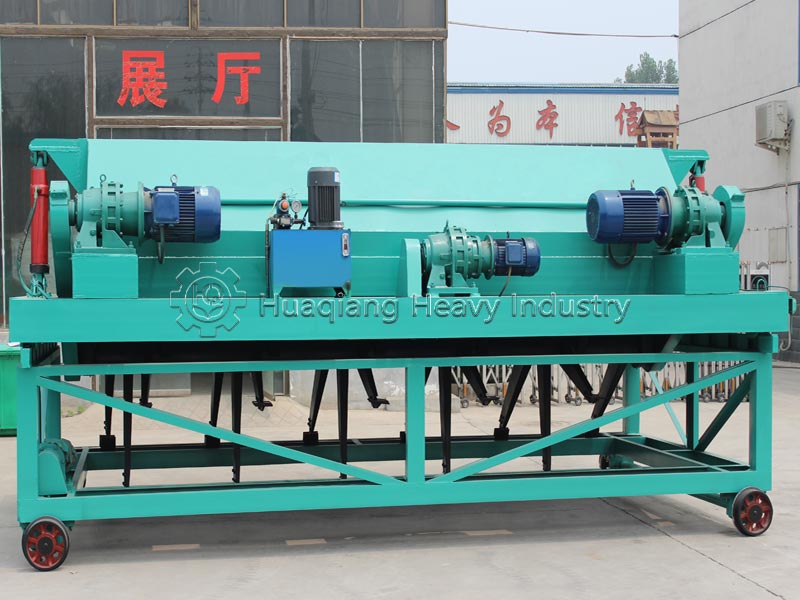

The hydraulic compost turning machine boasts high overall composting uniformity and excellent layered mixing, making it the preferred mainstream model for trough-type organic fertilizer fermentation. The equipment utilizes a large-diameter spiral cutter shaft with staggered spiral rake teeth. During operation, it simultaneously completes bottom layer turning, surface layer falling back, material crushing, and oxygen supply mixing, preventing localized stagnation or incomplete turning.
The entire machine relies on a hydraulic system to precisely control the turning depth, adjusting the turning thickness from 0.6 to 1.8 meters according to the fermentation cycle. Consistent depth ensures thorough material exchange between the upper and lower layers, preventing the upper layer from drying out and the lower layer from anaerobic and smelly. The machine uses a rack and pinion drive, providing stable and uniform movement without sudden changes in speed or uneven turning. The constant cutter shaft speed ensures uniform material distribution and strong mixing consistency.
The equipment features automatic material feeding and dispersing functions, breaking down and loosening clumps of manure and straw, allowing for thorough mixing of auxiliary and main materials, resulting in a more balanced carbon-nitrogen ratio and moisture distribution. The machine effectively covers both sides and corners of the compost trough, leaving no dead zones, ensuring synchronized fermentation temperature and maturation progress throughout the entire trough.
Compared to simple compost turning machines, the hydraulic trough-type machine offers more stable movement, more precise depth, and a more rational cutter shaft arrangement, significantly improving the uniformity of turning and composting. This results in consistent fermentation and maturation, uniform color and appearance of the finished product, and reduces the amount of undercooked or over-composted material, thus improving the quality of organic fertilizer from the source and reducing raw material loss.