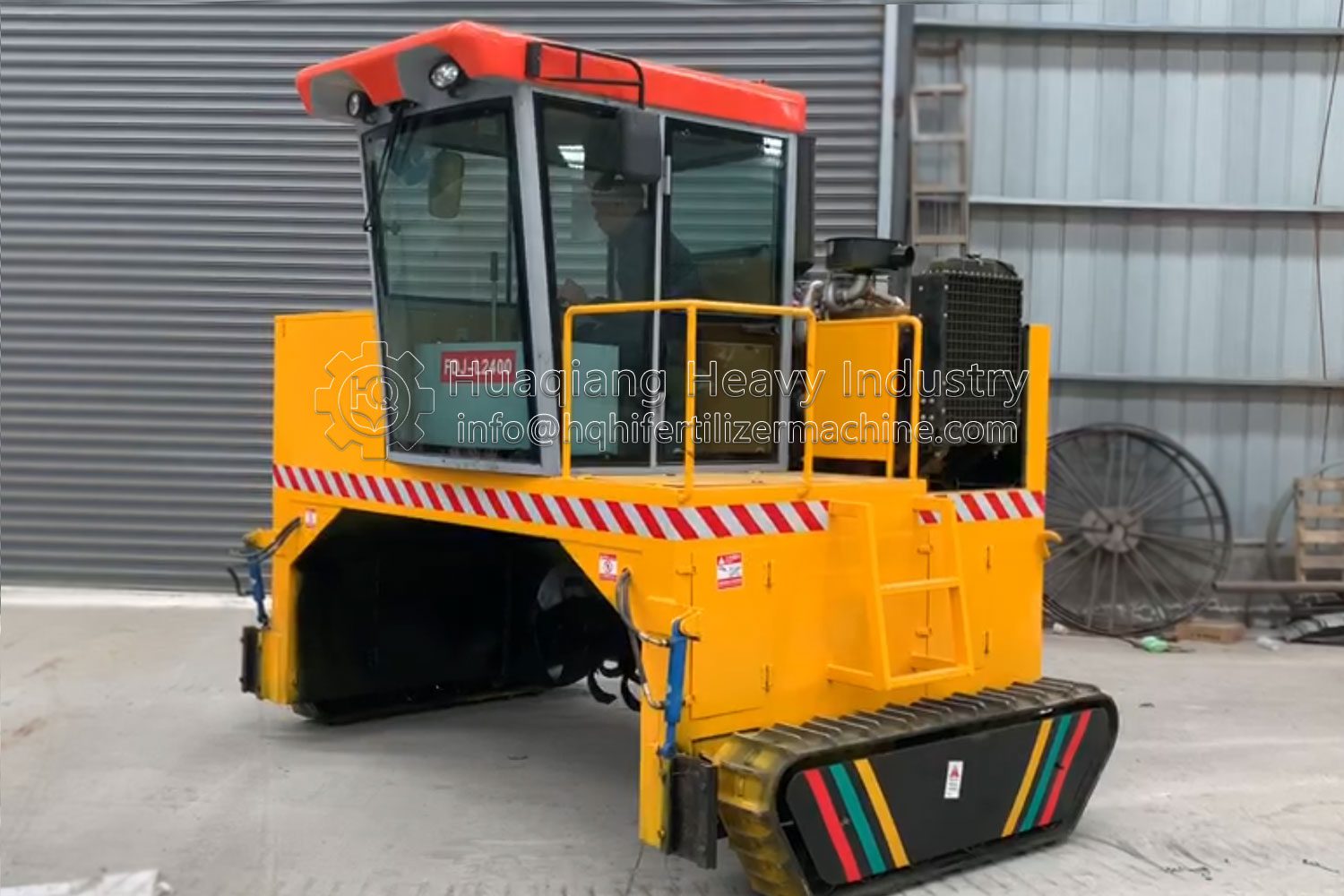

The windrow compost turning machine utilizes a track-based, self-propelled chassis that requires no rails. Mainstream models feature a fully hydraulic, independent drive system suitable for open-air windrow composting, offering superior mobility on soft surfaces such as manure or sludge piles. Powered by a diesel engine, the machine splits power to simultaneously drive the turning drum and the hydraulic pumps for the travel system; independent hydraulic motors and planetary gear reducers on each track control their respective speeds. The chassis assembly includes drive sprockets, track rollers, carrier rollers, idlers, and track tensioners. The large ground contact area and low ground pressure prevent slipping or sinking on muddy, wet, or soft composting surfaces. While economy models may use mechanical transmission—resulting in linked track power and reduced steering flexibility—large-scale equipment employs a fully hydraulic structure.
This fermentation compost turning machine is controlled via dual operating levers, executing various maneuvers by utilizing the speed differential between the left and right tracks. For straight-line travel, both tracks operate synchronously at the same speed, with continuously variable control over forward and reverse velocities. Differential steering is achieved by slowing or stopping one track while the other continues to move; this results in a tight turning radius, making the machine suitable for windrows spaced closely together. A key feature is its ability to perform zero-radius turns—by driving one track forward while reversing the other, the machine can pivot on the spot, eliminating the need for a large turning area and thereby saving space at the fermentation site.
The travel system offers two operating modes: a low-speed working mode and a high-speed transfer mode. In the low-speed working mode, the turning drum lowers into the material pile, advancing slowly and steadily to simultaneously perform turning, aeration, and material discharge. In the high-speed transfer mode, the drum is lifted off the ground, allowing for rapid relocation to new piles and improving site turnover efficiency. Compared to wheeled turners, the crawler system offers superior shock absorption for smoother travel on uneven terrain and stronger hill-climbing capability under load. It avoids compacting the underlying composting material, making it suitable for windrow composting of various organic feedstocks, including livestock manure, straw, and spent mushroom substrate.