

A fascinating dichotomy exists within the field of fertilizer processing: some stages demand absolute precision, while others rely on the operator’s almost instinctive, “fuzzy” judgment. The multiple-silo single-weigh static batching system exemplifies the former philosophy—replacing human experience with sensors and programmed logic. In contrast, the bio-disk organic fertilizer machine represents the latter; whether the granules tumbling on the disk grow into ideal spheres depends largely on the operator’s real-time perception of the tilt angle, rotation speed, and moisture levels. Situated between these two extremes, the BB fertilizer mixer ingeniously blends both approaches.
The design logic of the multiple-silo single-weigh static batching system is entirely focused on eliminating human uncertainty. Multiple silos hold different raw materials; the system dispenses them sequentially into a single high-precision weigh hopper according to a recipe, recording the weight after each addition before discharging the combined batch. This “cumulative” weighing method achieves precision within a few thousandths—far exceeding the reliability of manual weighing. Its value lies in traceability: ingredient data for every batch is fully recorded, ensuring that any bag of finished product can be tested and its data matched against the original recipe. For export orders settled based on inspection reports or direct supply contracts with large farms, the system itself serves as a guarantee of quality and reliability.
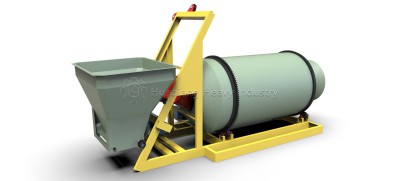
The task facing the BB fertilizer mixer is more nuanced. It mixes pre-formed granular fertilizers—such as urea, diammonium phosphate, and potassium chloride—rather than raw powders. Since these materials arrive from upstream plants as finished products, the primary risk during mixing is not inadequate blending, but rather excessive agitation that could shatter the granules. Consequently, this mixer aims for a “restrained uniformity”: low-speed convective action allows granules of varying densities to thoroughly redistribute, keeping the coefficient of variation for mixing uniformity low while minimizing granule breakage. This sense of proportion represents a balance between “precise mixing” and “material preservation”—avoiding both rough handling and lax control.
The operation of the bio-disk organic fertilizer machine possesses a distinctly different character. On the tilted, rotating disk, material tumbles repeatedly under the combined influence of gravity, centrifugal force, and friction; fine particles become coated in atomized moisture, layering up and gradually growing in size. The beauty of this process lies in its resistance to complete quantification—factors such as material moisture content, ambient temperature and humidity, and raw material fiber content subtly influence the pelletization behavior, requiring the operator to make real-time, minute adjustments to the tilt angle and water input based on the material’s tumbling motion. Research indicates that setting the disk tilt to 48 degrees and maintaining a rotation speed of 11 to 15 revolutions per minute yields the most uniform particle size for bio-organic fertilizer granules. However, these figures do not constitute a universal formula; the optimal parameters can shift drastically when switching to a different batch of raw materials. A significant portion of the expertise involved in disk granulation resides in the operator’s tactile intuition and visual judgment rather than in programmed control logic.